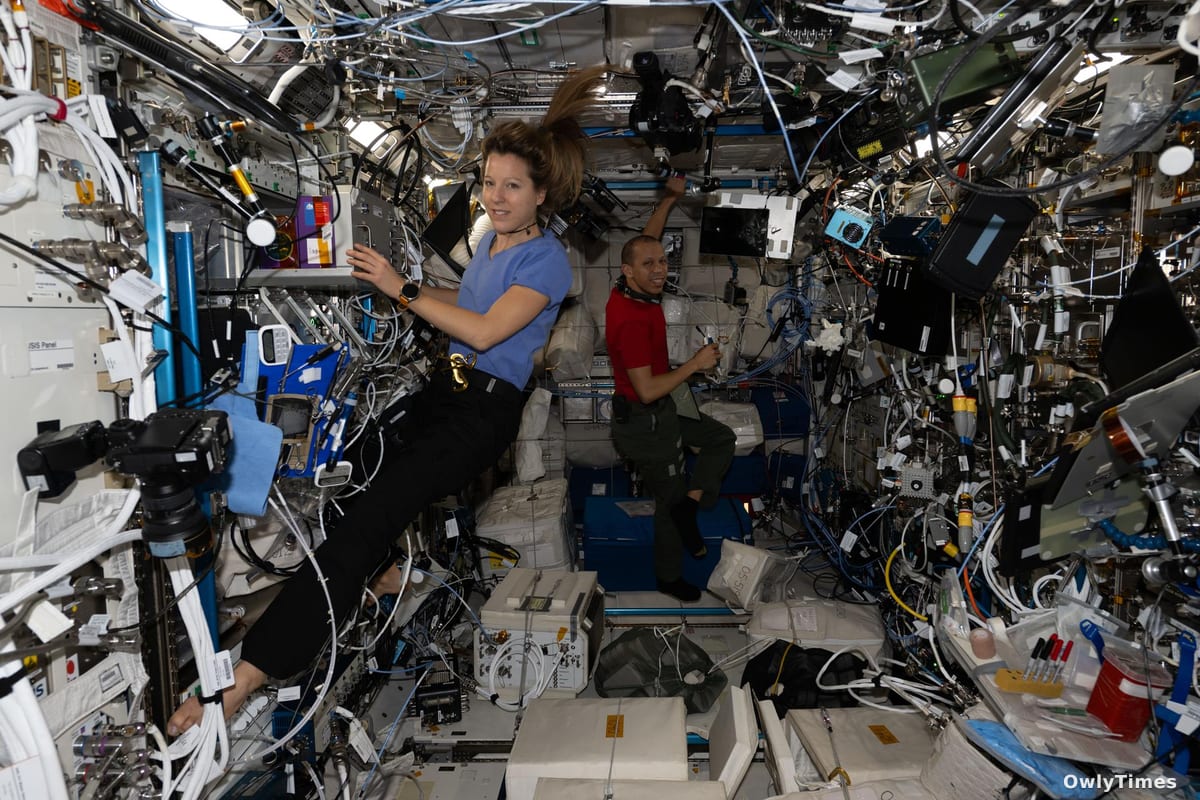

The fundamental challenge of modern regenerative medicine lies in the limitations of Earth-based manufacturing: growing healthy, high-quality cells in large quantities is notoriously difficult due to gravity’s influence on cell sedimentation and nutrient distribution. On Tuesday, the Expedition 74 crew aboard the International Space Station (ISS) shifted their focus toward whether the microgravity environment can overcome these biological hurdles. By processing blood stem cell samples and testing DNA-assembly techniques in orbit, researchers are attempting to determine if space-grown cells can provide the clinical-grade consistency required for advanced cancer and blood disease therapies.
Leveraging Microgravity for Cellular Architecture
The research, which arrived via Northrop Grumman’s Cygnus XL cargo spacecraft on April 13, represents a shift from basic observation to active manufacturing trials. Flight engineers Sophie Adenot of the ESA (European Space Agency) and Jack Hathaway of NASA spent the day processing stem cell samples to assess whether space-induced changes to cell attributes could yield superior medical outcomes. To ensure data accuracy, Hathaway utilized the KERMIT fluorescent microscope, allowing ground-based teams to monitor real-time cellular development in a weightless state.
It is important to distinguish the specific objective of this study from broader claims regarding space-based "cures." The current research does not suggest that microgravity cures diseases; rather, it investigates whether the unique environment allows for the assembly of nanostructures and stem cells that are otherwise prone to degradation on Earth. By utilizing the Life Science Glovebox inside the Kibo module to conduct the DNA Nano Therapeutics-3 experiment, the team is testing whether DNA-inspired nanomaterials can be assembled with higher precision in orbit.
Beyond Biology: Systems and Safety in Orbit
While the biotechnology experiments capture the potential for future medical breakthroughs, the daily life of the station remains tethered to the harsh realities of off-world living. The crew must balance high-stakes scientific inquiry with the mechanical maintenance required to keep the station functional. For instance, NASA flight engineer Jessica Meir transitioned from operating the Canadian Space Agency’s Bio-Analyzer—a device designed to parse the molecular properties of biological samples—to managing the physics of cryogenic fluid storage. This study, conducted in the Destiny module’s Microgravity Science Glovebox, is essential for the future of deep-space exploration, as efficient fuel storage is a prerequisite for long-duration missions.
Operational safety remains the highest priority for the station's occupants. On Tuesday, NASA flight engineer Chris Williams joined station commander Sergey Kud-Sverchkov and flight engineer Sergei Mikaev, both Roscosmos cosmonauts, to practice an emergency departure drill within the Soyuz MS-28 spacecraft. This simulation, monitored in real-time by Roscosmos mission controllers, underscores the persistent risks inherent in orbital research. Simultaneously, Roscosmos flight engineer Andrey Fedyaev focused on the digital infrastructure of the station, installing software updates to improve control over the European robotic arm inside the Nauka module.
Limitations to Consider
While the prospect of space-manufactured therapeutics is compelling, the scalability of these experiments remains a significant limitation. The volume of material that can be processed inside a laboratory module like Kibo is currently minuscule compared to the clinical requirements for patient treatment on Earth. Furthermore, the cost-to-benefit ratio of launching hardware via a Cygnus XL cargo ship to produce biological samples will be the primary metric for determining the viability of this "space economy."
The next steps for this research will be determined by the data returned to Earth from the samples currently being processed. The ongoing performance of the Bio-Analyzer and the stability of the cryogenic fluids in the Destiny module will serve as the primary indicators of whether these orbital processes can be transitioned from experimental proof-of-concept to repeatable industrial methods. As the crew continues to balance human health studies with the mechanical upkeep of the station, the next reading of these biological samples will clarify whether the advantages of microgravity can truly outpace the logistical challenges of space-based manufacturing.





