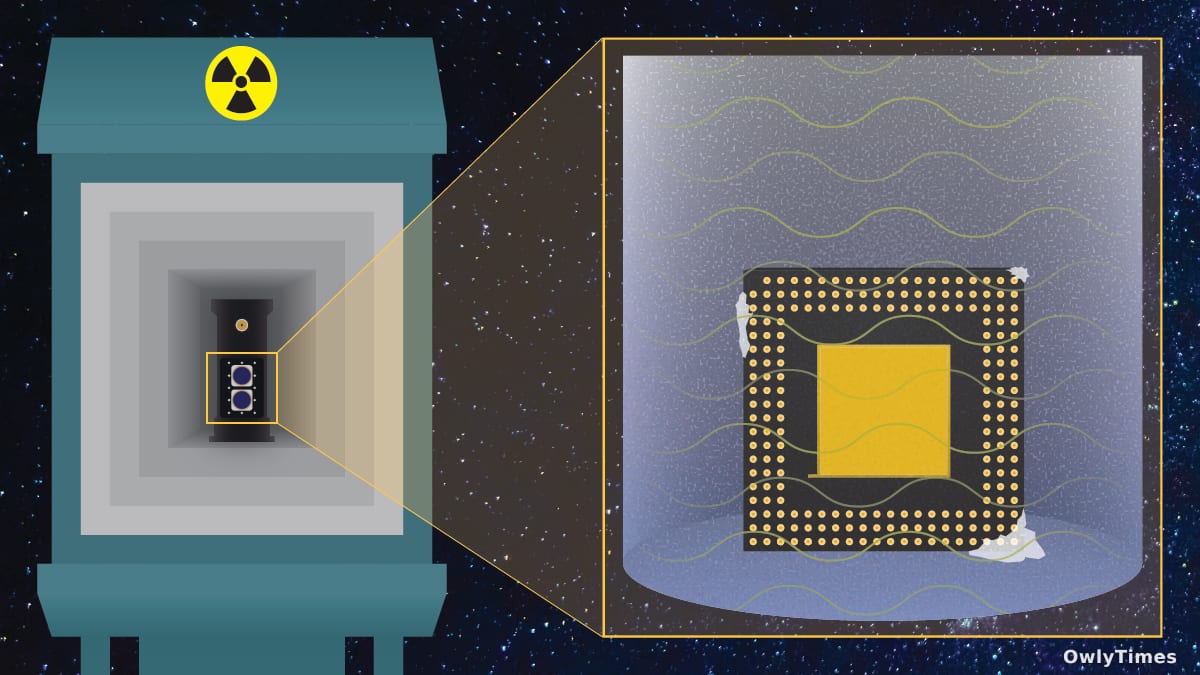

The demand for increasingly resilient technology isn’t driven by a desire for gadgets that simply “last longer.” It’s a response to a fundamental shift in where we need technology to operate – and the environments are becoming exponentially more hostile. While consumer electronics face challenges of heat and humidity, a growing sector of critical infrastructure, from satellite networks to advanced medical devices, requires components capable of functioning reliably after years of exposure to radiation levels a hundred times greater than natural background and temperature swings exceeding 300 degrees Fahrenheit. At Arizona State University, a dedicated team is tackling this challenge head-on, not just testing existing technologies, but actively shaping the future of extreme environment engineering.
The Extreme Environments Lab, led by Hugh Barnaby, professor in the School of Electrical, Computer and Energy Engineering, isn’t simply confirming whether a chip will survive in space; they’re defining the boundaries of what’s possible. Often, headlines about this kind of research focus on the dramatic conditions – the minus 85 to 250°F temperature fluctuations, the intense radiation – but the core of their work lies in meticulous characterization. They aren’t just exposing components to these extremes, they’re precisely measuring how those extremes alter performance, and then using that data to refine design and manufacturing processes. This is a crucial distinction. Many labs can break things; the SWAP Hub aims to understand why they break, and how to prevent it.
See the original news.asu.edu story for the full account.
This capability is particularly vital given the long operational lifespans demanded of these technologies. As Barnaby explains, “Things need to last for 10 to 20 years up there under extreme conditions.” Unlike a smartphone upgrade cycle, replacing a faulty component on a satellite or in a deep-sea sensor is often prohibitively expensive, or even impossible. The lab’s work, therefore, isn’t about incremental improvements, but about ensuring decades of reliable operation in environments that actively seek to degrade performance. This focus extends beyond space applications, encompassing geothermal energy, nuclear systems, and even radiation therapy, all requiring components that can withstand unique and punishing conditions. The lab’s unique position as the only regional hub with comprehensive infrastructure for testing electronics in both extreme temperature and radiation environments, as part of the Department of Defense’s Microelectronics Commons, underscores its strategic importance.
The lab’s approach is also notable for its integration of student research. PhD student Jereme Neuendank exemplifies this, having developed a cryogenic device – the Rigel DSTAT – capable of simultaneously testing components under extreme cold and radiation. This wasn’t simply a matter of combining existing equipment; Neuendank had to create a solution to a specific problem. “The main reason we wanted to do that is because in a space environment, a microchip will usually be at a very cold temperature when it's getting exposed to radiation,” he explains. His work extends beyond hardware, too, including the development of a remote testing system allowing for experiments lasting up to 10 hours to run autonomously. This innovation, initially developed at ASU, was subsequently adopted by Sandia National Laboratories, demonstrating the practical impact of student-led research.
However, it’s important to acknowledge the limitations of even this sophisticated testing regime. While the lab can simulate a wide range of radiation types – galactic cosmic rays versus proton radiation, for example – perfectly replicating the complex radiation environment of space, or the nuanced conditions within a nuclear reactor, remains a challenge. Furthermore, accelerated testing, while necessary to predict long-term performance, always carries the risk of overlooking subtle degradation mechanisms that only manifest over years of actual operation. The lab mitigates this through extensive modeling and analysis, led by students like Tyler Kirby, who uses computer simulations to predict device behavior and identify potential weaknesses. But prediction is not certainty.
Looking ahead, the next critical step isn’t simply building more powerful testing equipment, but refining the predictive models. The goal is to move beyond reactive testing – identifying failures after they occur – to proactive design, where components are engineered to withstand extreme conditions from the outset. This requires a deeper understanding of the fundamental physics governing material degradation under radiation and extreme temperatures. Specifically, researchers are focusing on developing more accurate models of “total ionizing dose” effects, where cumulative radiation exposure gradually alters the electrical characteristics of semiconductors. If these models can accurately predict long-term performance, it will dramatically reduce the cost and time associated with qualifying new technologies for deployment in critical environments. The question now is: can these predictive models keep pace with the increasingly demanding requirements of the next generation of extreme environment applications?





