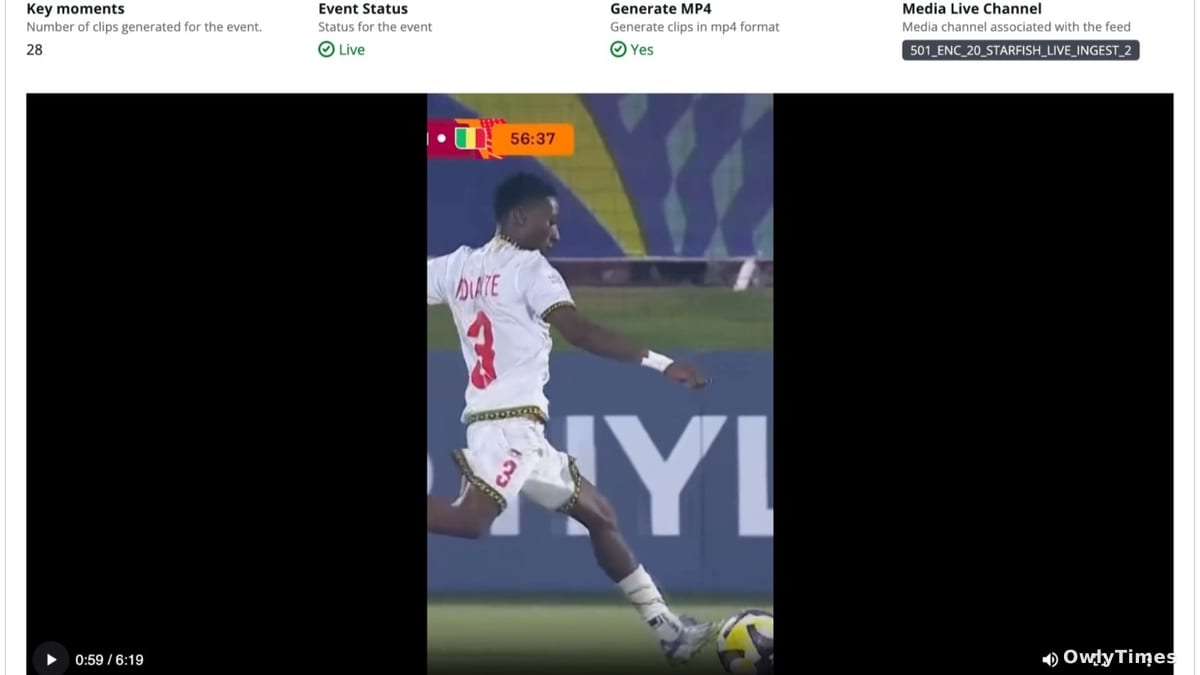

Is the future of television…tall? Not in the sense of higher resolutions, but narrower ones. While everyone’s been obsessing over the metaverse and the next big streaming war, a quiet revolution is happening in how we actually watch things. Amazon Web Services (AWS) just launched a new AI-powered service, AWS Elemental Inference, designed to automatically convert video into vertical formats. The real story here isn’t about fancy new tech – it’s about acknowledging where eyeballs actually are: glued to phones, scrolling through TikTok and Instagram.
The 90% Rule and the Death of Landscape
For years, the broadcast industry has operated under the assumption that content should be created for the biggest screen in the room. But Ricardo Perez-Selsky, senior director of digital production operations for Fox Sports, lays it bare: nearly 90% of their digital content is consumed vertically. Ninety percent. That’s not a niche preference; it’s a dominant viewing habit. This isn’t about catering to a short attention span; it’s about meeting viewers where they are, and in the format they expect. AWS Elemental Inference aims to make that automatic, using AI to intelligently reframe shots, track subjects, and ensure key action remains visible, all with a claimed latency of just 6-10 seconds. Think of it as a digital cameraman, constantly adjusting the frame for optimal mobile viewing.
Original reporting: The Hollywood Reporter.
Beyond the Reframe: What the AI Actually Does
The technical details are surprisingly complex. Regina Rossi, head of product for AWS Media Services, explains they’re using “fully managed foundation models optimized for video workloads,” including saliency mapping, object tracking, and speaker detection. In plain English? The AI isn’t just cropping the top and bottom of a shot. It’s understanding what’s happening in the video. It knows who the important people are, where the action is, and adjusts the framing accordingly. This is crucial for live sports, where a poorly framed vertical clip can miss the crucial moment. The smoothing algorithms Rossi mentions are equally important – a jerky, constantly reframing video is worse than no video at all. AWS is attempting to mimic the subtle movements of a human camera operator, a surprisingly difficult feat for an algorithm.
Why This Matters to You (Even If You Don't Watch Sports)
This isn’t just about sports highlights on TikTok. The implications are far broader. Consider the economics of content creation. Traditionally, converting content to vertical required manual editing – a time-consuming and expensive process. AWS is promising to automate that, drastically reducing costs and accelerating turnaround times. This means more content, faster, and potentially, more personalized experiences. NBCUniversal’s early adoption suggests they see the same potential. But there’s a darker side. The ease of verticalization could also lead to a flood of low-effort, algorithmically generated content, further blurring the lines between genuine storytelling and attention-grabbing snippets.
The Latency Question and the Streaming Arms Race
The 6-10 second latency AWS claims is impressive, but it’s still a delay. In the world of live sports, even a few seconds can be critical. Will viewers tolerate a slight delay in exchange for a perfectly framed vertical stream? That’s the question. This technology also intensifies the existing streaming arms race. Platforms like Netflix, Peacock, and ESPN are already experimenting with vertical video, but AWS gives traditional broadcasters a powerful new tool to compete for mobile attention. It levels the playing field, allowing them to quickly adapt to changing viewing habits without massive investments in manual editing.
Looking ahead, I predict we’ll see a surge in “dual-format” broadcasts – a traditional landscape version for TVs and a dynamically reframed vertical version for mobile devices. The real challenge won’t be creating vertical video, but ensuring the AI consistently makes smart framing decisions, avoiding awkward cuts and missed moments. The next time you’re scrolling through Instagram and see a perfectly framed sports highlight, don’t just think “cool video.” Think about the AI working behind the scenes, and wonder if the future of television is, indeed, standing on its side.