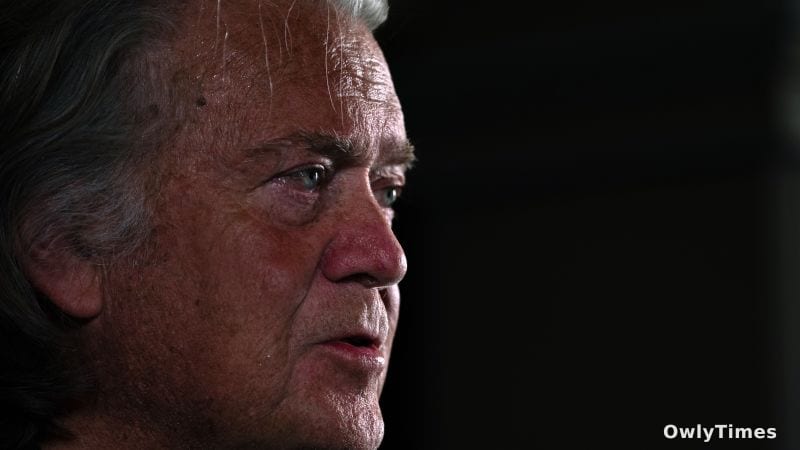

The calculated silence surrounding Steve Bannon’s relationship with Jeffrey Epstein isn’t a glitch in the conservative media ecosystem – it’s a strategic maneuver. While right-wing outlets like “American Sunrise” recently amplified calls for accountability in the Epstein case, the conspicuous absence of any discussion of Bannon’s own extensive ties to the convicted sex offender reveals a carefully constructed protection of a key influencer and a calculated risk assessment regarding the potential fallout. The core calculus isn’t about denying the scandal, but about controlling the narrative and insulating a powerful voice within the MAGA movement from its contaminating effects.
The dynamic unfolded plainly earlier this month. On February 9th, “American Sunrise” on Real America’s Voice demanded “an example” be made of those connected to Epstein. Moments later, the program transitioned to “War Room,” hosted by Bannon, who proceeded to spend two hours discussing everything from the Super Bowl to a Texas Senate primary – pointedly omitting any mention of the newly released Epstein files detailing his close relationship with the host. This isn’t accidental omission; it’s a deliberate firewall. The benefit is clear: preserving Bannon’s platform and influence. The loss, for now, is largely borne by the principle of consistent outrage that has defined the right-wing media landscape for years.
Original reporting: CNN.
This selective outrage echoes a historical pattern of political expediency. Consider the decades-long protection afforded to figures like Senator Robert Byrd, whose past association with the Ku Klux Klan was consistently downplayed by both parties when his legislative votes were needed. The parallel isn’t about moral equivalence, but about the pragmatic calculus of power. Just as Byrd’s past was strategically managed, Bannon’s Epstein connection is being compartmentalized – framed, according to Bannon himself, as research for a documentary film. The claim, delivered to The New York Times, that he captured 50 hours of footage of Epstein and intends to “destroy the very myths he created” is a convenient justification, but it rings hollow given his earlier advice to Epstein – revealed in newly released texts – to “push back on the lies” and “crush the pedo/trafficking narrative.”
The hypocrisy isn’t lost on everyone within the Trump orbit. Laura Loomer, a Trump loyalist, publicly called for Bannon to be “100% forthcoming.” Even Michael Flynn, another far-right figure, urged an explanation on X, responding to a 2018 text where Bannon suggested invoking the 25th Amendment to remove Donald Trump from office. Marjorie Taylor Greene, once a frequent “War Room” guest, expressed concern about the “friendly relationship” with Epstein, even after his 2008 conviction. Yet, despite these internal pressures, Bannon’s show continues uninterrupted, attracting high-profile guests like Tommy Tuberville and Ken Paxton, signaling a willingness among many to overlook the controversy. This resilience speaks to the size of Bannon’s audience – as one Trump administration official reportedly noted, he’s “too big to fail.”
The contrast between Bannon’s current silence and his past eagerness to exploit the Epstein story for political gain is particularly striking. Last year, “War Room” regularly featured segments on Epstein’s alleged network, framing it as a Democratic scandal. A July 2023 post on the show’s X account claimed, “Democrats know Epstein’s black book is a ticking time bomb.” Bannon himself declared Epstein “a key that picks the lock on so many things,” fueling a pressure campaign that ultimately led to the release of more files. This prior advocacy now appears as cynical positioning, especially considering his private communications with Epstein, where he discussed plans to “take down” Pope Francis and advance populist movements in Europe. The 2019 texts, where Bannon bluntly told Epstein, “Have you lost your f**king mind,” the moment he considered responding to coverage, underscore the priority of self-preservation over transparency.
The most revealing aspect of the released communications isn’t just the frequency of contact, but the substance of the advice Bannon offered Epstein as allegations resurfaced in 2019. He actively strategized on damage control, advising Epstein to “crush the pedo/trafficking narrative” and rebuild his image as a philanthropist. This isn’t the behavior of someone investigating a criminal; it’s the behavior of someone protecting a valuable connection. The fact that Bannon then appeared elated when prosecutors rejected a challenge to Epstein’s plea deal further solidifies this impression. The narrative of a documentary filmmaker seeking to expose Epstein feels increasingly like a cover story.
The implications extend beyond Bannon’s personal reputation. His willingness to share sensitive information with Epstein – including discussing the potential invocation of the 25th Amendment against Trump – raises questions about his loyalty and judgment. The texts reveal a complex and often critical view of Trump, with Bannon referring to the former president and his inner circle as “transitory figures” while positioning himself as the “center of gravity of this movement.” This ambition, coupled with his Epstein connection, could ultimately derail any future political aspirations. As one Trump advisor bluntly stated, “He has zero chance now. It’s so sketchy.”
The political chess move to watch next isn’t whether Trump will publicly address Bannon’s ties to Epstein – though that remains a possibility. It’s whether the Justice Department, now in possession of detailed evidence of Bannon’s communications with Epstein, will investigate whether any laws were broken. Will they examine whether Bannon’s advice to Epstein constituted obstruction of justice, or whether his fundraising efforts for the border wall were compromised by his attempts to avoid appearing “incompetent” in Trump’s eyes? The answer to that question will determine whether Bannon’s calculated silence can ultimately shield him from the fallout, or whether the Epstein scandal will finally claim one of its most prominent, and surprising, protectors.





