
£3,000 Tonnes of Flour, and a Growing Disconnect: Essex Businesses Weigh Council Value
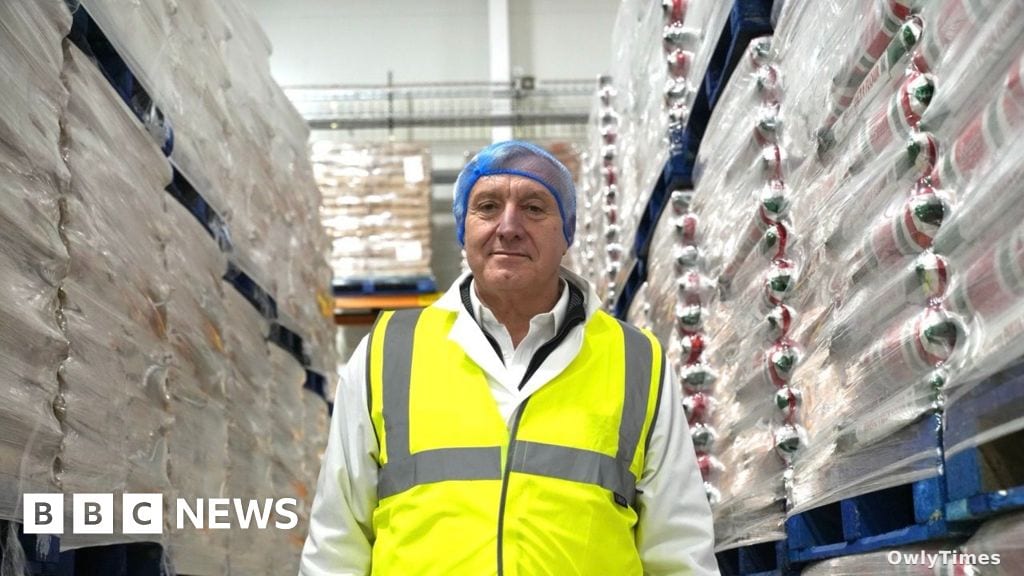
A staggering 3,000 tonnes of flour are produced weekly at Wright’s Flour’s Harlow facility, a testament to the continued strength of British manufacturing. Yet, despite this substantial output – and the £3.2 million in business rates the company pays annually – managing director David Wright contends he receives “not a lot” in return from local authorities. This sentiment, voiced just days before the May 7th council elections, encapsulates a widening chasm between Essex businesses and the councils meant to serve them, a dynamic that reveals a fundamental shift in local governance priorities.
The tension isn’t about outright hostility, but a perceived decline in reciprocal investment. Wright’s Flour, a family business tracing its roots back to 1867 and Benjamin Disraeli’s chancellorship, exemplifies this. Thirty years ago, the company actively partnered with Enfield Council on infrastructure projects – roads, lighting, security – through a successful match-funding scheme. Today, Wright reports that level of engagement is “non-existent,” replaced by a focus on social care and other large-scale public services. This isn’t an isolated case; it reflects a broader trend where businesses, even significant employers like Wright’s (with 150 staff), feel increasingly peripheral to council decision-making.
This article draws on reporting from the BBC.
This shift is particularly noticeable when viewed against the backdrop of recent infrastructure investments championed by Julia Gregory, chairwoman of the Greater Essex Business Board. The board, representing major players like DP World ports and Leonardo defence, highlights projects like the new Beaulieu Park station – the first addition to the Great Eastern Mainline in a century – as evidence of council effectiveness. However, these large-scale projects, while beneficial, don’t necessarily translate into direct, tangible benefits for all businesses. The focus on regional connectivity doesn’t address localized concerns like pothole repairs, a seemingly minor issue that Wright cites as a current need. This illustrates a key disconnect: councils are delivering on strategic infrastructure, but neglecting the granular, day-to-day needs of their business constituents.
The political parties vying for votes on Thursday are attempting to bridge this gap, albeit with varying degrees of specificity. Reform proposes reversing the recent rise in employers’ National Insurance and halving VAT for hospitality, while the Liberal Democrats offer a 5% VAT cut for the same sector. Labour points to £150 million for High Street revitalization and £1.5 billion for youth training, and the Conservatives pledge carbon tax reductions for the energy sector. These promises, however, lack the targeted, collaborative approach Wright describes as successful in the past. The Green Party’s delayed detailing of its business offer further underscores the lack of immediate, concrete plans.
Even smaller businesses, like the Dragonfly Lounge in Colchester, recognize the importance of council engagement. Co-owner Jo Palmer-Tweed, who launched her business just a year ago, emphasizes the crucial role councils play in planning, licensing, and rates, and notes positive cross-party support for her venture. This suggests that responsiveness at the local level can exist, but isn’t guaranteed. The key takeaway isn’t simply about tax burdens, but about perceived value. Businesses are increasingly asking: what demonstrable return on investment are we receiving for the substantial sums we contribute through business rates?
What this means for your wallet: As local councils grapple with budgetary pressures and shifting priorities, businesses – and ultimately consumers – will feel the impact. Watch closely for whether the winning parties prioritize collaborative infrastructure projects and targeted support for local businesses, or continue down a path of centralized, large-scale initiatives. The future of Essex’s economic landscape, and the price of your daily loaf of bread, may depend on it.