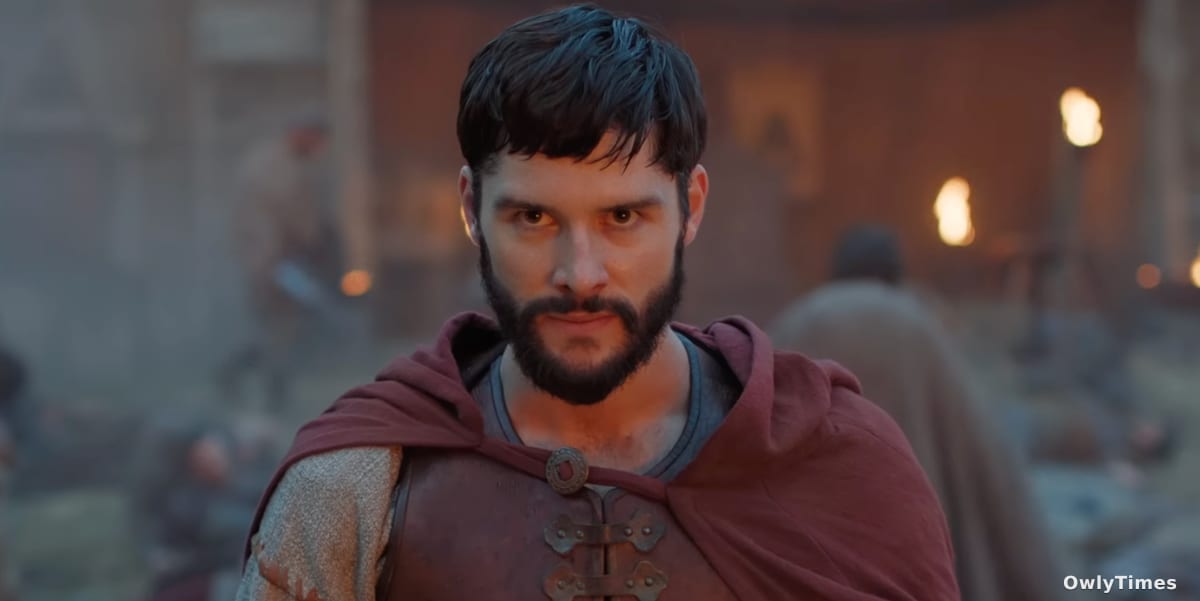

The water is cold, shockingly so, even for a British stream in the 4th century AD. A man, face weathered and unnamed, wades deeper, his gaze fixed on something bobbing amongst the reeds. It’s a baby, swaddled and abandoned, a scene echoing the biblical tale of Moses. This is how The Pendragon Cycle: Rise of the Merlin begins, a deliberate invocation of ancient myth, but one that quickly feels less epic and more…confused. The series, executive-produced by Ben Shapiro and exclusive to his DailyWire+ streaming service, isn’t attempting a fresh take on Arthurian legend; it’s a symptom of a larger, and increasingly desperate, effort to build a media ecosystem for the right. And right now, that ecosystem is struggling to tell a compelling story, let alone capture an audience.
The “Anti-Woke” Content Gap
The launch of The Pendragon Cycle isn’t about fantasy; it’s about filling a perceived void. As “alternative” cultural moments – like the “All-American Super Bowl Halftime Show” championed by conservatives – gain traction, the demand for entertainment tailored to a specific political viewpoint is growing. Jeremy Boreing, co-founder of Daily Wire and creator of the series, clearly sees an opportunity. He adapted the story from the novels of Stephen R. Lawhead, aiming for a Game of Thrones-esque spectacle. But the execution, and the underlying strategy, reveals a fundamental challenge: simply being “anti-woke” isn’t enough to create good television. The series, reportedly costing seven figures per episode, feels less like a grand fantasy and more like a Spirit Halloween store brought to life.
Drawn from esquire.com.
The problem isn’t a lack of ambition. The Pendragon Cycle attempts to cover a vast scope, blazing through the first two books of Lawhead’s six-book series in its first season. It’s a genealogical deep dive into Merlin’s lineage, a backstory so granular it feels actively resistant to audience engagement. Names and places fly by, punctuated by jarring time jumps (“75 years later!” the screen proclaims before you’ve even learned anyone’s name). This dense storytelling, coupled with a reliance on assumed familiarity with the source material, creates a viewing experience that’s less immersive and more exhausting. It’s a far cry from the accessible world-building that propelled Game of Thrones to global dominance.
A Biblical Epic…Or Just a Family Tree?
Boreing initially touted the series as “probably the most Christian piece of mainstream entertainment since Braveheart,” a claim he later walked back, clarifying it wasn’t “Christian entertainment” in the traditional sense. This hedging speaks to a core tension within the project. The Pendragon Cycle is steeped in biblical allegory – the abandoned baby mirroring Moses, the arrival of Christianity as a central plot point – but it’s hesitant to fully embrace a religious label, perhaps fearing it will alienate a broader audience. This ambiguity results in a narrative that feels both overtly symbolic and strangely hollow. The series unfolds like a literal retelling of the Old Testament book of Numbers, a relentless listing of names and lineages.
This approach, however, clashes with the genre’s expectations. As actress Rose Reid, who plays Princess Charis, told The Telegraph, the key to successful faith-based storytelling is subtlety: “You let the audience find that message. You don’t shove it down their throats.” The Pendragon Cycle struggles with this balance, presenting its themes with a heavy hand while simultaneously failing to establish a compelling emotional core. The bullfight in a Roman coliseum, meant to be a thrilling spectacle, feels strangely detached, a visual flourish that doesn’t land because the characters remain underdeveloped.
The HBO Contrast and the Viewership Void
The timing of The Pendragon Cycle’s release couldn’t be worse. HBO’s A Knight of the Seven Kingdoms, a prequel to Game of Thrones, has been met with near-universal acclaim, drawing an average of 13 million viewers per episode, according to Variety, and securing a swift season two renewal. The Daily Wire has yet to release viewership numbers for its series, and it’s difficult to imagine they come close. The show hasn’t even garnered enough reviews to register a score on Rotten Tomatoes. This disparity isn’t simply about budget or production value; it’s about understanding what makes a fantasy story resonate.
A Knight of the Seven Kingdoms succeeds because it focuses on character and charm, telling a simple, engaging story within a familiar world. The Pendragon Cycle, by contrast, prioritizes complexity and backstory, sacrificing accessibility for a perceived intellectual depth. It’s a pattern we’ve seen before from conservative media ventures – attempts to replicate successful formulas without understanding the underlying ingredients. Like Kid Rock’s protest concert against a non-English-language singer, the series feels like a reaction to something rather than a compelling creation in its own right.
Beyond the headlines of “conservative media” and “anti-woke entertainment,” The Pendragon Cycle reveals a crucial truth: building a media empire requires more than just a political agenda. It demands skilled storytelling, compelling characters, and a genuine understanding of audience desires. The series isn’t just a failed fantasy show; it’s a cautionary tale about the limitations of ideological programming. The question now is whether Daily Wire, and others like it, will learn from this misstep, or continue to chase a Netflix for the Right that remains stubbornly out of reach. Will they prioritize quality storytelling over political signaling, or will they continue to offer audiences incomprehensible alternatives to the mainstream?