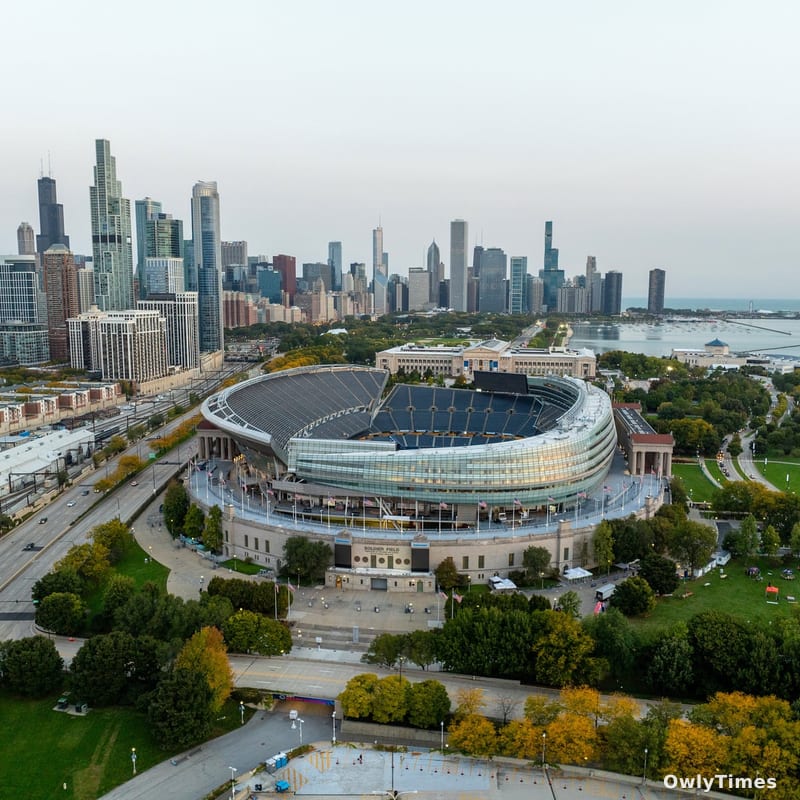

The air in Chicago smells like stale hot dogs and simmering outrage. It’s a scent familiar to anyone who’s witnessed a beloved team threaten to leave town, and right now, it’s particularly potent. The Chicago Bears, a franchise woven into the city’s very identity for over a century, are seriously considering a move to Hammond, Indiana – a mere 30 miles south, but a world away in terms of civic pride. This isn’t just about football; it’s about a city grappling with the shifting loyalties of a business that once felt intrinsically linked to its soul. WWE star CM Punk’s blunt assessment – “straight greed” – is echoing across social media, and Illinois Governor JB Pritzker hasn’t been shy with his own condemnation, calling it a “slap in the face.” But beyond the immediate fury, the potential Bears exodus is exposing a deeper fracture in the relationship between professional sports and the communities that sustain them.
The Price of Loyalty: A Stadium Standoff
The immediate catalyst is a stalled negotiation over property taxes related to the Bears’ $197.2 million purchase of a 326-acre site in Arlington Heights, Illinois, in 2023. While Arlington Heights keeps the team within the state, the tax dispute has opened the door for Indiana, which swiftly passed legislation on February 26th authorizing funding for a potential stadium in Hammond. This isn’t a case of a team struggling financially; the Bears are valued at a staggering $8.9 billion. This is about maximizing profit, about securing a more favorable financial landscape, and about leveraging the desperation of multiple cities against each other. Soldier Field, the Bears’ current home, is a historic landmark, but it’s also a rental, an open-air venue with the smallest seating capacity in the NFL at just over 61,500. The team argues a new, modern stadium is essential for revenue growth, but the question remains: at what cost to the city that’s supported them for generations? The average NFL stadium capacity is closer to 70,000, and newer venues routinely exceed 75,000, demonstrating the league’s clear preference for maximizing game-day revenue.
See the original The Guardian story for the full account.
Echoes of Brooklyn: A Personal History of Loss
The uproar in Chicago has unexpectedly ignited a decades-old wound for Senator Bernie Sanders. The Vermont independent, a Brooklyn native, remembers all too well the gut punch of losing the Dodgers to Los Angeles in 1957. As he recounted on the Flagrant podcast, the move was viewed with such betrayal in his neighborhood that Walter O’Malley, the Dodgers owner, was ranked alongside Adolf Hitler and Joseph Stalin as one of the worst people in history. This isn’t hyperbole; it’s a visceral illustration of the emotional connection fans have to their teams, and the profound sense of loss when that connection is severed. Sanders’ personal history isn’t just anecdotal; it’s a driving force behind the “Home Team Act,” co-sponsored with Representative Greg Casar, which would require owners to give local communities a year to purchase the team before relocating.
The Home Team Act: A Long Shot with a Powerful Message
The Home Team Act isn’t a guaranteed solution, but it’s a significant attempt to shift the power dynamic. The bill proposes a one-year window for communities – ranging from private individuals to government entities or even community ownership models like the Green Bay Packers – to match a fair market valuation and keep their team. The Packers, uniquely owned by over 500,000 shareholders with individual ownership limits, serve as a rare example of a team truly rooted in its community. However, the Act faces considerable hurdles. It needs to pass both houses of Congress and gain the signature of a president who maintains close ties with numerous billionaire sports owners. Determining a “fair market valuation” and defining when a relocation process officially begins are also practical challenges. Yet, the bill’s core message is resonating: sports franchises aren’t simply businesses; they’re cultural assets with deep community ties.
Beyond Chicago: A Pattern of Displacement
Chicago isn’t an isolated case. Representative Lateefah Simon, a co-sponsor of the Home Team Act representing Oakland, California, knows this all too well. Oakland has lost its Warriors (to San Francisco), Raiders (to Nevada), and faces the impending departure of the Athletics (to Las Vegas) within a seven-year span. The economic and cultural fallout has been devastating, impacting small businesses, jobs, and the city’s identity. Had a bill like the Home Team Act been in place, Simon argues, Oakland might still have a team. This pattern of displacement isn’t accidental. It’s a consequence of a system that prioritizes maximizing profits over fostering community loyalty. The Bears’ potential move, the Raiders’ relocation, the Warriors’ departure – they all represent a calculated decision to chase higher revenues, often at the expense of the cities that nurtured those franchises for decades.
This moment matters because it’s forcing a reckoning. The outrage over the Bears’ potential move isn’t just about football; it’s about a growing awareness of the power imbalance between sports owners and the communities they claim to represent. Will the Home Team Act pass? Probably not in its current form. But the conversation it’s sparked – the demand for greater accountability, the exploration of community ownership models, the recognition that sports franchises are more than just bottom lines – is a game changer. The question now is: will other cities, facing similar threats, begin to proactively explore mechanisms to protect their teams, or will they continue to be held hostage by the pursuit of billionaire profits?