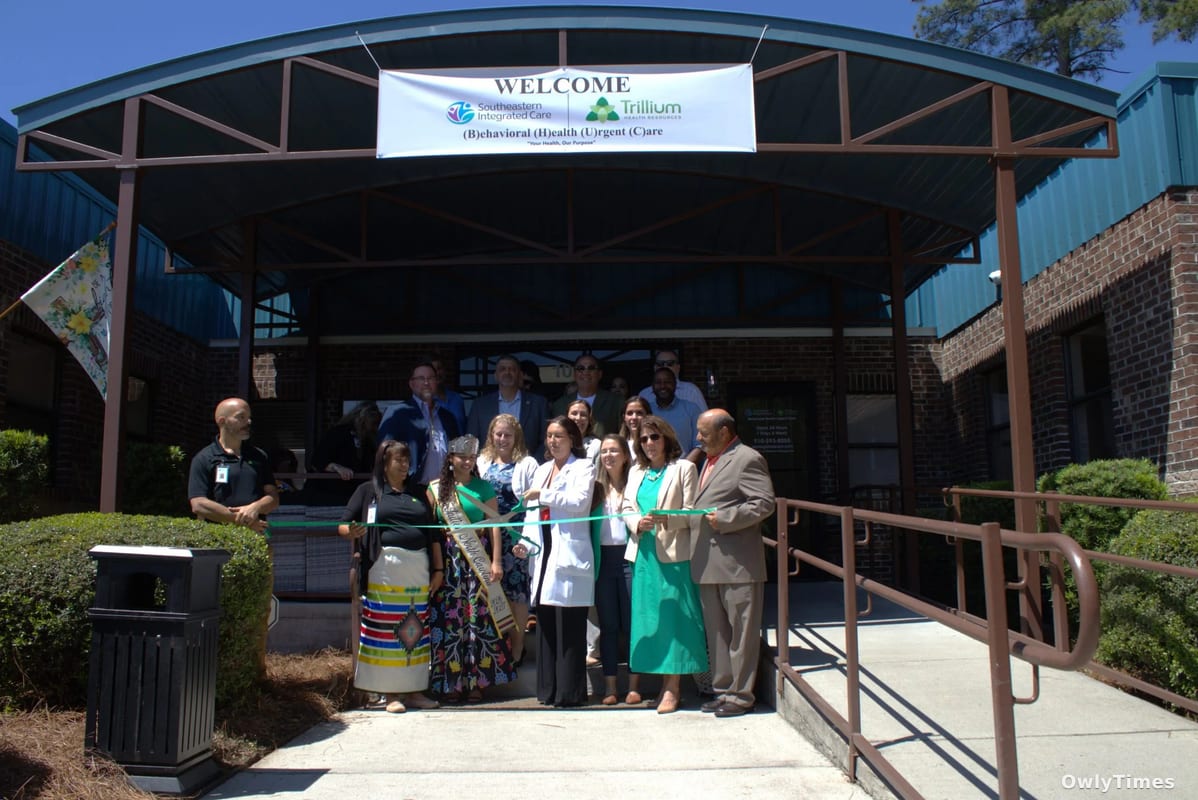

How do we reconcile the acute needs of a population in crisis with a healthcare infrastructure that was never designed to handle the complexity of modern behavioral health? This is the central challenge facing Robeson County, where the launch of the new Southeastern Integrated Care behavioral health urgent care center in Lumberton represents a significant pivot in how communities manage mental health and substance misuse.
When the facility at 105 Farmbrook Drive opens on May 4, it will provide 24-hour care for adults and children over the age of 4. While headlines may focus on the ribbon-cutting ceremony, the true scientific and operational question is whether this model can successfully decouple mental health crises from the emergency room environment. Anthony Grimaldi, chief innovation officer for Southeastern Integrated Care, describes the facility as a sanctuary for those at their "worst moment," but the clinical objective is more granular: to provide rapid triage and assessment within 15 minutes of a patient’s arrival.
The current burden on local emergency departments is substantial. In 2024 alone, the emergency department in Robeson County recorded 919 visits for suicidal ideation, 609 for depression, and 908 for anxiety. According to Renae Taylor, vice president and chief nursing officer at UNC Health Southeastern, these cases are resource-intensive, requiring prolonged evaluation times and multidisciplinary oversight that often exceeds the standard capacity of an ER. By funneling patients toward the new urgent care center through mobile crisis units and partnerships with emergency medical services, the project aims to optimize hospital resources while providing specialized care.
Limitations to this transition must be considered. While the facility is designed to serve up to 12 patients at a time with services ranging from withdrawal management to telehealth, the county faces a systemic shortage of psychiatric and psychological professionals to treat its 119,000 residents. Furthermore, the success of this center as a diversionary tool depends heavily on the integration of legal and clinical workflows. Robeson County Sheriff Burnis Wilkins noted that the facility may help alleviate the strain on the local detention center, which is currently operating over capacity by more than 100 individuals, many of whom have unmet mental health needs.
The initiative is supported by a $2 million investment from Trillium Health Resources and the N.C. Department of Health and Human Services, part of a larger $16 million state legislative allocation. This funding reflects a broader trend; Robeson is one of eight counties to open such a center in the last two years, with five more planned. However, the operational reality of these centers will be tested by the requirements of "Iryna’s Law," which mandates more rigorous mental health assessments for involuntary commitment. While the new center can conduct initial evaluations, the ability of staff to maintain these high-intensity assessments without overextending their own resources remains a key variable.
The next phase of this development will be measured by the facility's ability to reduce psychiatric boarders in local emergency rooms and its impact on jail diversion metrics. As the center begins operations, the effectiveness of its integration with the sheriff’s office’s Substance Abuse Freedom & Education (SAFE) program will serve as a bellwether for whether specialized urgent care can truly replace traditional punitive or emergency-only responses to mental health crises. Monitoring the volume of patients redirected from hospitals to the Farmbrook Drive location will provide the first concrete data on whether this model can scale to meet the complex, persistent needs of the region.





