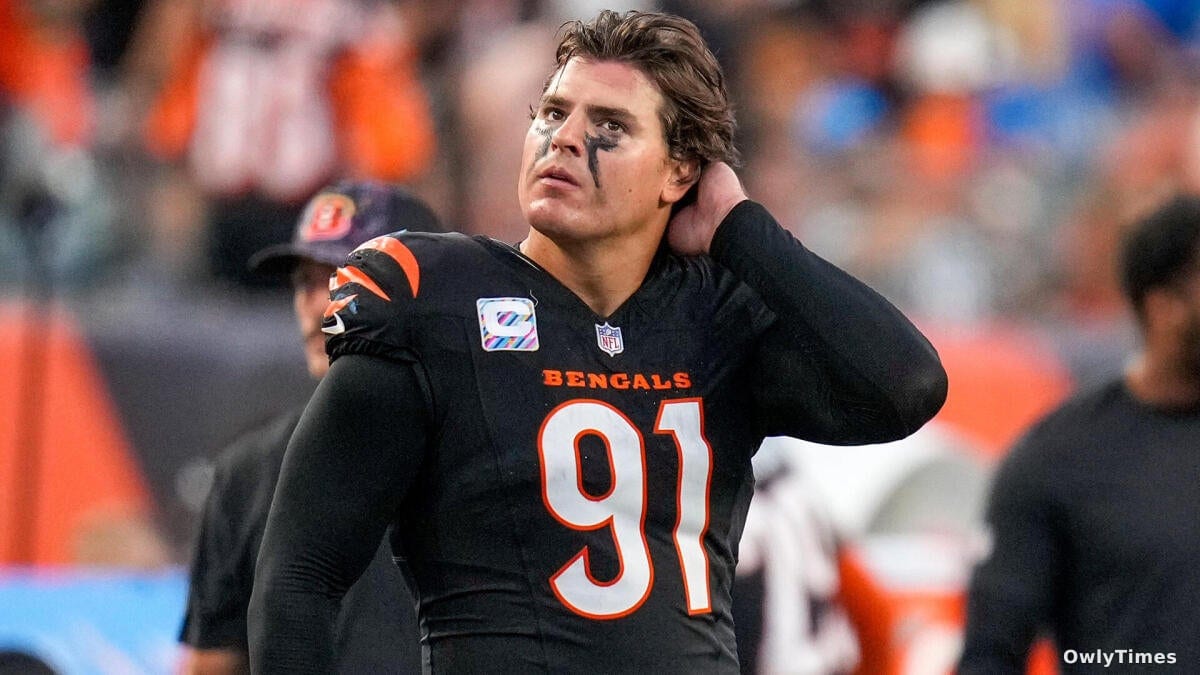

The chipped paint on the Paul Brown Stadium (now Paycor Stadium) bleachers seemed to mirror the state of the Cincinnati Bengals’ defensive line last season: worn down, and desperately in need of repair. While Joe Burrow’s recovery dominated headlines, a quieter, but equally critical, drama unfolded around Trey Hendrickson, the 31-year-old defensive end whose future in Cincinnati hangs in the balance as the NFL franchise tag window opens. This isn’t just about one player’s contract; it’s a microcosm of the league’s shifting power dynamics, the increasing risk aversion surrounding aging stars, and the brutal calculus teams face when balancing immediate needs with long-term financial health.
The Bengals are staring down a familiar crossroads with Hendrickson, eerily reminiscent of the standoff last offseason when he sat out most of training camp seeking a new deal. He ultimately secured a $13 million raise for 2025, but his contract is now expiring, leaving him poised for free agency unless Cincinnati utilizes the franchise tag. The situation feels less like negotiation and more like a holding pattern, a temporary fix for a problem the Bengals haven’t truly addressed. The franchise tag itself, intended as a tool for team control, is increasingly viewed as a strategic gambit – a way to either retain a valuable player or, as we’re seeing more frequently, to inflate their trade value.
Reporting from CBS Sports informs this analysis.
Cincinnati essentially has three paths forward: tag him, tag-and-trade, or let him walk. The franchise tag, projected to be around $27.2 million for defensive ends, will likely cost the Bengals closer to $30.2 million due to a 20% salary bump from his previous earnings. While a hefty sum, it’s arguably a bargain for a player who, when healthy, remains a dominant pass rusher. The Bengals’ defense was demonstrably one of the NFL’s weakest in 2024, finishing 28th in sacks with just 34 – a stark contrast to the league-leading 53 recorded by the Baltimore Ravens. To put that in perspective, the average number of sacks across the league was 42.5. Hendrickson’s presence, even at 31, offers a guaranteed injection of pressure, a commodity increasingly valuable in a league defined by quarterback protection. The question isn’t just can the Bengals afford to tag him, but can they afford not to, given their defensive deficiencies?
However, the specter of Hendrickson’s injury history looms large. He played only seven games last season, raising concerns about his durability. Pete Prisco of CBS Sports HQ bluntly assessed the situation, citing “injury and age” as significant risks. Yet, Prisco also acknowledged the inherent allure of a proven pass rusher, predicting a robust market for Hendrickson regardless. This tension – the desire for immediate impact versus the fear of investing in a declining asset – is a defining characteristic of modern NFL roster building. Teams are increasingly hesitant to commit long-term to players over 30, even those with exceptional resumes. The league’s emphasis on youth and speed, coupled with the rising cost of healthcare for aging players, is reshaping the landscape of player contracts.
The most intriguing, and perhaps most likely, scenario is a tag-and-trade. This strategy, exemplified by the Green Bay Packers’ 2022 trade of Davante Adams to the Las Vegas Raiders after tagging him, allows the Bengals to recoup assets for a player they may not be able to afford to keep long-term. While Pete Prisco expressed skepticism, warning of the risk of being “stuck” with Hendrickson, the Bengals’ recent acquisition of Joe Flacco demonstrates a willingness to make bold, unconventional moves. The NFL Scouting Combine, falling within the two-week tag window, provides a crucial opportunity to gauge Hendrickson’s market value and potentially solicit offers. This isn’t simply about shedding salary cap space; it’s about strategically rebuilding a defense that desperately needs an influx of talent.
Ultimately, the Bengals’ decision will reverberate beyond Cincinnati. It will serve as a bellwether for how the league values veteran pass rushers in an era of increasingly sophisticated offenses and a growing emphasis on defensive versatility. Will teams continue to prioritize proven commodities, even with age-related risks, or will they increasingly favor younger, cheaper alternatives? The Hendrickson saga isn’t just about one player’s future; it’s a test case for the evolving economics and strategic priorities of the NFL. As the Bengals weigh their options, the league will be watching closely, anticipating the signal this decision sends about the future of aging stars in a relentlessly competitive game. Will other teams follow suit, utilizing the tag as a trade chip, or will they attempt to navigate the treacherous waters of long-term contracts with veteran players? That’s the question looming over the next few weeks, and the answer will shape the landscape of NFL roster construction for years to come.