
The current leadership at the Centers for Disease Control and Prevention (CDC) is undertaking a fundamental re-evaluation of established public health strategies, a shift that extends beyond simply responding to emergent threats like measles and into a broader questioning of past pandemic responses. While headlines focus on policy reversals regarding COVID-19 vaccination recommendations, the deeper story is about a deliberate effort to reshape the CDC’s core function – from proactive disease control to a more reactive, and arguably more politically-aligned, approach. This isn’t merely a change in administration; it’s a challenge to the very foundation of evidence-based public health, and the implications are only beginning to unfold.
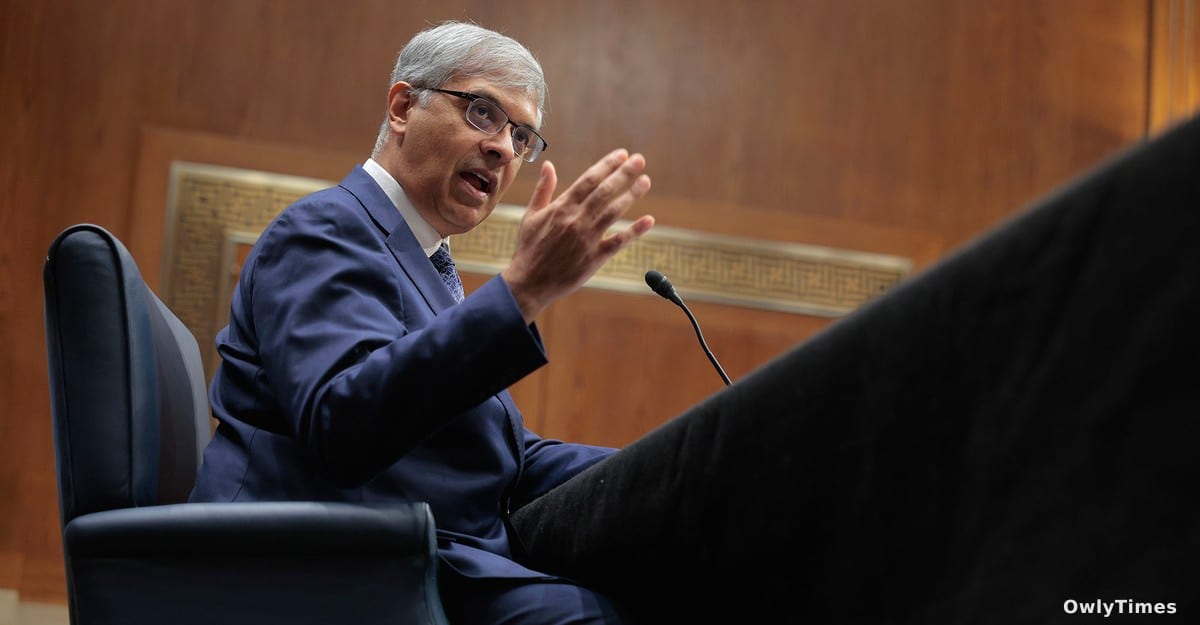
The catalyst for this transformation is the unprecedented dual leadership of Jay Bhattacharya, now simultaneously directing both the National Institutes of Health (NIH) and the CDC. His appointment, following Donald Trump’s return to office, is striking given Bhattacharya’s history. In 2020, as a health economist at Stanford University – without specialized training in infectious disease – he co-authored the Great Barrington Declaration. This document advocated for a “focused protection” strategy, essentially downplaying the severity of COVID-19 and calling for a limited reopening of society before vaccines were available. At the time, the proposal was widely criticized by public health experts as dangerous. Now, that same perspective is at the helm of the nation’s leading health agencies. It’s crucial to understand that the current narrative isn’t simply about revisiting past decisions; it’s about installing a leader who fundamentally disagreed with those decisions in the first place, and empowering him to reshape the institutions accordingly.
This piece references the theatlantic.com report.
Since Robert F. Kennedy Jr. assumed the role of Secretary of the Department of Health and Human Services (HHS), a significant restructuring has been underway at the CDC. Reports indicate thousands of personnel have been removed, and numerous agency leaders have resigned. This isn’t a typical administrative turnover; it’s a deliberate dismantling of institutional knowledge and expertise. Perhaps most dramatically, Kennedy dismissed the entirety of the Advisory Committee on Immunization Practices (ACIP), the independent body responsible for vaccine recommendations, replacing it with a cohort perceived as more skeptical of vaccines. This move isn’t about improving the quality of advice; it’s about ensuring the committee’s recommendations align with a pre-determined ideological stance. Jason Schwartz, a vaccine-policy expert at Yale, notes that several CDC vaccine recommendations have been scaled back “as far as they can go without affecting coverage guarantees” from insurers, suggesting a deliberate effort to weaken public health protections while maintaining a veneer of compliance.
The shift in CDC policy regarding COVID-19 vaccination is a clear illustration of this dynamic. The agency recently moved away from recommending the shot for all Americans, instead advising individuals to consult with their physicians. While presented as a return to individualized medical advice, this change aligns with Bhattacharya’s long-held belief that widespread vaccination policies violated “informed consent rights” and were “dangerous for public health.” He has consistently disputed the overwhelming evidence supporting the safety and efficacy of COVID-19 vaccines, arguing that natural immunity acquired through infection is superior. The current messaging, while not explicitly discouraging vaccination, creates space for doubt and reinforces his previously expressed views. It’s important to note that the change in recommendation hasn’t dramatically altered vaccination rates – uptake was already low – but it serves to legitimize Bhattacharya’s perspective and potentially pave the way for further downgrades to CDC recommendations.
However, the situation with measles presents a more immediate and pressing concern. Despite acknowledging the effectiveness of the measles, mumps, and rubella (MMR) vaccine, Kennedy has simultaneously downplayed its efficacy and exaggerated its harms, declining to directly urge families to immunize their children. This contradictory messaging is particularly troubling given the recent surge in measles cases, which threatens to declare the disease endemic in the United States again. While Bhattacharya has expressed support for the MMR vaccine and even offered to publicly encourage vaccination, his actions haven’t yet translated into concrete policy changes. This inconsistency raises questions about the extent to which his personal views will override the agency’s stated goal of protecting public health. Gigi Gronvall, a health-security expert at Johns Hopkins University, worries that Bhattacharya’s approach to past outbreaks could negatively influence the CDC’s response to current threats.
Limitations to consider are significant. Assessing the long-term impact of these changes requires time and careful analysis. The current situation is fluid, and the extent to which Bhattacharya’s influence will reshape the CDC remains uncertain. Furthermore, attributing causality – directly linking specific policy changes to Bhattacharya’s or Kennedy’s actions – is complex. Political pressures and bureaucratic inertia also play a role. However, the pattern of personnel changes, policy reversals, and rhetorical shifts strongly suggests a deliberate effort to undermine the CDC’s traditional role as a champion of evidence-based public health.
Looking ahead, the next meeting of ACIP, where COVID-19 vaccines will again be discussed with a focus on potential “injuries,” will be a critical moment. The committee’s findings, and the subsequent CDC recommendations, will reveal the extent to which Bhattacharya’s influence has permeated the agency. More broadly, we should be watching for how the CDC responds to the ongoing measles outbreak. Will the agency prioritize aggressive vaccination campaigns and public health messaging, or will it continue to navigate a path of contradictory statements and hesitant action? The answer to that question will tell us whether the CDC is truly committed to protecting public health, or whether it has become a vehicle for validating a pre-determined ideological agenda. The public needs to be vigilant in observing whether the CDC’s actions align with scientific consensus, or if they increasingly reflect a rewriting of public health history to fit a particular narrative.





