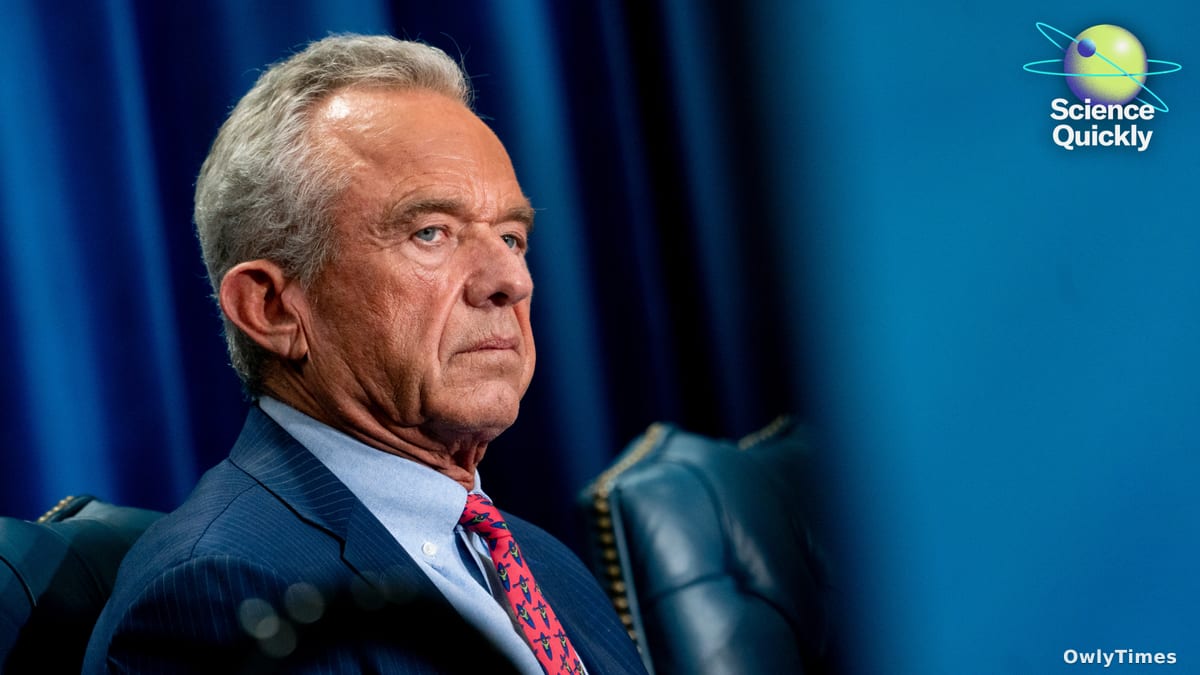

The persistent questioning of established scientific consensus isn’t new, but the current moment feels distinctly precarious. It’s not simply disagreement over data – it’s a fundamental erosion of trust in the institutions designed to safeguard public health, coupled with the resurgence of ideas rooted in a troubling historical context. The appointment of Robert F. Kennedy, Jr. as U.S. Secretary of Health and Human Services (HHS) last February wasn’t merely a personnel change; it signaled a potential shift in the very foundation of how the nation approaches preventative medicine and responds to public health crises. While headlines have focused on specific policy reversals – the CDC’s altered hepatitis B vaccine recommendations, cuts to mRNA vaccine development – the deeper concern lies in the underlying ideology driving these decisions and its echoes of past, discredited theories.
The HHS, overseeing agencies like the Centers for Disease Control and Prevention (CDC) and the Food and Drug Administration (FDA), is fundamentally responsible for protecting the health of the American people. Yet, since assuming his role, Kennedy has repeatedly taken actions that contradict established public health practices. The narrative often presented is one of a champion of “natural immunity” and a critic of “Big Pharma,” but a closer examination reveals a pattern of promoting fringe theories and dismantling decades of scientific progress. For example, the recent outbreaks of measles – with 2,283 confirmed cases in 2025 marking the worst year since 1992 – occurred amidst delayed federal messaging on vaccination, while Kennedy himself suggested ineffective treatments and downplayed the severity of the disease, stating in a March 4, 2025, Fox News interview that “It’s very, very difficult for measles to kill a healthy person.” This statement directly contradicts medical reality, as tragically demonstrated by cases like that of a previously healthy child in Texas who succumbed to the virus. The crucial point here isn’t simply that Kennedy made an inaccurate statement, but that his position actively undermines public health efforts during a preventable outbreak.
Source material: scientificamerican.com.
The concern extends beyond specific diseases. Last August, the HHS cut funding for 22 mRNA vaccine development projects, a move that raises questions about the administration’s commitment to future pandemic preparedness. Simultaneously, Kennedy has amplified unsubstantiated claims, such as the assertion that “seed oils” are uniquely unhealthy – a claim he reiterated in an August 24, 2024, interview on Fox & Friends Weekend, linking them to “all kinds of very, very serious illnesses, including body-wide inflammation.” These pronouncements, while seemingly innocuous, contribute to a broader climate of distrust in scientific expertise and promote unsubstantiated health advice. The focus on “natural” solutions, while appealing to some, often lacks the rigorous testing and evidence-based foundation of modern medicine. This isn’t a rejection of wellness practices per se, but a dangerous elevation of anecdotal evidence over established scientific principles.
Underlying these actions, as highlighted by Beth Mole, a senior health reporter with Ars Technica, is a rejection of germ theory – the foundational concept that microorganisms can cause disease. Kennedy appears to subscribe to “terrain theory,” which posits that illness arises from an imbalance within the body, rather than external pathogens. While acknowledging the existence of germs, he seemingly believes a sufficiently “healthy” individual is immune to infection, a notion that ignores the complexities of immune systems and the vulnerability of certain populations. This perspective, as Mole points out, echoes historical ideas that place blame on the individual for their illness, rather than addressing systemic factors and the role of infectious agents. This isn’t simply a difference of opinion; it’s a fundamental misunderstanding of how disease transmission works and a dangerous justification for neglecting preventative measures. The rhetoric, as historian Robert Johnston of the University of Illinois Chicago notes, has roots in 19th-century movements that prioritized “good living” over medical intervention, often with a strong undercurrent of moral judgment.
Perhaps the most unsettling aspect of this situation is the characterization of Kennedy’s ideology as “soft eugenics.” While the eugenics of the 20th century involved forced sterilization and overt discrimination, this modern iteration operates through the dismantling of public health infrastructure and the removal of access to life-saving interventions like vaccines. The logic, as Mole explains, is that by removing protections for the most vulnerable, “nature” can take its course, allowing only the “genetically superior” to survive. While an HHS spokesperson dismissed this characterization as “absurd,” the policies enacted under Kennedy’s leadership – the weakening of vaccine recommendations, the promotion of unproven treatments, the staffing changes within the CDC and FDA – undeniably create conditions where certain populations are disproportionately at risk. The removal of experienced scientists and their replacement with individuals skeptical of vaccines, as detailed by Dan Vergano, a senior editor at Scientific American, further erodes public trust and undermines the ability of these agencies to effectively respond to public health threats.
It’s crucial to acknowledge the limitations of drawing definitive conclusions at this early stage. The full impact of Kennedy’s policies will unfold over time. However, the initial signs are deeply concerning. The layoffs at the FDA, CDC, and National Institutes of Health (NIH), despite his pledge not to interfere with dedicated staff, represent a significant loss of institutional knowledge and expertise. The appointment of individuals with an “antipathy to vaccines” to key positions within the CDC’s vaccine committee, as Vergano points out, raises serious questions about the impartiality of future vaccine recommendations. These actions, coupled with the promotion of unsubstantiated health theories, create a climate of uncertainty and distrust that could have long-lasting consequences.
The next critical step is to monitor the administration’s response to future public health challenges. Will the lessons learned during the COVID-19 pandemic – the importance of rapid vaccine development, clear public health messaging, and a robust public health infrastructure – be heeded? Or will the current trajectory of dismantling established protocols and embracing fringe theories continue? Specifically, we should watch for how the HHS responds to potential future outbreaks of infectious diseases, and whether it prioritizes evidence-based interventions or continues to promote unproven remedies. The question isn’t simply whether Robert F. Kennedy, Jr. believes in science, but whether his administration will prioritize the health and well-being of the American people over ideological convictions. The answer to that question will determine the future of public health in the United States.





