
Beyond the Ranking: What UNC Gillings’ Continued Success Reveals About the Future of Public Health
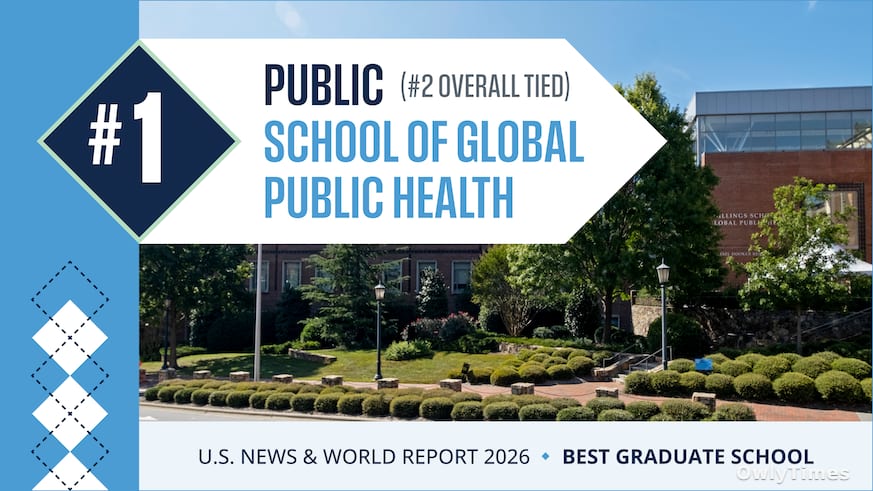
The release of the U.S. News & World Report’s 2026-2027 rankings on April 6 confirms what many in the field have long suspected: the University of North Carolina at Chapel Hill’s Gillings School of Global Public Health remains a dominant force, tied for No. 2 overall and retaining its position as the top-ranked public school of public health in the nation. While headlines focus on the numerical placement, a closer look at this sustained success – the eighth consecutive period holding the No. 2 spot since 1987 – reveals a critical shift in how public health education is evolving, and what qualities are now most valued by those shaping the field. This isn’t simply a story of institutional prestige; it’s a barometer of the challenges and priorities facing public health in a rapidly changing world.
Source material: sph.unc.edu.
The methodology underpinning these rankings deserves careful consideration. U.S. News & World Report relies heavily on peer assessment surveys, gathering opinions from deans, administrators, and faculty at accredited schools. This means the ranking isn’t a direct measure of research output, student success rates, or community impact – though these factors undoubtedly influence perceptions. Instead, it reflects how leaders within public health perceive the quality and direction of different programs. The Gillings School’s consistent high ranking suggests a broad consensus that its approach to training and research is aligned with the evolving needs of the profession. Nancy Messonnier, MD, dean and Bryson Distinguished Professor in Public Health at the Gillings School, rightly frames the recognition as “a reflection of the people who make up the Gillings community and our shared commitment to improving lives through public health.” But what specifically is that commitment, as perceived by her peers?
The strength of Gillings isn’t solely at the school-wide level. The specialty rankings offer a more granular view of its expertise. All ranked disciplines – Environmental Health Sciences, Health Care Management, Health Policy and Management, Social and Behavioral Sciences, Biostatistics, and Epidemiology – landed within the top five nationally. Notably, Environmental Health Sciences secured the No. 1 position, while Health Care Management, Health Policy and Management, and Social and Behavioral Sciences all improved their standing from the previous year. This upward trajectory in areas like health policy and social behavior is particularly significant. For decades, public health was often framed as a primarily biomedical endeavor. The rising prominence of these disciplines signals a growing recognition that addressing health inequities and complex public health crises requires a deeper understanding of social determinants, policy interventions, and community engagement.
However, it’s crucial to acknowledge the limitations of relying so heavily on peer review. The system is susceptible to existing biases within the field, potentially favoring established institutions and research paradigms. A school with a radical, innovative approach might struggle to gain recognition if it challenges conventional wisdom. Furthermore, the survey doesn’t capture the full spectrum of public health work – the vital contributions of local health departments, community-based organizations, and frontline public health workers are largely absent from this assessment. The Gillings School’s success doesn’t negate the valuable work happening at other institutions, nor does it guarantee that its graduates are uniquely prepared to address all public health challenges.
Looking ahead, the next critical research step for the Gillings School – and the field as a whole – lies in translating these rankings into tangible improvements in population health. Will the school leverage its position to advocate for increased funding for public health infrastructure, particularly in underserved communities? Will it prioritize research that addresses the root causes of health disparities, rather than simply treating the symptoms? The continued emphasis on interdisciplinary collaboration, evidenced by the rising rankings of programs like Social and Behavioral Sciences, is a promising sign. But the true test of Gillings’ leadership will be whether it can translate its academic success into measurable progress on pressing public health issues – and whether other institutions will follow suit, adapting their programs to meet the evolving demands of a world facing increasingly complex health threats. Watch for initiatives emerging from Chapel Hill in the next two years that specifically address the integration of climate change resilience into public health curricula and practice; that will be a key indicator of whether this ranking translates into real-world impact.