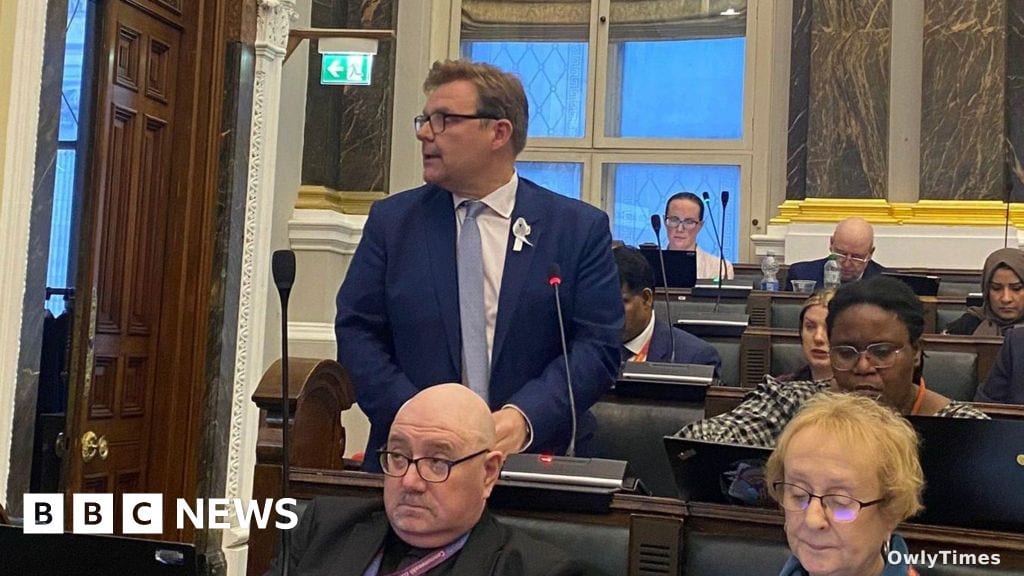

The recent budget debate within Birmingham City Council transcended mere financial figures, quickly escalating into a high-stakes battle for narrative control over the city’s very identity. The strategic calculus for both sides was clear: to define Birmingham’s present and future reputation in a manner that serves their immediate political objectives, particularly as the council grapples with the significant challenge of balancing its budget for the first time in three years. This rhetorical clash, pitting "thriving powerhouse" against "cesspit of Europe," highlights a fundamental tension between political messaging and the lived realities of citizens.
The Politics of Reputation in a City Under Strain
Council Leader John Cotton, representing the Labour group, opened by framing Birmingham as a "thriving powerhouse," a city ripe for millions in investment and regeneration projects. His budget proposals were presented as the essential mechanism to put the city "back on track." This narrative is a classic political maneuver designed to instill confidence, reassure stakeholders, and project an image of competence and forward momentum, especially crucial when a local authority faces financial difficulties. The implicit benefit for Cotton and his Labour colleagues is the preservation of political capital and public trust, essential for governing and attracting external investment. To admit to significant decline without a strong counter-narrative would be to concede ground to critics and potentially deter economic growth.
Drawn from the BBC.
Conversely, Councillor Jane Jones, now an independent after departing the Labour group, launched a scathing attack, declaring Birmingham the "cesspit of Europe" and a "laughing stock" on the world stage. Her rhetoric, sharp and provocative, serves a distinct strategic purpose: to delegitimize the current administration and highlight perceived failures. By presenting such a bleak picture, Jones aims to tap into public frustration and discontent, positioning herself as an unvarnished voice for those who feel the city's challenges are being downplayed. The "who benefits" in this instance is anyone seeking to undermine the incumbent Labour leadership, including opposition parties or disaffected former members, by forcing an acknowledgment of the severity of the city's problems.
Echoes of Past Urban Struggles
This fierce contention over a city's character is not without historical precedent. Throughout history, urban centers facing economic decline or significant social upheaval have often seen their reputations become battlegrounds for political factions. From the industrial cities of the American Rust Belt in the 1970s and 80s to British cities like Liverpool during periods of severe austerity, politicians have either rallied around narratives of resilience and potential or decried decay to demand intervention and accountability. The underlying dynamic remains constant: control the narrative, control the agenda. In Birmingham's case, with the council having failed to balance its budget for three years, the stakes are particularly high. The inability to pass financial plans during the initial meeting on Tuesday underscores the fragility of the political consensus and the depth of the fiscal challenge.
Residents Offer a Nuanced Reality
Amidst this political posturing, the voices of Birmingham residents offer a more nuanced, and perhaps more authentic, perspective. Vicky Fisher, who has lived in areas like Small Heath, Sparkbrook, and Alum Rock, rejected the political extremes. "I think Birmingham is what you make it," she stated, emphasizing community action over political pronouncements. Her example of volunteer litter pickers highlights the grassroots efforts that often define local identity, asserting that "Don't let the politics say what our city is, allow it to be what you want for your area." This suggests that for many citizens, the city's reputation is forged from daily experiences and local engagement, rather than top-down political branding.
Similarly, Isaac Samuel acknowledged the city's "potential" while candidly admitting, "parts of the city are a cesspit. There's quite a lot that has been ignored for a long time." His observation that "the stuff that's not been done stands out more" directly challenges Cotton's "thriving powerhouse" image, aligning more closely with Jones's critique, yet without her extreme rhetoric. These resident perspectives reveal that while citizens may share some of the concerns articulated by the opposition, they also possess a deep-seated connection to their city and an optimism that transcends partisan divides.
The Next Chess Move on the Council Floor
The immediate political chess move to watch will unfold before 11 March, when a further meeting is scheduled to set the budget. The Labour group's inability to pass financial plans previously suggests either a lack of internal consensus or insufficient support across the council. Will Leader Cotton soften his rhetoric to secure broader backing, or will he double down on his positive framing, attempting to rally support through sheer force of optimism? Conversely, will Councillor Jones and other opposition voices maintain their sharp critique, aiming to extract concessions or further expose the council's vulnerabilities? The battle for Birmingham's reputation, initially waged in words, will soon translate into concrete decisions that will define the city's fiscal path and, perhaps, its true identity for years to come.





