
The escalating crisis at the US-Mexico border isn’t simply a matter of border security or immigration policy; it’s a meticulously engineered public health catastrophe. While headlines focus on record numbers of apprehensions and political battles over wall construction, a quieter, more insidious story unfolds in the emergency rooms and makeshift clinics along the border: a surge in deliberately inflicted trauma. The current approach to border enforcement isn’t just failing to deter migration – it’s actively causing a humanitarian crisis, and the medical community is increasingly recognizing this as a systemic issue demanding a response beyond treating individual injuries. This isn’t about accidental harm; mounting evidence suggests a calculated strategy of deterrence through pain and suffering.
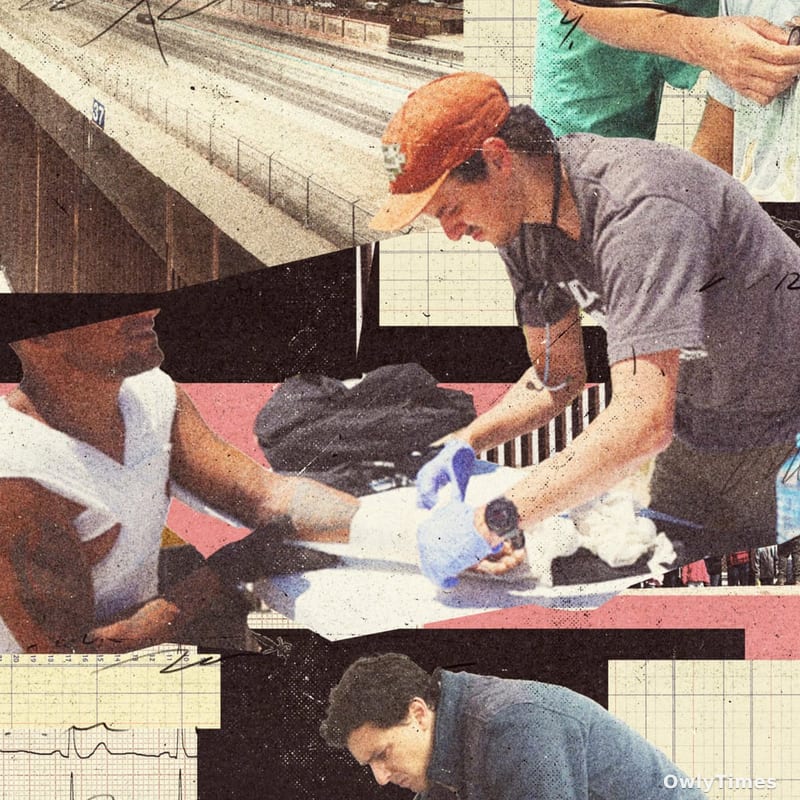
For Dr. Brian Elmore, his awakening to this reality began in 2022, while completing his medical residency at the region’s only level 1 trauma center in El Paso, Texas. The city, historically known as the “Ellis Island of the Southwest” for generations of immigrants arriving from Latin America and beyond, found itself at the epicenter of a new kind of border crisis. While the hospital provided emergency care to all, a stark disparity emerged just a few blocks away in Ciudad Juárez, where displaced migrants and refugees faced limited or no access to medical attention. This inequity, he felt, was not accidental. He co-founded the Hope Border Institute to address the needs in Juárez, witnessing firsthand the brutal consequences of increasingly restrictive border policies.
The injuries Elmore and his colleagues began to see weren’t typical accident cases. People were falling from the increasingly high border wall, fracturing legs, severing spines, and sustaining traumatic brain injuries. They were drowning in the Rio Grande canals, suffering deep lacerations from razor wire, and succumbing to dehydration and heat exhaustion in the surrounding desert. From early 2023 to August 2024, the El Paso sector, not historically considered one of the most dangerous crossing points, became the deadliest section of the deadliest land migration route in the world. Trauma doctors began describing the situation as a public health crisis, directly linking the severity of injuries to the US policy of deterrence – a strategy first deployed in El Paso under President Bill Clinton with Operation Hold the Line, designed to funnel migrants into the most dangerous environments possible.
Original reporting: The Guardian.
The logic, as chillingly revealed by former Border Patrol chief Rodney Scott in 2019, isn’t about preventing crossings, but about making them so dangerous that people won’t attempt them. During a presentation to migrant advocacy groups, Scott openly discussed psychological research indicating that a 30-foot wall increased the likelihood of falls and injuries. He framed this as an intentional design feature. While Border Patrol now claims the idea of intentionally designing barriers to cause injury is “blatantly false,” the evidence – and the resulting surge in trauma cases – paints a different picture. Jay Doucet, a trauma surgeon at UC San Diego Health, succinctly captured the reality: “Every system is perfectly designed to get the results it gets.” The collateral cost of the wall, including $72 million spent by San Diego hospitals over a two-year period and $22.2 million by University Medical Center in El Paso, underscores the financial burden of a policy prioritizing deterrence over human life.
The political response has been to double down on enforcement. The “One Big Beautiful Bill Act,” passed last July, allocates $170 billion to immigration enforcement, including $46.5 billion to complete the wall and roughly $30 billion over four years to supercharge Immigration and Customs Enforcement (ICE) efforts. Ironically, migrant arrivals had already begun to decline before the return of stricter policies, and the increased enforcement has led to fewer border-related injuries – but at the cost of pushing migrants into even more dangerous situations and creating a climate of fear. The consequences extend beyond physical trauma. Dr. Elmore witnessed firsthand the psychological toll on patients, many of whom had already endured unimaginable hardships before reaching the border, only to face further violence and desperation.
The situation has created a profound ethical dilemma for healthcare providers. As Elmore discovered, even advocating for patient care can carry risks. After publicly criticizing the governor of Texas’s border crackdown, he received a warning from hospital administrators to be cautious about his public statements. This chilling effect silences crucial voices and hinders the ability of medical professionals to address the root causes of the crisis. The focus has shifted from providing care to navigating a politically charged landscape where even basic medical treatment can be viewed with suspicion.
As of mid-2025, migrant crossings had decreased, and with them, the immediate surge in severe injuries. However, the underlying problem remains. Dr. Elmore, now pursuing a fellowship, believes the next step is to empower the next generation of medical professionals to recognize the political pathologies driving these injuries and to advocate for their patients beyond the confines of the exam room. He hopes they will bear witness to the suffering and challenge the policies that perpetuate it. But the question remains: will policymakers listen? And, more importantly, will they acknowledge that the current approach to border enforcement isn’t just inhumane, but a self-inflicted public health crisis? We should all be watching for a shift in the narrative – a move away from punitive measures and towards a compassionate, evidence-based approach that prioritizes human life and dignity. The alternative is a continued cycle of preventable suffering and a deepening moral failure.





