
$2.2 Million Question: Boston’s Participatory Budget Faces a Fiscal Reckoning
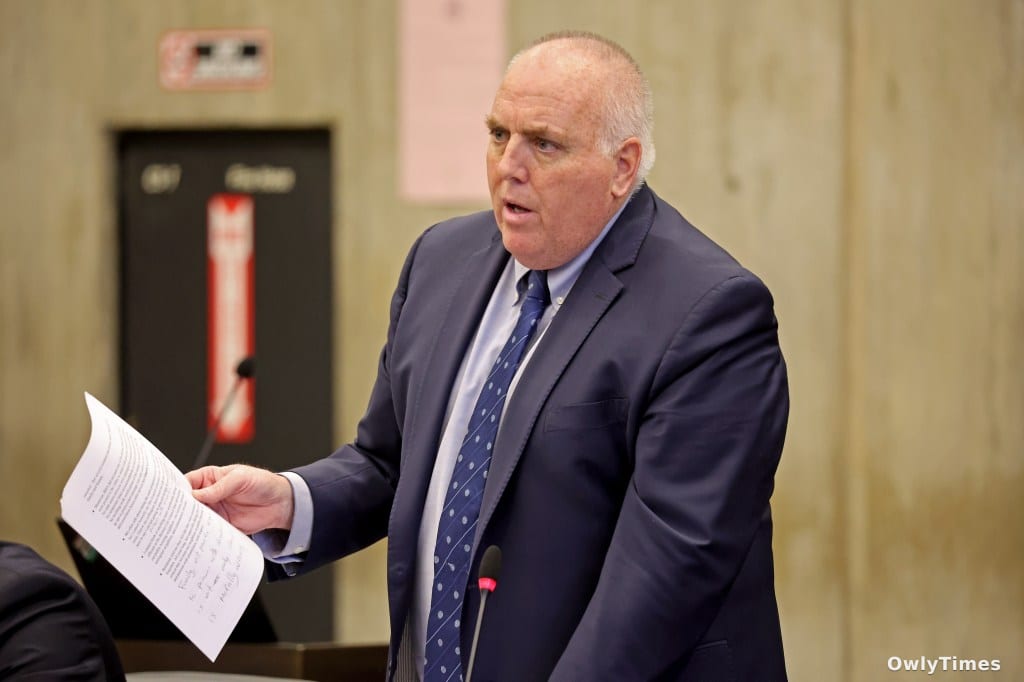
A $2.2 million allocation for Boston’s participatory budgeting program is now squarely in the crosshairs, as City Councilor Ed Flynn pushes for a reduction to as little as $100,000. This isn’t simply a debate over budget line items; it’s a collision between a progressive vision of direct democracy and the stark realities of a shrinking municipal revenue base. Follow the money, and the story reveals a city grappling with declining commercial property values – a 12.7% drop in assessed value in 2023 alone – forcing Mayor Michelle Wu to mandate 2% budget cuts across all departments. Flynn’s proposal, while framed as fiscal responsibility, is fundamentally a challenge to the very premise of allowing residents, including those as young as 11 and regardless of citizenship status, to directly decide how public funds are spent.
The timing is critical. Mayor Wu recently diverted nearly 30% of the FY26 participatory budget – approximately $600,000 – towards initiatives supporting undocumented immigrants, specifically a $400,000 legal defense fund and $300,000 for career pathways programs. This move, while aligning with the Wu administration’s stated commitment to inclusivity, has become a focal point for critics like Flynn, who argue that limited resources should be prioritized differently during a financial downturn. To put this in perspective, the $600,000 allocated to immigrant support represents 27% of the entire participatory budget, exceeding the $500,000 dedicated to neighborhood fresh food access – a program with broader appeal across the city’s diverse demographics. Flynn’s argument isn’t simply about the dollar amount, but about the perceived priorities embedded within the allocation.
The participatory budgeting process itself is relatively new to Boston, approved by a ballot measure in 2021 and formalized by a city ordinance in 2023. This means the city is legally bound to continue the program, despite Flynn’s objections. However, the scale of the program – and therefore its impact – is very much open to negotiation. Community groups are already advocating for a significant expansion, petitioning for 1% of the entire city budget, roughly $40 million, to be allocated through participatory budgeting. This represents a nearly 18-fold increase over the current $2.2 million, a demand that appears increasingly unrealistic given the city’s financial constraints. The tension here is palpable: a grassroots movement pushing for greater democratic control versus a pragmatic need for fiscal austerity.
Source material: bostonherald.com.
Flynn’s concerns extend beyond the financial implications. He explicitly questions the judgment of allowing children to influence budgetary decisions, framing it as a matter of accountability. While this argument has been dismissed as “politically incorrect” by some, it taps into a broader debate about the maturity and capacity of young citizens to engage with complex financial issues. It’s a point that resonates with a segment of the electorate concerned about responsible governance. The city’s overall budget for FY26 totaled $3.75 billion, meaning the participatory budget, even at $2.2 million, represents less than 0.1% of total spending. However, the symbolic importance of this allocation – and the principle of direct citizen involvement – far outweighs its numerical value.
What this means for your wallet: Boston residents should watch closely how the FY27 budget negotiations unfold. The outcome will not only determine the future of participatory budgeting but also signal the Wu administration’s willingness to compromise on its progressive agenda in the face of economic headwinds. Specifically, monitor whether the city explores alternative funding sources for immigrant support programs if Flynn succeeds in significantly reducing the participatory budget allocation. The question isn’t just if the budget will be cut, but where those cuts will fall, and what message that sends about Boston’s priorities.





