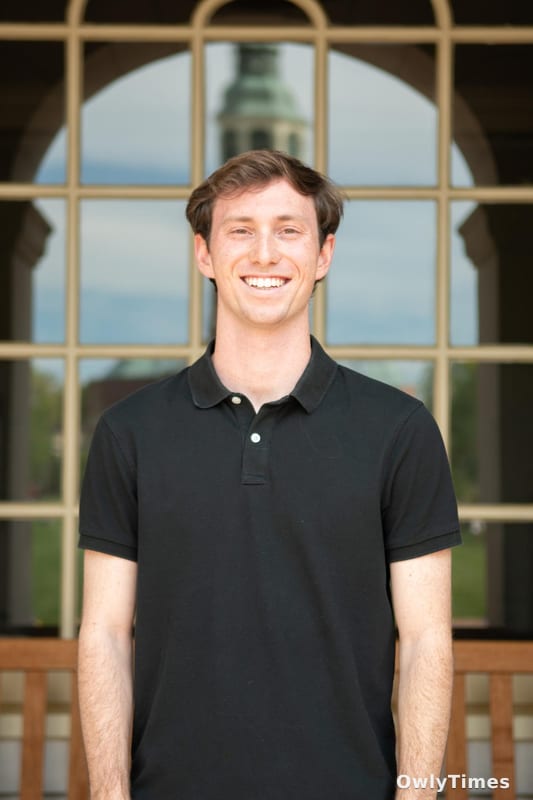

The transition from undergraduate studies to specialized doctoral programs is often viewed through the lens of academic metrics, yet the true preparation for high-level clinical research frequently happens in the spaces between disciplines. As Caleb Walsh prepares to depart for Boston University—a move occurring just eight days after his graduation—he represents a growing cohort of students leveraging interdisciplinary scholarship to address complex health challenges. Walsh is set to enroll in a dual program to pursue a Doctor of Physical Therapy and a PhD in Rehabilitation, a trajectory that requires more than just textbook knowledge; it demands the synthesis of clinical observation and human movement science.
Bridging the Gap Between Movement and Medicine
Walsh’s academic path at Wake Forest University provides a unique case study in how undergraduate research can influence long-term clinical outcomes. Initially, the institution was not on his radar, and as a student from Northern Virginia, he entered a campus where he lacked pre-existing social ties. However, he utilized this environment to bridge the divide between the Dance Department and the Health and Exercise Science (HES) Department. By operating at this intersection, Walsh focused his research on adults’ perceived exertion and enjoyment during dance and walking, aiming to translate these findings into strategies that encourage older adults to engage in consistent physical activity.
What these findings represent is a shift in how we approach geriatric physical therapy. While headlines often prioritize high-tech interventions or pharmacological breakthroughs, the underlying science of patient compliance and enjoyment is arguably more critical for long-term health. Walsh’s work under Associate Professor Jason Fanning suggests that by quantifying how dance influences the perception of exertion, practitioners can design more effective, socially engaging rehabilitation programs. This approach moves beyond the mechanical repair of injuries to focus on the sustainability of movement in aging populations.
The Reality of Rigorous Academic Preparation
It is important to distinguish between the excitement of a student’s success and the systemic demands of the programs they enter. Walsh identifies his coursework, specifically Anatomy, as one of the most challenging experiences of his undergraduate career. While he views this difficulty as a foundational benefit—noting that the struggle of mastering complex material made his subsequent roles as a teaching assistant more meaningful—this serves as a reminder that the pipeline to doctoral-level rehabilitation science is intentionally rigorous. The mentorship provided by Gary Miller, the HES department chair, emphasizes the necessity of human connection in this process, with Walsh citing their informal walks as a formative part of his development.
Limitations to Consider in Interdisciplinary Research
While Walsh’s integration of dance and physical therapy offers a promising framework, it is crucial to remain cautious about the scalability of such research. Interdisciplinary studies that rely on behavioral metrics, such as "enjoyment" or "perceived exertion," face inherent challenges in standardization. Because these studies are highly dependent on the specific participant demographic and the nature of the activity, the transition from a controlled university setting to a clinical practice at a large research institution like Boston University will test the robustness of his models. The success of these methods will depend on whether they can be replicated across broader, more diverse patient populations outside of an academic dance studio.
As Walsh prepares to move to Massachusetts, his progress serves as a measurable indicator of how undergraduate interdisciplinary training translates into clinical aptitude. The next readings of his research output during his dual-degree program will show whether the intersectional approach developed at Wake Forest can effectively influence standardized rehabilitation outcomes in a clinical setting. For those tracking the evolution of physical therapy, Walsh’s journey highlights that the future of the field may rely as much on the arts as it does on traditional physiological sciences.





