
Is the future of conservation hiding in a farmer’s field? We’re obsessing over AI-powered climate models and satellite imagery, pouring billions into “smart” solutions, while a quiet crisis unfolds right under our noses – and sometimes, directly in the path of a tractor. The real story here isn’t about flashy tech; it’s about the painstaking, boots-on-the-ground work of understanding how a creature that’s been around for millennia is quietly disappearing, and whether we can even notice before it’s too late.
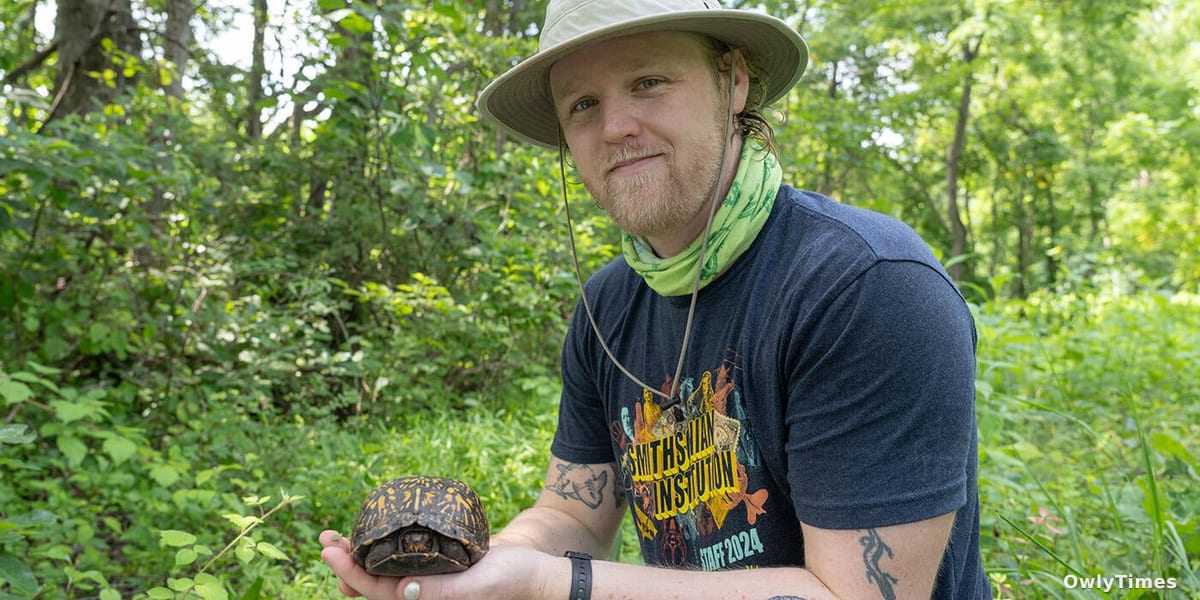
That’s the challenge facing Maxwell Earle, a researcher at the Smithsonian’s Turtle Conservation Ecology Lab. Earle isn’t tracking carbon emissions; he’s tracking Eastern box turtles – those charming, dome-shelled reptiles with the unique ability to completely seal themselves inside their shells. These turtles, found throughout the eastern woodlands of the United States, aren’t just a nostalgic symbol of a vanishing wilderness. They’re a surprisingly sensitive indicator of environmental health, and their decline is a warning sign we can’t afford to ignore. Eastern box turtles live surprisingly long lives, averaging 25 to 50 years, with some individuals exceeding a century, and spend over 90% of their time on land, making them particularly vulnerable to habitat loss and human activity.
The problem, as Earle explains, is simply finding them. “They’re masters of camouflage,” he says, “which makes them hard for predators to spot and even harder for scientists to study.” This isn’t a case of needing more data; it’s a case of needing to find the animals to get the data. In 2023, the Northeastern Box Turtle Working Group’s status assessment confirmed what many researchers suspected: populations are declining across the Northeast, but the reasons remain frustratingly unclear. What we do know – that reproduction rates aren’t keeping pace with losses from poaching, vehicle strikes, and, crucially, agricultural practices – paints a grim picture.
Earle’s approach is a blend of old-fashioned fieldwork and cutting-edge technology. Forget drones and AI; he’s relying on radio telemetry and GPS loggers – essentially, tiny tracking devices glued to the turtles’ shells. The VHF transmitters allow him to physically locate turtles within a half-kilometer radius, while the GPS loggers record their movements hourly, providing a detailed map of their home ranges. This data, combined with climate information from on-site weather stations, is revealing crucial insights into how turtles interact with their environment, particularly within the “working landscapes” of Virginia farms and pastureland. It’s a far cry from the pristine wilderness often associated with conservation, but Earle emphasizes that these agricultural areas may be among the last strongholds for box turtles in the region.
Source material: nationalzoo.si.edu.
A typical day for Earle involves hours of methodical searching within 250-acre plots, meticulously documenting each turtle encountered. The goal isn’t just to track individuals, but to estimate overall population size through recapture rates. It’s slow, painstaking work – sometimes a turtle is found in minutes, other times it takes hours. But the data is invaluable. It allows Earle and his team to advise landowners on how to minimize harm to turtles, suggesting optimal times for mowing or brush hogging to avoid accidental injuries. This isn’t about imposing restrictions on farmers; it’s about finding practical solutions that benefit both agriculture and conservation.
The Smithsonian isn’t working in isolation. Earle collaborates with organizations like the Turtle Survival Alliance, the Clifton Institute, and the Virginia Department of Wildlife Resources, creating what he describes as “one big conservation community.” This collaborative approach is essential, bridging the gap between scientific research and on-the-ground action. The Turtle Survival Alliance, for example, is contributing to turtle genomics research, while the Clifton Institute provides a dedicated technician to assist with fieldwork. The Virginia Working Landscapes program focuses on translating scientific findings into actionable best management practices for landowners.
The good news, according to Earle, is that many landowners are genuinely invested in protecting local wildlife. “There are a lot of conservation-minded folks in Virginia,” he says, “and most farmers and landowners don’t want to hurt turtles.” This willingness to engage is a critical factor in the success of these conservation efforts. But it’s not enough to rely on goodwill. We need to proactively identify and protect key turtle habitats, and that requires a deeper understanding of their movements and behaviors.
So what happens next? Expect to see a rise in hyper-local conservation alerts – think “high turtle movement day, don’t mow” notifications sent directly to landowners. More importantly, watch for a shift in agricultural practices, driven not by regulation, but by a growing awareness of the ecological value of these often-overlooked creatures. The future of the Eastern box turtle, and perhaps many other species, hinges on our ability to connect the dots between scientific research, landowner stewardship, and the everyday choices we make about how we use the land. If we fail to do so, we risk losing a piece of our natural heritage, not with a bang, but with the quiet disappearance of a turtle in a field.