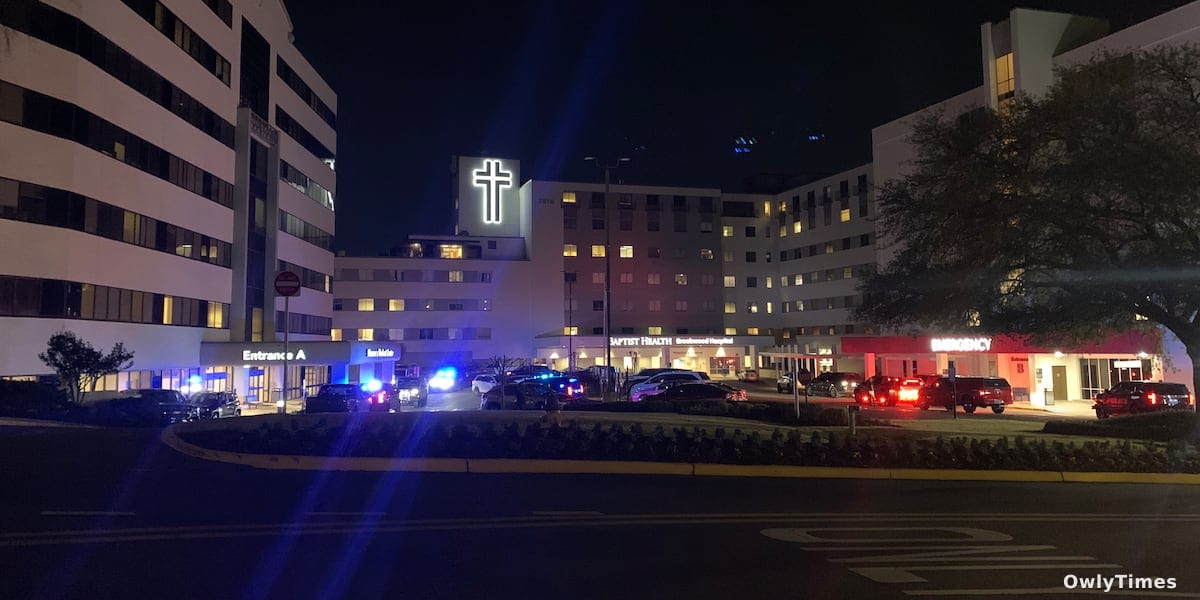

The immediate aftermath of a tragic event often focuses on what happened – a shooting, in this case – but rarely addresses where it happened, and why that location amplifies the impact. Sunday night’s shooting at Baptist Health Brookwood Hospital in Homewood, Alabama, resulting in the deaths of a man and a woman, isn’t simply a crime statistic; it’s a stark violation of a space explicitly designed for healing, a breach of trust with profound implications for both patients and healthcare workers. While initial reports from the Homewood Police Department indicate a likely murder-suicide, the event compels us to consider the escalating challenges of security within healthcare facilities, and the psychological toll such incidents take on those dedicated to providing care.
A Breach of Sanctuary: The Hospital as a Vulnerable Space
The call came in at 9:25 p.m. on Sunday, reporting shots fired. Homewood Police officers arriving at Baptist Health Brookwood Hospital discovered a man and a woman deceased from gunshot wounds. Preliminary investigations suggest the incident was a murder-suicide, a classification that, while offering a narrative closure, doesn’t diminish the trauma. What’s crucial to understand is that hospitals, unlike many other public spaces, operate under an inherent expectation of safety. Schools implement active shooter drills, concert venues increase security screenings, but hospitals have historically relied on a different paradigm – one of open access for those in need. This accessibility, while vital for emergency care, creates a vulnerability that is increasingly at odds with the realities of public safety. Nationally, incidents of violence against healthcare workers have been on the rise, with the American Hospital Association reporting a 62% increase in reported assaults between 2012 and 2018 – a trend that, while data is still being compiled, appears to be continuing. This isn’t simply about random acts of violence; it often involves individuals experiencing mental health crises, or those with grievances against the healthcare system itself.
Source material: wbrc.com.
Beyond the Immediate Investigation: Understanding the “Why”
The Homewood Police Department’s investigation is, understandably, focused on establishing the sequence of events and identifying the individuals involved. However, the focus shouldn’t end there. The question of why this happened within the walls of a hospital is paramount. Was there a history of domestic violence? Were mental health services readily available to the individuals involved? Was there any indication of escalating distress that could have been intercepted? These are questions that extend beyond the scope of a criminal investigation and require a broader public health response. Baptist Health Brookwood Hospital released a statement acknowledging the incident, but offered no details beyond confirming the shooting occurred. This is typical in the immediate aftermath, prioritizing patient privacy and cooperating with law enforcement. However, transparency regarding security protocols and a commitment to addressing the underlying factors that contribute to such tragedies will be essential in rebuilding trust. It’s also important to note that the hospital, like many across the country, likely faces budgetary constraints that impact security staffing and technology.
The Ripple Effect: Trauma for Healthcare Professionals
The impact of this shooting extends far beyond the immediate victims and their families. Healthcare workers – doctors, nurses, technicians, support staff – are already operating under immense stress, exacerbated by the ongoing pressures of the pandemic and chronic understaffing. To experience a violent event within their workplace, a place they associate with care and compassion, can be profoundly traumatizing. Studies have shown that healthcare professionals exposed to workplace violence are at increased risk of burnout, post-traumatic stress disorder (PTSD), and decreased job satisfaction. While hospitals often offer employee assistance programs, these resources are frequently underutilized due to stigma or lack of awareness. The long-term consequences of this event on the Brookwood Hospital staff must be addressed proactively, with comprehensive mental health support and a renewed focus on workplace safety. The hospital’s statement did not address support for its employees, a notable omission given the circumstances.
Limitations to Consider: The Complexity of Prevention
Attributing blame or proposing simplistic solutions would be a disservice to the complexity of this situation. While increased security measures – metal detectors, armed guards – might seem like an obvious response, they can also create a more hostile and intimidating environment, potentially deterring patients from seeking necessary care. Furthermore, such measures are often reactive rather than preventative. The root causes of violence, including mental health issues, socioeconomic disparities, and access to firearms, require systemic solutions that extend far beyond the walls of any single hospital. It’s also crucial to avoid stigmatizing individuals with mental illness, as the vast majority are not violent. The challenge lies in identifying and supporting those at risk before they reach a point of crisis.
Looking Ahead: A Call for Proactive Security and Mental Health Integration
The investigation into the shooting at Baptist Health Brookwood Hospital will undoubtedly yield more details in the coming days. However, the immediate aftermath should serve as a catalyst for a broader conversation about hospital security and mental health integration. What steps will Baptist Health take to review and enhance its security protocols? Will the state of Alabama invest in increased funding for mental health services and crisis intervention teams? And, perhaps most importantly, how can we, as a society, create a culture that prioritizes both access to care and the safety of those who provide it? The question isn’t simply whether another tragedy like this will happen, but when, and what we will do to prevent it. We need to watch for legislative action regarding hospital security funding, and, crucially, for hospitals to publicly detail their plans for supporting staff mental health in the wake of traumatic events. The silence following these incidents is as damaging as the events themselves.





