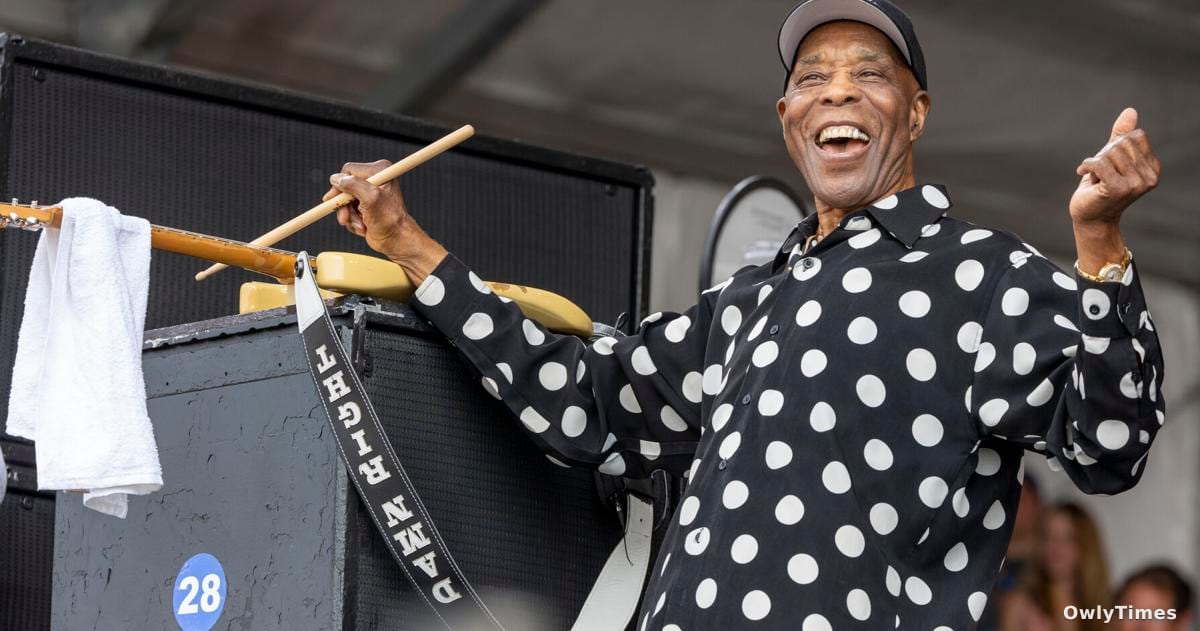

The air hung thick with humidity and the scent of jambalaya at the New Orleans Jazz & Heritage Festival last May, but it wasn’t the headliners drawing the most knowing glances. It was Buddy Guy, 89 years young, casually picking out a Jimi Hendrix tune on a drum stick – a gesture that felt less like a novelty and more like a passing of a torch, a visual echo of the lineage that’s suddenly front and center in American pop culture. That moment, captured by photographer Chris Granger, feels particularly prescient now, as Ryan Coogler’s “Sinners” barrels toward the Academy Awards with a record-breaking 16 nominations.
Beyond the Vampire Thrills: A Blues Renaissance
“Sinners,” a $369 million worldwide box office success, isn’t just a horror film; it’s a history lesson disguised as a vampire thriller. Set in the juke joints of the 1930s South, the film doesn’t just use the blues – it centers its narrative around it, recognizing the genre as the wellspring from which so much of modern music flows. This isn’t a new argument, of course. Scholars have long traced the roots of rock ‘n’ roll, soul, R&B, rap, and even country back to these humble, often segregated spaces. But what’s different now is the scale of the recognition. “Sinners” isn’t preaching to the choir; it’s introducing a mainstream audience to the architects of American sound. The film’s seamless transition from 1930s blues to visions of future musical movements – rock, rap, breakdancing, funk – isn’t just a stylistic choice, it’s a statement about the enduring power of the blues as a foundational force.
This article draws on reporting from NOLA.com.
Louisiana Legends Get Their Due
The film’s impact extends beyond broad cultural acknowledgment. It’s a moment of overdue recognition for Louisiana’s blues pioneers. Buddy Guy, born in Pointe Coupee Parish in 1936, isn’t just in the film as an aging “Preacher Boy” Moore; he is the embodiment of the era. A Grammy Lifetime Achievement Award winner and Kennedy Center honoree, Guy’s influence on guitar gods like Hendrix, Eric Clapton, and Stevie Ray Vaughan is well-documented, yet often overshadowed by the artists who followed. Similarly, Bobby Rush, 92, a native of Homer, Louisiana, didn’t appear on screen, but his harmonica breathes life into the character “Delta Slim.” The inclusion of the late harmonica legend Little Walter of Marksville, through the performance of his original song “Juke” (now boasting over 2.2 million Spotify streams and 750,000 YouTube plays), is a particularly poignant tribute. Walter’s tragically short life – he died at 37 – underscores the fragility of these musical legacies and the importance of preserving them.
The Staying Power of the Bluesmen
What’s striking isn’t just that these musicians are being celebrated in a blockbuster film, but that they’re still actively creating. While “Sinners” resurrects the past, Buddy Guy is currently preparing for an Australian tour, and Bobby Rush maintains a relentless performance schedule, from the French Quarter Festival in New Orleans to the Ribs & Blues Festival in the Netherlands. This isn’t a nostalgic revival; it’s a testament to the enduring vitality of the blues and the artists who keep it alive. It’s a direct rebuke to the industry’s tendency to relegate elder statesmen to the sidelines, a pattern that often overlooks the continued relevance and creative energy of seasoned performers. The average age of a headlining act at major music festivals has been steadily declining in recent years, with a focus on younger, trendier artists – a trend “Sinners” subtly challenges.
A Shift in the Cultural Soundtrack?
Herman Fuselier, executive director of the St. Landry Parish Tourist Commission and a longtime Louisiana music journalist, understands the significance. He’s witnessed firsthand the ebb and flow of interest in the blues, and he sees “Sinners” as a potential turning point. But will this moment translate into sustained support for the genre and its artists? Will record labels and streaming services prioritize blues music beyond the initial Oscar buzz? The film’s success presents a unique opportunity to reframe the narrative around American music history, to acknowledge the debt owed to the blues pioneers, and to invest in the future of the genre. The question now isn’t just whether Ryan Coogler brings home a U-Haul full of Oscars, but whether “Sinners” will inspire a new generation to dig deeper into the roots of the music they love – and, crucially, to support the living legends who continue to shape it.