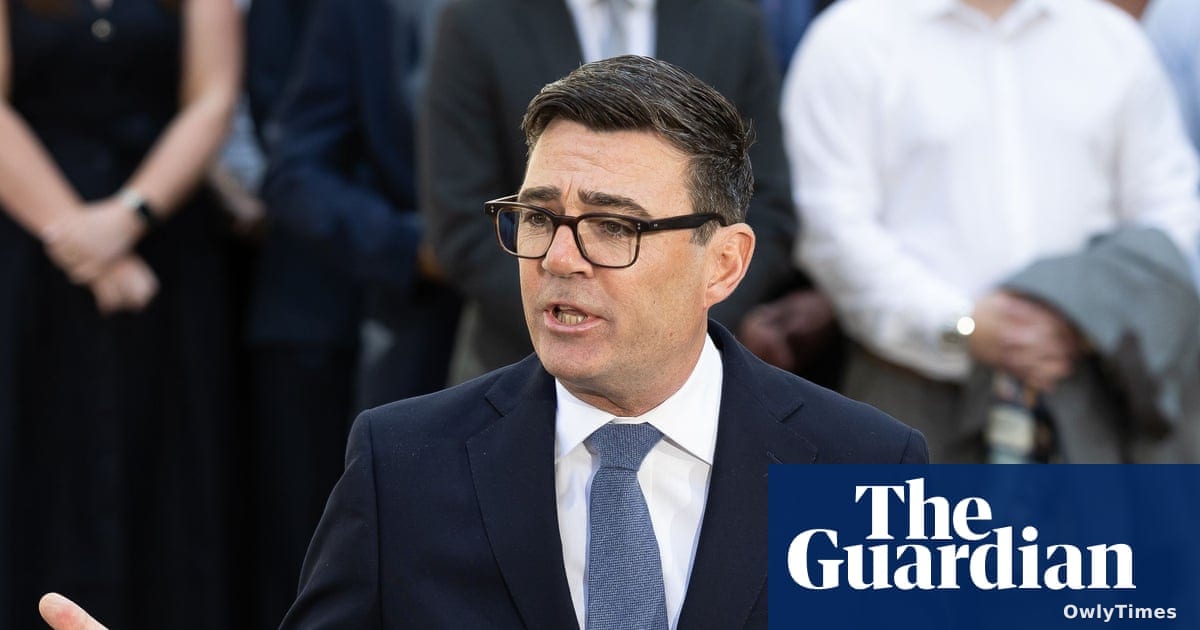

The installation of Andy Burnham as Britain's 59th prime minister is a calculated attempt by the Labour Party to survive a pincer movement from its political flanks. Having seen Keir Starmer forced out after just two years in office, Labour strategists recognized that a London-centric, technocratic approach was failing to hold a fragile electoral coalition together. By elevating Burnham—the 56-year-old former Mayor of Greater Manchester—the party is betting that his self-styled "everyman" regional persona can neutralize the rising threat of the populist Reform UK party and the progressive Green Party.
In this high-stakes realignment, who benefits and who loses becomes immediately clear. Regional and local authorities stand to gain significantly from Burnham's pledge to redistribute power out of London, potentially anchored by a physical "No. 10 North" in Manchester. Conversely, the losers in this transition include the traditional Whitehall establishment, whose centralized authority is directly targeted, and the international development sector, which must now contend with a severely depleted foreign aid budget.
On Monday, July 20, 2026, Burnham was formally invited by King Charles III at Buckingham Palace to form a new government, according to CBS News. This constitutional formality officially made him the United Kingdom's seventh prime minister in a single decade. Burnham entered office after winning a special election in the Manchester-area district of Makerfield, defeating a candidate from Reform UK, as reported by ABC News. His rapid ascension was made possible because, under the U.K. parliamentary system, the governing party can replace its leader without triggering a national election.
Burnham’s platform of regional reindustrialization, state intervention, and nationalization has already drawn sharp historical comparisons abroad. Italy's Corriere della Sera observed that Burnham’s policy instincts suggest he views the past as a model, warning that he risks taking refuge in a "backward-looking Eden," as cited by The Guardian. The Italian daily pointed out that the pre-Margaret Thatcher years, which Burnham's economic model evokes, were actually characterized by grim realities such as energy rationing, refuse piling up in the streets, and emergency bailouts from the International Monetary Fund.
Devolution as a Shield Against Westminster Volatility
In his first address outside 10 Downing Street, Burnham stated he was "acutely conscious" of the public weariness surrounding the revolving door of British leadership, promising to bring "new resolution" and stability, CBS News reported. To deliver on this, his domestic strategy relies on "Manchesterism"—a pragmatic, business-friendly brand of socialism developed during his mayoral tenure to revitalize post-industrial areas. ABC News noted that Burnham's background as a working-class Cambridge graduate from Liverpool, combined with his high-profile advocacy for the families of the Hillsborough Stadium disaster, gives him a unique brand of empathetic credibility that Starmer lacked.
The Tightrope of Global Diplomacy and a Transatlantic Reset
On the international stage, Burnham must quickly reconcile his past criticisms of U.S. President Donald Trump with the realities of the "special relationship." Despite previously labeling Burnham "extremely liberal" and a mere "mayor of a town," Trump posted on Truth Social that the two had a "very good conversation" on Monday night, wishing him "GOOD LUCK AND GODSPEED!" The Guardian confirmed that the discussions touched on highly sensitive geopolitical matters, including North Sea oil. CBS News added that the telephone call also covered trade, military cooperation, and security in the Strait of Hormuz, with both leaders agreeing to meet in person in the near future.
European leaders also moved swiftly to establish ties, though with distinct strategic agendas. French President Emmanuel Macron and European Commission President Ursula von der Leyen both expressed desires to deepen the UK-EU partnership, while German Chancellor Friedrich Merz immediately initiated discussions on Monday evening regarding continued joint support for Ukraine, according to The Guardian. Ukrainian President Volodymyr Zelenskyy and Australian Prime Minister Anthony Albanese also issued statements reaffirming their respective alliances with the new administration.
Balancing Domestic Welfare Against a Decimated Aid Budget
Perhaps the most immediate crisis facing Burnham's cabinet is a severely overstretched Foreign, Commonwealth and Development Office (FCDO). To fund a rising defense budget, Starmer and his chancellor, Rachel Reeves, had previously slashed international development spending to 0.3 percent of Gross National Income (GNI), down from the target of 0.7 percent, as reported by The Independent. These cuts have already severely damaged Britain's international standing, with nine African nations scheduled to see their UK bilateral aid cut by more than 80 percent through 2029.
This fiscal strain has triggered immediate internal friction. International development minister Baroness Jenny Chapman resigned on Monday night, admitting that executing these deep cuts required intense "soul searching," according to The Independent. Although newly appointed Energy Secretary Ed Miliband—who replaced Yvette Cooper—has been granted permission to prioritize climate goals with a theoretical roadmap to restore the 0.7 percent aid target, experts like Roli Asthana of Chatham House warn that the UK's credibility has already been deeply compromised by abrupt funding cuts to vital health and humanitarian programs.
The first true test of Burnham's ability to navigate these competing pressures will occur on Tuesday, when he is scheduled to announce his administration's initial concrete measures to address the soaring cost of living, as noted by CBS News. This announcement will serve as a critical market and political signal, revealing whether his "No. 10 North" philosophy can actually deliver immediate economic relief. Observers will be watching closely to see if he can balance these localized promises while operating under the strict fiscal constraints that ultimately doomed his predecessor.