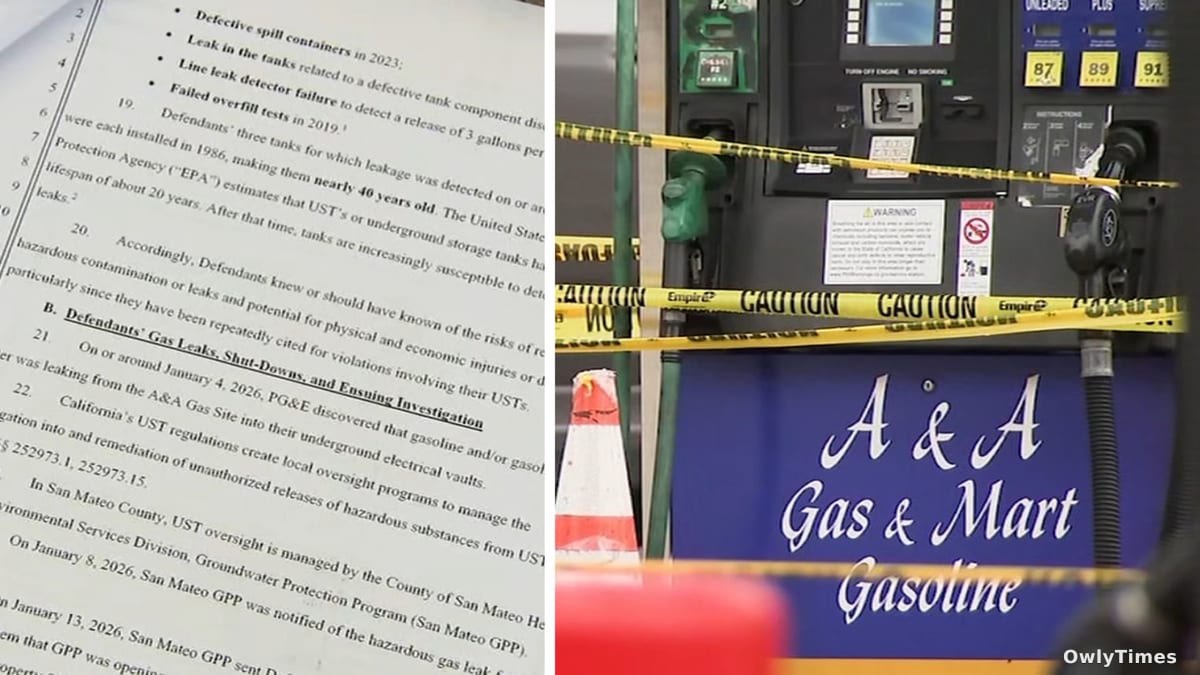

$100,000. That’s a conservative estimate of the cumulative revenue lost by businesses along Burlingame’s Broadway Corridor following a gasoline leak discovered in early January, and it’s the figure driving a newly filed class action lawsuit against A&A Gas & Mart and Mash Petroleum. While initial reports focused on road closures and power outages, a deeper look at the financial fallout reveals a systemic risk for businesses reliant on foot traffic and immediate accessibility – a risk amplified by a history of regulatory non-compliance at the gas station. This isn’t simply a case of temporary disruption; it’s a demonstration of how localized infrastructure failures can trigger a cascade of economic consequences for small businesses, and the potential for those consequences to be significantly underestimated.
The lawsuit, representing nearly 100 businesses including Maverick Jack’s, centers on alleged negligence by A&A Gas & Mart. Nanci Nishimura, the attorney representing the businesses, points to a pattern of “about two dozen” underground tank violations over the years, with three remaining unresolved as of February 26, 2026. This isn’t a new problem surfacing in the wake of the leak; it’s a pre-existing condition that, according to the complaint, directly contributed to the incident. Follow the money here: the cost of preventative maintenance and compliance with tank regulations, while a short-term expense for A&A Gas & Mart, pales in comparison to the potential liability stemming from a major leak and subsequent business interruption claims.
John Kevranian, owner of Nuts for Candy and former president of the Broadway Burlingame Business Improvement District, quantified his personal losses at “several thousand dollars,” emphasizing the impact extended beyond a single day to “11 to 12 days.” Extrapolating that figure across 100 businesses suggests a minimum of $110,000 in lost revenue – a substantial blow for small enterprises operating on tight margins. Micheál Mallie, owner of an unnamed restaurant along the corridor, highlighted a different dimension of the loss: unsold inventory spoiled due to the power outage. This illustrates a critical vulnerability for businesses dealing in perishable goods, where lost revenue is compounded by direct product loss. The timing is particularly noteworthy; January typically represents a slower period for many retailers following the holiday season, meaning these losses are less easily absorbed than they would be during peak months.
The situation is further complicated by the lack of communication from A&A Gas & Mart and Mash Petroleum. Mallie’s frustration – “We’ve had zero contact from those responsible. They’re right across the street… No phone calls” – underscores a broader issue of corporate accountability in localized incidents. While legal recourse is being pursued, the immediate financial burden falls squarely on the affected businesses. This lack of proactive engagement also raises questions about the company’s risk management protocols and its willingness to address potential environmental and safety concerns. The fact that this leak occurred in an AT&T electrical vault and followed a separate petroleum product leak into a PG&E vault a week earlier suggests a systemic issue with underground infrastructure in the area, and a potential for future incidents.
Drawn from abc7news.com.
What this means for your wallet: Burlingame residents should anticipate potential price increases at affected businesses as they attempt to recoup lost revenue. More broadly, this case serves as a warning for investors and consumers alike. Businesses operating in areas with aging infrastructure, or reliant on single points of access, face an elevated risk of disruption. The question now is whether this lawsuit will compel A&A Gas & Mart and Mash Petroleum to prioritize preventative maintenance and infrastructure upgrades, or if Burlingame’s Broadway Corridor will remain vulnerable to similar incidents in the future. Will insurance payouts fully cover the losses, or will this event force some businesses to permanently close their doors?





