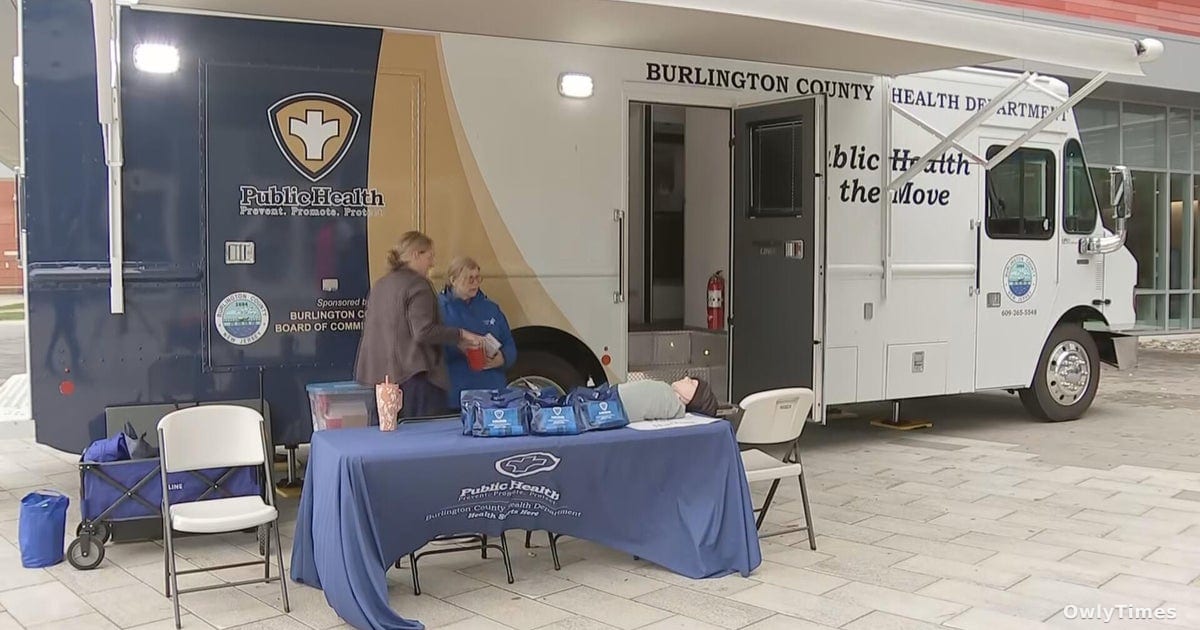

Beyond Brick and Mortar: Reimagining Healthcare Access in Burlington County
The persistent challenge of healthcare access isn’t simply about affordability or insurance coverage; it’s fundamentally about convenience. While policy debates often center on systemic costs, a new mobile health clinic launched in Burlington County, New Jersey, on April 2, 2026, addresses a more immediate, logistical hurdle: reaching the nearly 450,000 residents who face barriers to traditional healthcare settings. This isn’t a novel concept – mobile clinics have existed for decades – but the Burlington County initiative, as highlighted by Stephanie Stahl of CBS News Philadelphia, represents a strategic response to documented access gaps and a growing emphasis on preventative care. The question this launch answers isn’t if mobile clinics can help, but how effectively they can integrate into a county’s existing healthcare infrastructure and address specific community needs.
Source material: CBS News.
The core function of the new unit, spearheaded by the Burlington County Health Department under the direction of Dr. Holly Cucuzzella, is to deliver essential services directly to residents. These include vaccinations, blood pressure screenings, and crucially, Narcan training – a response to the ongoing opioid crisis impacting New Jersey. The clinic also offers HIV and STD testing, recognizing the importance of timely intervention in managing infectious diseases. What’s often lost in initial reports, however, is the deliberate design of the mobile unit itself. Dr. Cucuzzella emphasized the inclusion of two fully equipped exam rooms, enabling comprehensive services beyond simple screenings. This isn’t a “pop-up” vaccination station; it’s a functioning, albeit mobile, primary care extension. The stated goal is to overcome appointment scheduling difficulties and transportation limitations, making healthcare “readily accessible” – a phrase that, while common, underscores a significant operational challenge.
The Preventative Care Imperative and Cost Considerations
The emphasis on preventative services – early detection and intervention – is a key element of the Burlington County initiative. Dr. Cucuzzella frames these services not merely as healthcare provisions, but as “opportunities for life-saving intervention.” This aligns with a broader shift in public health strategy, moving away from reactive treatment towards proactive prevention. However, the long-term cost-effectiveness of this approach remains a complex calculation. While preventative care demonstrably reduces the burden of chronic diseases, quantifying that reduction in immediate budgetary terms is difficult. The initial investment in the mobile unit – the exact cost of which hasn’t been publicly disclosed – must be weighed against potential savings in emergency room visits and hospitalizations. Furthermore, the ongoing operational costs, including staffing and maintenance, will require sustained funding.
The political support for the project, as evidenced by the presence of Congressman Herb Conaway at the launch, is encouraging. Conaway’s statement – “The health center on this vehicle comes to them” – highlights the fundamental principle of patient-centered care. However, sustained political commitment is crucial, particularly as funding cycles shift and priorities evolve. It’s also worth noting that the clinic will serve individuals regardless of insurance status, a critical component of equitable access. This raises questions about the funding model: will the clinic rely solely on county and state resources, or will it explore partnerships with private insurers or philanthropic organizations?
Beyond Burlington County: Scaling Mobile Healthcare
The success of this mobile clinic won’t be measured solely by the number of vaccinations administered or blood pressure checks completed. The true test will be its ability to demonstrate a measurable impact on health outcomes within specific, underserved communities. The county hasn’t yet outlined specific metrics for evaluating the program’s effectiveness, but tracking rates of chronic disease management, preventative screening participation, and emergency room utilization in targeted areas will be essential. This data will be crucial not only for justifying continued funding but also for informing the potential expansion of the program.
Limitations to consider include the geographic reach of a single mobile unit. While it can serve multiple locations, it’s inherently limited by travel time and appointment capacity. Furthermore, the success of the clinic relies heavily on community outreach and trust-building. Simply having a mobile clinic doesn’t guarantee utilization; residents must be aware of its services and feel comfortable accessing them. This requires targeted communication strategies and partnerships with local community organizations. The Rowan College at Burlington County, as noted by Dr. David Spang, played a key role in the launch event, suggesting a potential avenue for ongoing collaboration.
The next critical research step involves a comparative analysis of health data before and after the implementation of the mobile clinic, specifically focusing on the communities it serves. Researchers should also investigate patient satisfaction and identify any remaining barriers to access. Ultimately, the Burlington County initiative offers a valuable case study for other counties and states grappling with similar healthcare access challenges. The question now is: will this model prove scalable, and can it be adapted to meet the unique needs of diverse communities across the country? We should watch for data released in late 2027 detailing the clinic’s impact on key health indicators within Burlington County, and whether other New Jersey counties begin exploring similar mobile healthcare solutions.





