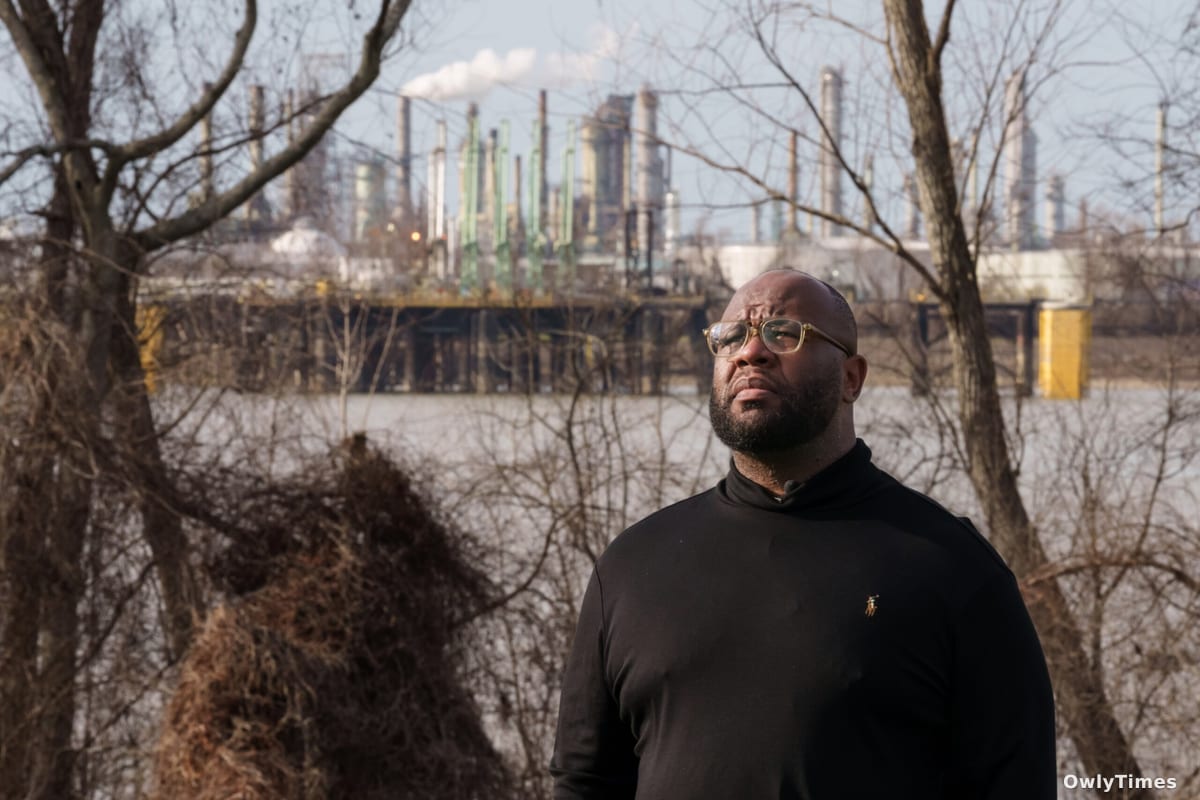

The question of whether clean air is a privilege or a right has been forcefully reopened, not through new scientific discovery, but through a deliberate dismantling of existing protections. This month’s revocation of the 2009 “endangerment finding” by the Environmental Protection Agency – the determination that greenhouse gases pose a public health threat – isn’t simply a policy shift; it’s a re-evaluation of whose lives are considered expendable in the pursuit of economic growth. While framed as deregulation to benefit industry, the decision carries a disproportionate risk for communities already bearing the heaviest burden of environmental pollution, and reveals a troubling pattern of environmental injustice.
A Legacy of Illness in “Cancer Alley”
The human cost of this policy reversal is starkly visible in places like St. John the Baptist Parish, Louisiana, a community situated within the 85-mile stretch known as “Cancer Alley.” This region, home to roughly 170 fossil fuel and petrochemical plants, experiences premature death rates significantly higher than the national average. Gary C. Watson Jr., a lifelong resident and advocate with Rise St. James Louisiana, describes a grim reality: “Most adults in the area are attending two to three funerals per month.” His own family has been deeply affected, with five relatives lost to cancer in recent years despite his father’s survival. Cancer Alley isn’t an anomaly; it’s emblematic of a broader pattern across the United States where marginalized and impoverished communities are consistently exposed to higher levels of air pollution and its associated health risks.
Based on the original wtop.com report.
The 2009 endangerment finding, established under the Obama administration, was a direct response to this inequity. By recognizing the link between greenhouse gases and public health, it provided a legal basis for stricter regulations, leading to demonstrable improvements in air quality in some areas. To understand the impact of its reversal, it’s crucial to move beyond the headlines proclaiming economic benefits and focus on the specific consequences for vulnerable populations. The EPA’s own 2021 report – now removed from its website – acknowledged this disparity, concluding that without mitigation, Black Americans are 40% more likely to live in areas facing the highest projected rise in deaths due to extreme heat with a 2-degree Celsius increase in global warming.
Disproportionate Exposure and Existing Vulnerabilities
The rollback isn’t expected to impact all Americans equally. Matthew Tejada, senior vice president for environmental health at the Natural Resources Defense Council, emphasizes that “overburdened communities…communities of color, Indigenous communities and low-income communities, they will, again, suffer most from these actions.” This isn’t simply a matter of proximity to polluting facilities, though that is a significant factor. A recent study revealed that over 46 million Americans live within a mile of energy supply infrastructure, but “persistently marginalized” racial and ethnic groups are disproportionately likely to live near multiple such sites. Latinos, in particular, exhibit the highest exposure levels.
This pre-existing vulnerability is compounded by systemic factors. Julia Silver’s research at UCLA’s Latino Policy and Politics Institute demonstrates that Latino communities in California experience 23 more days of extreme heat annually than their white counterparts, coupled with significantly poorer air quality and double the rate of asthma-related emergency room visits. These disparities aren’t accidental; they reflect historical patterns of residential segregation, limited access to healthcare, and overrepresentation in industries with high environmental exposure, like agriculture and construction. Hilda Berganza, climate program manager with the Hispanic Access Foundation, succinctly states that frontline communities “are going to feel it the most.”
Beyond Carbon Dioxide: The Co-Pollutant Threat
The focus on carbon dioxide often overshadows the dangers of “co-pollutants” – the harmful substances released alongside greenhouse gases from fossil fuel facilities. These include particulate matter, nitrogen oxides, and sulfur dioxide, all linked to respiratory illnesses, cardiovascular disease, and cancer. Sacoby Wilson, a University of Maryland professor and executive director of the Center for Engagement, Environmental Justice and Health INpowering Communities, predicts that the endangerment finding’s revocation will lead to “statistically significant increases in excess morbidity and mortality when it comes to climate impacts and health impacts associated with co-pollutants” in communities of color.
This isn’t merely a theoretical concern. Beverly Wright, founding director of the Deep South Center for Environmental Justice in New Orleans, points to the fact that at least four Black communities in Cancer Alley have already been displaced by industrial expansion. She fears the repeal will accelerate this trend, bringing more pollution, higher cancer rates, and increased vulnerability to extreme weather events. The administration’s justification – that the finding “hurts industry and the economy” – directly pits economic interests against the health and well-being of its most vulnerable citizens. President Trump’s dismissal of climate change as a “scam,” despite overwhelming scientific evidence, underscores this prioritization.
What Comes Next: Litigation and Continued Monitoring
The coalition of health and environmental groups that filed suit against the EPA on Wednesday represents a critical challenge to this decision. However, legal battles are often protracted, and the immediate impact of the revocation is already being felt. The next steps for researchers involve meticulously tracking air quality data in vulnerable communities, monitoring health outcomes, and quantifying the extent to which the rollback exacerbates existing disparities.
Crucially, we need to move beyond simply documenting the problem and focus on developing targeted interventions. Will communities like St. John the Baptist Parish see a demonstrable increase in respiratory illnesses and cancer diagnoses in the coming years? Will the rate of displacement accelerate as industrial facilities expand? The answers to these questions will determine whether the rollback of the endangerment finding is a temporary setback or a permanent erosion of environmental protections for those who can least afford to lose them.





