
The question of whether clean air is a privilege or a right has been forcefully reopened, not through new scientific discovery, but through a deliberate policy reversal. In February 2026, the Trump administration’s Environmental Protection Agency (EPA) overturned the 2009 “endangerment finding” – the determination that greenhouse gases pose a public health threat – a decision with potentially devastating consequences for communities already bearing a disproportionate burden of pollution. While headlines have focused on the rollback of climate regulations, the immediate and most acute impact will be felt in the health of vulnerable populations, particularly those living near heavy industry. It’s crucial to understand that this isn’t simply about future climate projections; it’s about present-day illness and premature death, and a widening of existing health disparities.
The 2009 endangerment finding, established under the Obama administration, served as the legal basis for numerous regulations aimed at reducing pollution from power plants and vehicles. Reversing this finding doesn’t immediately dismantle those regulations, but it removes a critical legal underpinning, opening the door for their weakening or elimination. The administration argues this will benefit industry and the economy, framing environmental protection as a hindrance to growth – a claim repeatedly contradicted by studies demonstrating the economic costs of pollution-related healthcare and lost productivity. What’s often missed in this debate is the human cost, vividly illustrated in places like “Cancer Alley” in Louisiana.
See the original click2houston.com story for the full account.
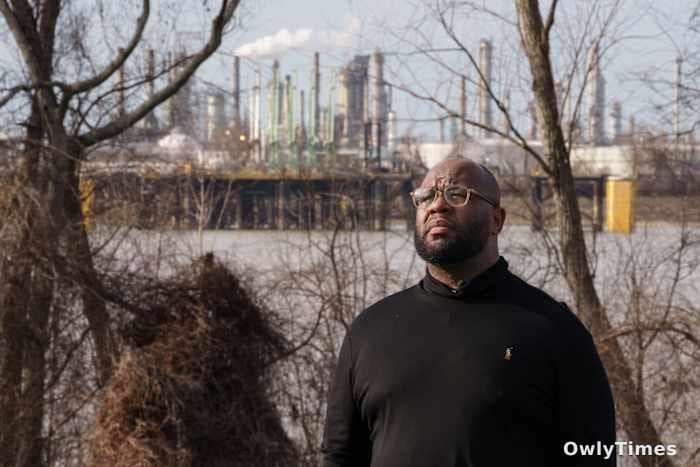
In a 170-plant stretch along the Mississippi River, communities like St. John the Baptist Parish are already living with the consequences of unchecked industrial emissions. Gary C. Watson Jr., a lifelong resident, describes a reality where “most adults in the area are attending two to three funerals per month.” His own family has been deeply affected, with at least five relatives succumbing to cancer in recent years, despite his father being a survivor. This isn’t an isolated case. Cancer Alley, a predominantly Black community approximately 30 miles outside of New Orleans, exemplifies a broader pattern: communities of color and low-income populations are consistently exposed to higher levels of pollution and experience worse health outcomes. A November 2025 study revealed that over 46 million Americans live within a mile of energy supply infrastructure, but “persistently marginalized” racial and ethnic groups are disproportionately clustered near multiple such sites, with Latino communities facing the highest exposure.
The EPA’s own 2021 report – now removed from its website – acknowledged this disparity, estimating that Black Americans are 40% more likely to live in areas projected to experience the highest increase in deaths due to extreme heat with a 2-degree Celsius rise in global warming. Similarly, Latino communities, heavily represented in outdoor industries, face a 43% higher likelihood of experiencing significant labor hour losses due to heat. Julia Silver, a senior research analyst at UCLA’s Latino Policy and Politics Institute, found that Latino communities in California experience 23 more days of extreme heat annually than their white counterparts, coupled with double the rate of poor air quality and asthma-related emergency room visits. These aren’t abstract statistics; they represent real people facing increased risk of illness and death.
It’s important to acknowledge the limitations of attributing specific health outcomes solely to the endangerment finding’s revocation. Environmental health is complex, influenced by a multitude of factors including socioeconomic status, access to healthcare, and pre-existing conditions. However, the reversal undeniably removes a crucial layer of protection, and experts like Sacoby Wilson, a University of Maryland professor, predict “statistically significant increases in excess morbidity and mortality” in communities of color. Beverly Wright, founding director of the Deep South Center for Environmental Justice, points to the alarming reality that at least four Black communities in Cancer Alley have already been displaced by industrial expansion, a trend she fears will accelerate.
The legal challenge brought by a coalition of health and environmental groups this month is a critical step, but the outcome is far from certain. The core question now isn’t simply about regulating carbon emissions, but about whether the federal government will prioritize the health and well-being of its most vulnerable citizens. We should be watching closely for trends in air quality monitoring data in communities near industrial facilities, specifically tracking increases in particulate matter and other pollutants known to exacerbate respiratory and cardiovascular illnesses. More importantly, we need to ask ourselves: if the cost of economic growth is the health of our neighbors, is that a price we are willing to pay?