
Beyond the Podium: How One Michigan School is Redefining Olympic Gold
The recent close of the 2026 Winter Games might signal a return to routine for many, but at Cannonsburg Elementary in Rockford, Michigan, the spirit of competition didn’t fade with the final medal ceremony. Instead, it transformed into something arguably more valuable: a school-wide “STEAM Olympics” where students weren’t striving for athletic prowess, but for a deeper understanding of the scientific principles underpinning the games themselves. This isn’t simply a feel-good story about tying education to a popular event; it’s a compelling example of how educators are proactively addressing a growing concern – the need to move beyond rote memorization and cultivate genuine, applied learning in STEM fields. While many schools talk about STEAM (Science, Technology, Engineering, Art, and Math), Cannonsburg’s approach, leveraging the inherent excitement of the Olympics, offers a tangible model for others.
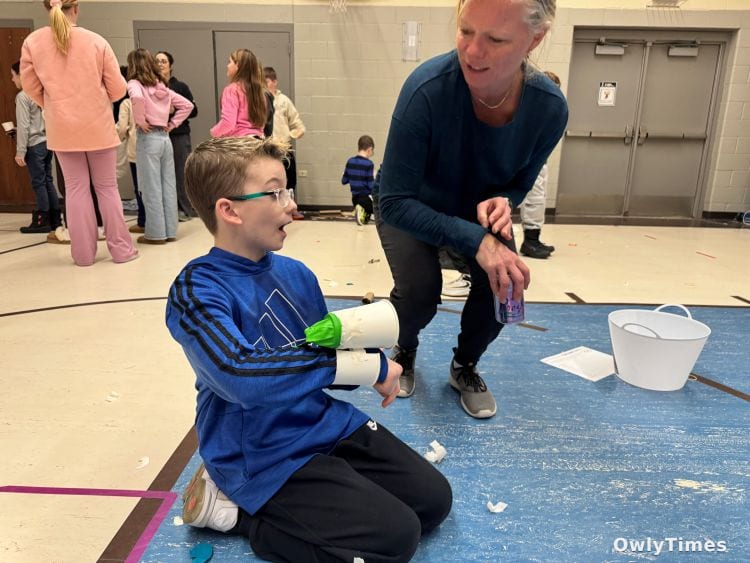
The event, spearheaded by fourth-grade teacher Lauren Arnett who first brought the STEAM Olympics to Cannonsburg in 2022, wasn’t about recreating the spectacle of the Games, but distilling them down to their core physical laws. Students weren’t just watching bobsleds; they were building miniature versions, experimenting with weight distribution to minimize friction, as Principal Teya Cotter explained. They weren’t simply cheering on curlers; they were constructing curling “stones” from aluminum foil and pennies, meticulously adjusting weight to control trajectory and impact. This hands-on approach is crucial. Research consistently demonstrates that students retain information far more effectively when actively engaged in experimentation and problem-solving, rather than passively receiving instruction. The focus, as Cotter articulated, is “bringing it to life for our kids.”
Source material: schoolnewsnetwork.org.
What’s particularly noteworthy is the level of nuanced thinking the event encouraged. Fourth-graders Ryan Pratt, Eddy Smagacz, and Dean Kosanke weren’t just aiming to build a ski jumper; they were formulating a hypothesis – that adding weight to the back of their miniature skier would increase elevation and speed – and then testing it. Fifth-graders Charlotte Dondzila, Harper Chase, and Emma Dondzila encountered the iterative nature of engineering when their initial ski jumper designs repeatedly failed, prompting them to refine their approach. This process of trial and error, of learning from setbacks, is a cornerstone of the scientific method and a skill that extends far beyond the classroom. It’s a departure from the often-pressured environment of standardized testing, where a single “correct” answer is prioritized over the learning process itself.
However, it’s important to avoid overstating the impact of a single event. While the STEAM Olympics undoubtedly provided a valuable learning experience for Cannonsburg students, it’s crucial to recognize its limitations. The activities, while engaging, were relatively short-term. Sustained, long-term integration of STEAM principles into the curriculum is essential to truly foster a lasting interest in these fields. Furthermore, the success of the event relied heavily on parental involvement, a resource not equally available to all schools or communities. The event’s scalability – whether it could be replicated effectively in schools with different resources and demographics – remains an open question.
Looking ahead, the most valuable next step isn’t simply to repeat the STEAM Olympics next Winter Games cycle. Instead, educators should focus on identifying the core pedagogical principles that made it successful – the emphasis on hands-on experimentation, the integration of real-world applications, and the encouragement of collaborative problem-solving – and embedding those principles into daily instruction. The question now is: can Cannonsburg Elementary’s innovative approach serve as a catalyst for a broader shift in how we teach STEM subjects, moving beyond abstract concepts and towards a more engaging, experiential, and ultimately, more effective model of learning? Will other schools adopt similar strategies, and more importantly, will they be able to sustain them beyond a single, Olympic-inspired event?





