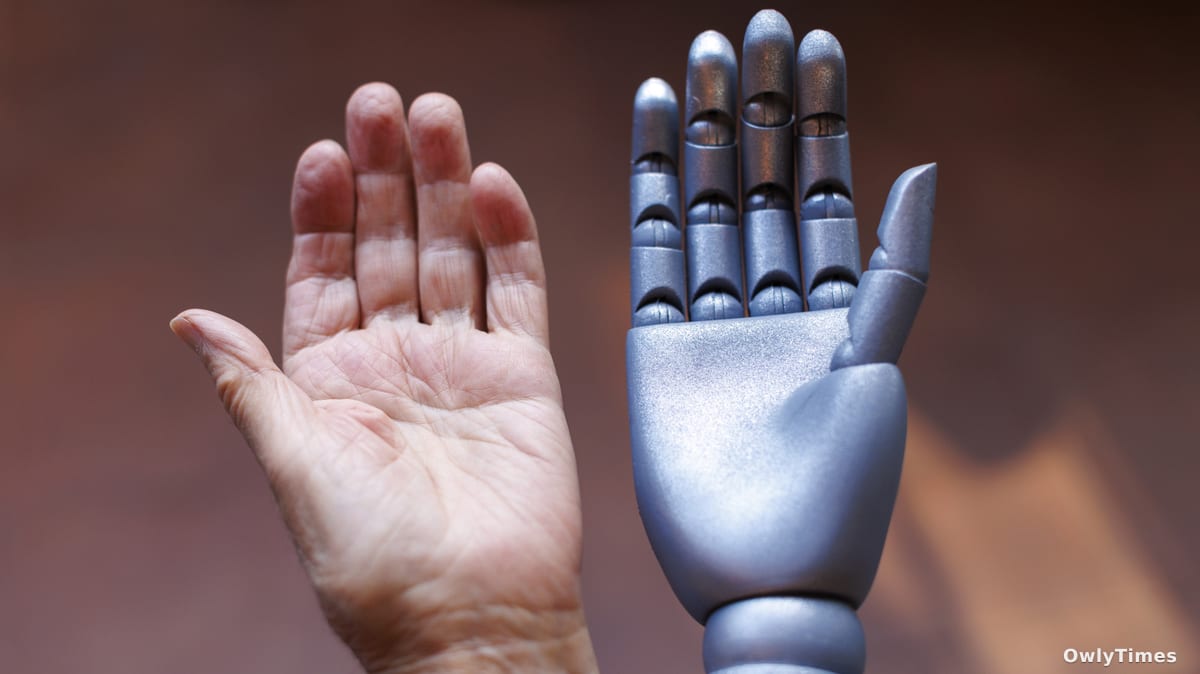

Is the future of robotics less about polished metal and more about… inflatable marshmallows? While Silicon Valley obsesses over humanoid robots that look like us – think Tesla’s Optimus and Boston Dynamics’ Atlas – the real story here isn’t replicating human form, it’s rethinking robotic structure entirely. A team at the Southern University of Science and Technology (SUSTech) in Shenzhen, China, has unveiled GrowHR, a humanoid robot capable of shrinking, floating, and navigating spaces previously inaccessible to its clunkier competitors. And it’s doing it with a disconcerting, yet endearing, cartoon grin.
Beyond the Bipedal Blueprint
For decades, the robotics industry has been fixated on building robots that mimic human anatomy. The assumption? That strength and rigidity are paramount. But SUSTech’s researchers, publishing their findings in Science Advances in January 2026, challenged that dogma. They looked not to engineering marvels, but to human biology – specifically, the ingenious design of bones. Bones are strong, yet lightweight, thanks to their hollow structure. Current humanoid robots, they argue, are essentially “simple columns,” heavy and inflexible by comparison. The contrast is stark: the Unitree G1, a comparable-sized robot, weighs nearly eight times more than GrowHR’s sub-10-pound frame. This isn’t just a matter of engineering pride; it’s a fundamental shift in how we approach robotic design.
Original reporting: bgr.com.
The Power of Pneumatics
GrowHR’s secret lies in its inflatable chambers. By inflating or deflating these chambers, the robot can alter its height and width by up to 61% and 36% respectively, allowing it to squeeze through tight spaces. This shape-shifting ability isn’t just a parlor trick. It’s the key to its buoyancy, enabling it to float, swim, and even stand on water. Imagine a search and rescue scenario where a robot needs to navigate a flooded building or crawl through the wreckage of a collapsed structure. GrowHR’s design offers a distinct advantage over robots constrained by rigid frames. The team at SUSTech isn’t aiming for a perfect imitation of human movement; they’re prioritizing adaptability and resilience.
Rescue Missions and the Limits of Soft Robotics
The potential applications are immediately apparent, particularly in high-risk environments. SUSTech’s researchers envision GrowHR as a first responder, capable of entering disaster zones and providing assistance where humans can’t safely tread. Its buoyant body could even act as a makeshift life preserver, offering support to drowning individuals. The soft, inflatable structure also provides inherent damage resistance, cushioning it from falls and impacts. However, this flexibility comes at a cost. GrowHR’s terrestrial locomotion is, to put it mildly, awkward. Its limbs buckle under its own weight, resulting in slow, unsteady movements. This highlights a core tension in soft robotics: maximizing adaptability often means sacrificing power and precision.
China’s Quiet Robotics Revolution
This isn’t an isolated incident. While Tesla and Boston Dynamics generate headlines with their ambitious (and often delayed) humanoid projects, China is quietly building a diverse and innovative robotics ecosystem. The focus isn’t solely on replicating human capabilities, but on solving practical problems with novel designs. The Chinese government’s long-term goal of technological self-sufficiency is clearly fueling this push, and the results are starting to show. The fact that a consumer-ready, shape-shifting robot is emerging from Shenzhen before anything comparable from Silicon Valley is a significant indicator of this shift. It’s a reminder that innovation doesn’t always follow the most predictable path.
The real question now isn’t if China will challenge US dominance in robotics, but how. And more specifically, watch for the first major deployment of a soft robot like GrowHR in a real-world disaster scenario within the next three years. If it proves its worth in a life-or-death situation, the inflatable future of robotics might arrive a lot faster than anyone expects.