
The Cracks in the Foundation: Hydropower, Displacement, and Water Politics in the Chenab Valley
The image is stark: Shama Begum, a woman in her late 40s, sitting in a kitchen with walls visibly fractured, a physical manifestation of the disruption consuming her life. Her story, and those of thousands like her in the Chenab Valley of Jammu and Kashmir, isn’t simply about the construction of hydropower projects. It’s a potent illustration of how infrastructure development is increasingly intertwined with geopolitical strategy, environmental degradation, and the marginalization of Indigenous communities – a confluence of factors that signals a dangerous shift in how water is governed in the region. The planned 5,190 megawatts of electricity generation is coming at a steep, and often overlooked, human and ecological cost.
Based on the original foreignpolicy.com report.
Background & Context: A History of Dams and Distrust
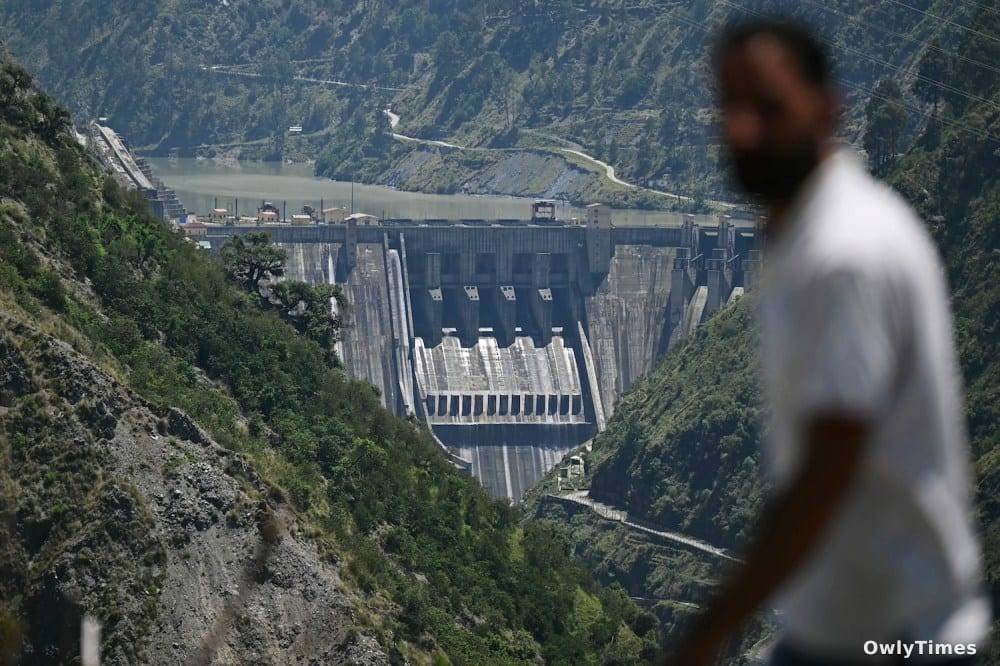
The current wave of hydropower development along the Chenab isn’t new, but its intensity and context are. The river, originating in Himachal Pradesh and flowing through Jammu and Kashmir before entering Pakistan, has long been subject to engineering interventions. However, the projects now underway – seven planned, four already in progress – represent a significant escalation. This surge is occurring against a backdrop of deteriorating relations between India and Pakistan, and within the framework of the Indus Waters Treaty, a 1960 agreement governing the sharing of the Indus River system.
Historically, the treaty, despite periods of tension, functioned as a rare example of cooperation. But since 2016, and particularly under the Narendra Modi government, rhetoric surrounding the treaty has shifted. Repeated threats to revisit, restrict, or even cancel the agreement, especially following security crises, have transformed it from a confidence-building mechanism into a tool for strategic signaling. This represents a fundamental shift: water is no longer solely viewed as a shared resource, but as an asset to be “fully utilized,” even within the bounds of treaty compliance. The Chenab Valley, strategically located, has become a focal point for this new approach.
The Human Cost: Beyond Compensation and into Vulnerability
The immediate impact of these projects is displacement. Over 20,000 people, predominantly Indigenous families reliant on forests and agriculture, are being uprooted. Shama Begum’s experience – losing land, livestock, and a traditional way of life, coupled with inadequate compensation and a home now threatened by structural damage from blasting – is tragically common. The promised development – better roads, facilities, employment – has largely failed to materialize.
What’s particularly concerning is the compounding effect of these disruptions. Local community logs reveal a 30% decline in spring flows, exacerbated by the altered river dynamics caused by upstream dams like Pakal Dul. This impacts irrigation, agricultural yields, and access to clean water. The situation is further complicated by the region’s seismic activity, raising questions about the long-term safety of large infrastructure projects in a geologically unstable zone. The narrative of “run-of-the-river” projects being low-impact is demonstrably false in this mountainous terrain, resulting in significant forest loss, farmland inundation, and ecosystem damage, as highlighted by researcher Parineeta Dandekar.
What This Means: Geopolitics, Climate Change, and Regional Instability
The developments in the Chenab Valley have far-reaching implications. For India, the hydropower expansion serves a dual purpose: meeting domestic energy demands and asserting upstream control over the Chenab, a subtle but significant message to Pakistan. This operational control, even if legally compliant with the Indus Waters Treaty, allows India to maximize its influence in the basin.
However, this strategy carries substantial risks. Erin Sikorsky of the Center for Climate and Security rightly points out that climate change is turning river basins like the Chenab into “zones of compound risk.” Melting glaciers, intensifying droughts, and increasing water scarcity are fueling mistrust between upstream and downstream communities, even without deliberate water withholding. The 2019 threat by India to halt water flows to Pakistan after a militant attack underscores the potential for escalation. The treaty, once a buffer, is increasingly viewed through a security lens, narrowing diplomatic options and raising the stakes in a region already fraught with tension. For the local population, it means increased vulnerability, diminished livelihoods, and a loss of cultural heritage.
Looking Ahead: A Looming Crisis of Trust and Resources
The future of the Chenab Valley, and indeed the broader Indus basin, hinges on a critical question: can India and Pakistan move beyond a zero-sum approach to water management? With over two dozen hydropower projects planned across Himachal Pradesh and Jammu and Kashmir, the pressure on the river system will only intensify.
Readers should watch for several key developments. First, the continued implementation of the Indus Waters Treaty, and whether India continues to signal its willingness to abide by its terms, or further erode trust through unilateral actions. Second, the impact of climate change on glacial melt and river flows, and how this affects both agricultural productivity and geopolitical dynamics. Finally, the plight of displaced communities like those in Dungduro, and whether adequate mitigation measures and genuine compensation are provided. The cracks in Shama Begum’s wall are a warning sign – a harbinger of a potentially larger crisis unfolding in a region where water, climate, and politics are converging with dangerous consequences.





