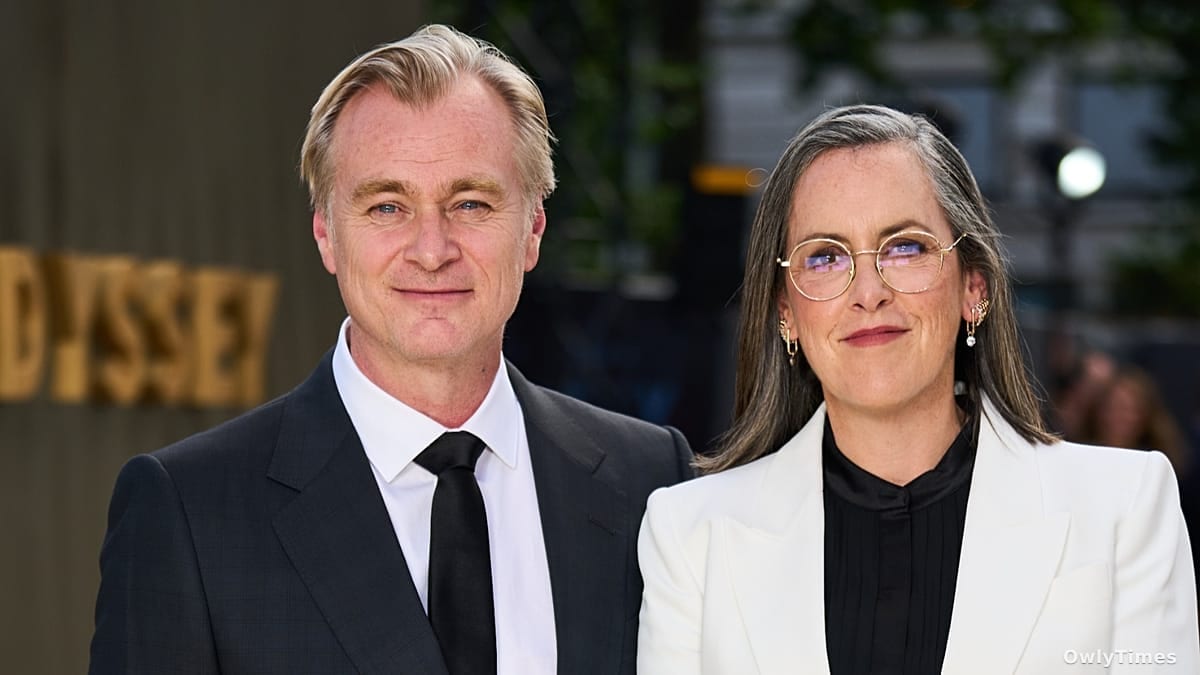

The Mediterranean sun blazes over the set of The Odyssey, but for director Christopher Nolan, the most significant battleground of 2026 isn't found in Homer’s ancient verses—it’s in the digital ether. As his $250 million blockbuster prepares for its worldwide release this Friday, July 17, the filmmaker has emerged as a vocal critic of the artificial intelligence boom, describing a generational shift that threatens to upend the industry. While Wall Street and tech giants lean heavily into generative tools, Nolan argues that the very audience those companies are chasing is turning its back on the technology.
The Rejection of 'AI Slop'
Across multiple interviews, Nolan has highlighted a growing cultural rift, noting that younger audiences have coined the term “AI slop” to describe the influx of machine-generated content, according to The Guardian. Speaking to AFP, Nolan expressed his surprise at how thoroughly the public has rejected a technology that investors have so aggressively adopted. This sentiment is echoed in his conversation with The Telegraph, where he described the phenomenon as a “rapid wholesale dismissal of a supposedly foundational jump in technology.”
Nolan, who famously eschews smartphones and email, insists that his own children have an “immediate and harsh” reaction to AI, perceiving it through the lens of the online world they inhabit daily, as reported by Euronews. He points to young filmmakers like Kane Parsons (director of Backrooms) and Curry Barker (director of Obsession) as proof that a new generation is prioritizing practical, tactile storytelling over virtual environments. Variety notes that Nolan specifically cites the success of these ruminative, mysterious films to refute the idea that younger attention spans are too “fried” to appreciate a three-hour epic.
Diverging Views on the Future of the Blockbuster
While Nolan remains optimistic about the future of cinema, the film's star, Matt Damon, holds a more melancholic view. Damon told GQ earlier this year that making The Odyssey felt like his “last chance” to participate in a traditional, large-scale Hollywood production. Nolan, however, explicitly disagrees with this “defeatist” perspective. He maintains that while the industry is in flux, cinema remains a vital medium that continues to evolve through the voices of new filmmakers who value the human element over wholesale replacement by machines.
Navigating Controversy Before the Premiere
The road to the July 17 premiere has not been without friction. The casting of Lupita Nyong’o as Helen of Troy sparked backlash from right-wing figures, including Elon Musk, who accused the production of “desecrating” the source material, according to The Independent. Nyong’o has largely ignored the discourse, telling The Guardian that the cast is “representative of the world.” In Greece, the response has been more localized; while the small nationalist party Niki objected to the state providing approximately 6 million euros ($6.9 million) in subsidies, the country’s Culture Minister, Lina Mendoni, rebuffed these claims, asserting that it is not the state’s role to dictate artistic interpretation, The Independent reported.
Ultimately, Nolan views these pre-release controversies as irrelevant, noting that critics cannot judge a film they have yet to see. For an industry still recovering from the 2023 strikes—which saw studios lose billions of dollars over existential concerns regarding AI and labor—The Odyssey stands as a massive, 70mm-shot stake in the ground. It is a test of whether audiences will continue to reward high-budget, human-led craftsmanship in an era where the boundary between creator and algorithm is being blurred.