
Beyond the Data Point: How Citizen Science is Redefining Environmental Monitoring
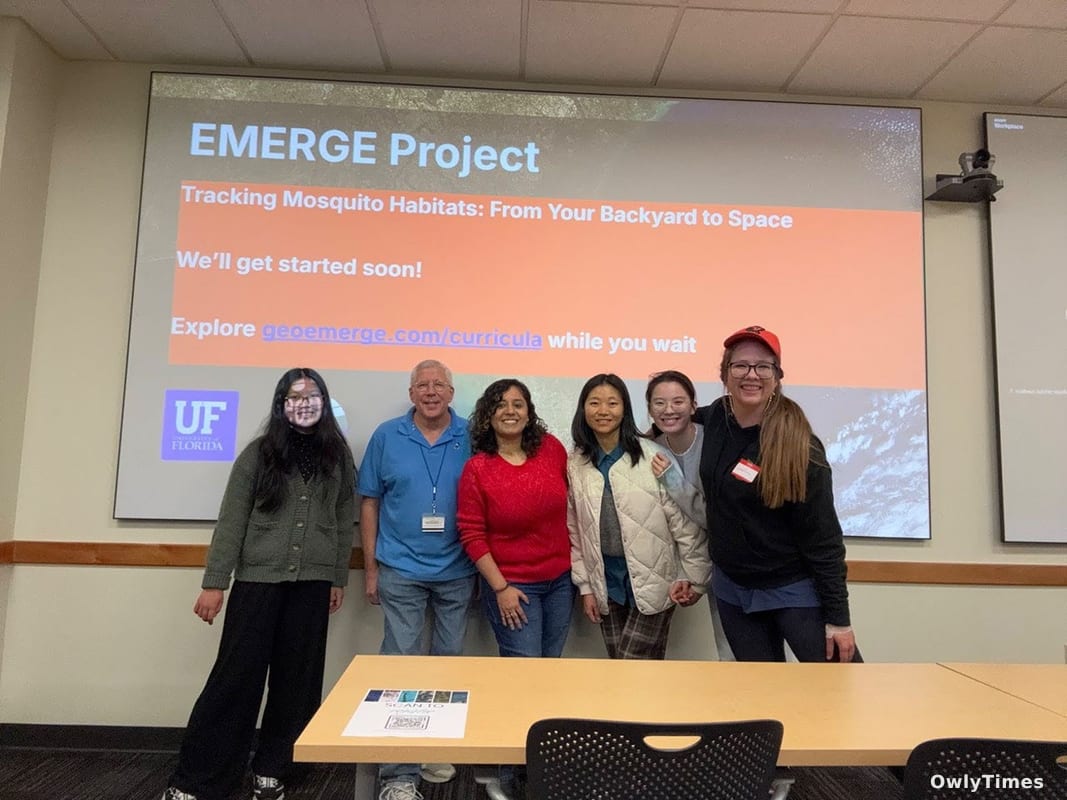
The impulse to understand our environment isn’t limited to researchers in labs; it’s a fundamental human drive. But translating that impulse into actionable data has historically been a bottleneck. A recent hackathon at the University of Florida’s Marston Science Library demonstrates a compelling shift: empowering everyday citizens – students, library staff, even community members – to contribute meaningfully to environmental science through accessible technology. On January 31st, 31 participants gathered for the Environmental Monitoring through Education, Research, and Geospatial Engagement (EMERGE) NASA Data Hackathon, not simply to analyze existing data, but to actively reimagine how we collect it, and who gets to participate. This isn’t just about more data; it’s about democratizing the scientific process itself.
This article draws on reporting from science.nasa.gov.
At the heart of EMERGE lies NASA’s GLOBE Observer app, a deceptively simple tool that transforms smartphones into mobile science labs. Users can log observations on mosquito habitats, land cover, cloud formations, and more, feeding directly into NASA’s research initiatives. While citizen science isn’t new – bird counts have relied on volunteer observers for decades – the GLOBE Observer app represents a leap forward in scalability and data accessibility. The hackathon, hosted by the Geospatial Digital Informatics Lab at UF, SciStarter, and Florida Community Innovation (FCI), with NASA and UF Libraries support, wasn’t about confirming pre-existing hypotheses. Instead, 13 teams were tasked with building projects using this citizen-sourced data, or designing improvements to the app itself. The winning projects, ranging from “Mosquito Tracker” to “Epidemiological Vector Mapping System,” highlight the diverse applications of this approach.
It’s crucial to understand what the hackathon actually found, versus how such events are often portrayed in headlines. Reports often emphasize the “innovation” or “potential” of citizen science. While those are valid, the EMERGE hackathon’s value lies in the concrete outputs: functional prototypes, improved data visualization tools, and a deeper understanding of the challenges inherent in volunteer-collected data. For example, the “Bias and Uncertainty in Reported Mosquito Habitat Data” project, awarded for Data Analysis Recognition in the Intermediate Track, directly addressed a critical issue in citizen science – acknowledging and mitigating the inherent subjectivity in observational data. This isn’t about dismissing the data, but about developing methods to account for potential biases, a step often overlooked in initial enthusiasm for large datasets. The winning teams weren’t simply identifying problems; they were building solutions.
However, it’s important to consider the limitations. The hackathon participants, while diverse, represent a self-selected group with existing interest and access to technology. This introduces a potential bias in both data collection and project development. Furthermore, the short timeframe of the hackathon – a single day – necessitates a focus on proof-of-concept projects rather than fully-fledged, rigorously tested applications. The “Mosquito Tracker” app, for instance, is a promising start, but requires further development and validation before it could be reliably used for public health monitoring. The success of these projects hinges on sustained engagement from both the citizen scientists contributing the data and the researchers analyzing it. A single hackathon, however impactful, cannot guarantee that longevity.
Looking ahead, the organizers are actively seeking input on future EMERGE events, inviting applications for a planning committee to refine the format and ensure accessibility. This is a critical step. The next phase of research needs to focus on expanding participation beyond the already engaged, particularly in communities most vulnerable to environmental changes. Caroline Nickerson of FCI is spearheading this effort, recognizing that the true power of citizen science lies in its inclusivity. More importantly, researchers need to develop standardized protocols for data validation and quality control, ensuring that citizen-sourced data can be seamlessly integrated into existing scientific workflows. The question now isn’t simply can citizens contribute to environmental monitoring, but how can we build systems that reliably harness that contribution to address pressing environmental challenges – and what safeguards must be in place to ensure the data is robust and representative?