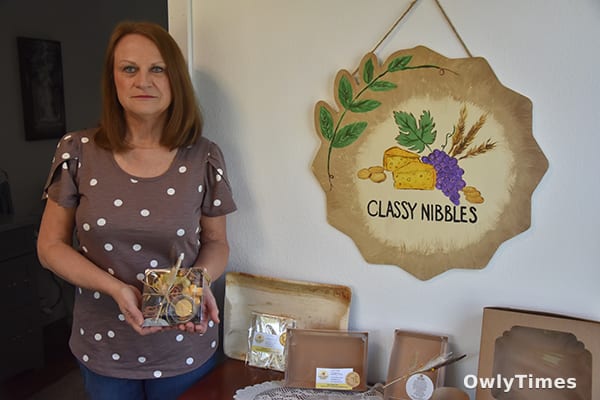

80 individual charcuterie cups represent the opening order volume that Deb Baskerville navigated shortly after launching her new venture, Classy Nibbles, on April 17. For a startup entering the local catering market, this initial demand serves as a litmus test for the viability of specialized, aesthetic-driven food services in a cost-sensitive economic climate. Follow the money in this sector and you find that the business model relies less on bulk volume and more on the premium assigned to convenience and culinary curation.
Navigating Regulatory Overhead and Startup Costs
The path to launching Classy Nibbles was defined by a six-month preparation period, necessitated largely by state pre-opening inspection requirements. For a small business, this period represents significant "dead time" where capital is tied up in compliance before the first sale is realized. Baskerville noted that every ingredient—from crackers to dips—had to be documented for state review, illustrating the high barrier to entry for food-based micro-enterprises. By formalizing these operations, Baskerville has transitioned from a hobbyist approach to a structured business model, shifting the burden of ingredient waste from the consumer to the provider.
The Economics of Convenience and Scalability
Baskerville’s pivot into the charcuterie space addresses a specific market inefficiency: the high cost of food inventory for the average household. By centralizing the procurement of meats, cheeses, fruits, and specialty items, Classy Nibbles allows consumers to bypass the need to purchase large quantities of disparate ingredients that might otherwise go to waste. This value proposition is particularly relevant given current food pricing volatility. For the consumer, the price point of a board or cup is not merely a reflection of the raw materials, but a premium paid for time-saving and aesthetic labor.
Operational Constraints as a Quality Metric
To maintain the integrity of her product, Baskerville has instituted a strict 48-hour notice policy for all orders. This constraint functions as an inventory management tool, ensuring that fresh items are sourced specifically for the client rather than held in stock. The decision to package crackers separately—a move made to prevent sogginess—highlights the tension between visual appeal and product quality. By prioritizing technical quality over immediate aesthetic convenience, the business positions itself as a premium service provider rather than a high-volume retailer.
Capitalizing on Local Market Gaps
The Marshalltown-based business fills a void in the local events market, targeting segments ranging from small gatherings of two to large-scale events of up to 30 people. Baskerville’s background, which includes three years running a Merle Norman cosmetics studio and three decades as a nail technician, brings an artisan’s eye to food presentation, such as crafting salami roses and cheese carnations. This focus on "flair"—which she plans to expand by incorporating house-smoked cheeses—is designed to differentiate her offerings from generic supermarket catering trays.
The financial trajectory of Classy Nibbles will be dictated by its ability to balance bespoke, time-intensive labor with the scalability required to service larger events. With delivery available for orders exceeding $50 within a 15-to-20-mile radius, the next reading of the business’s order frequency will reveal whether local demand for high-end convenience remains steady or fluctuates with seasonal event cycles. For consumers, the takeaway is clear: while the upfront cost of specialty food services may appear elevated, the value is increasingly found in the elimination of waste and the professionalization of event preparation.





