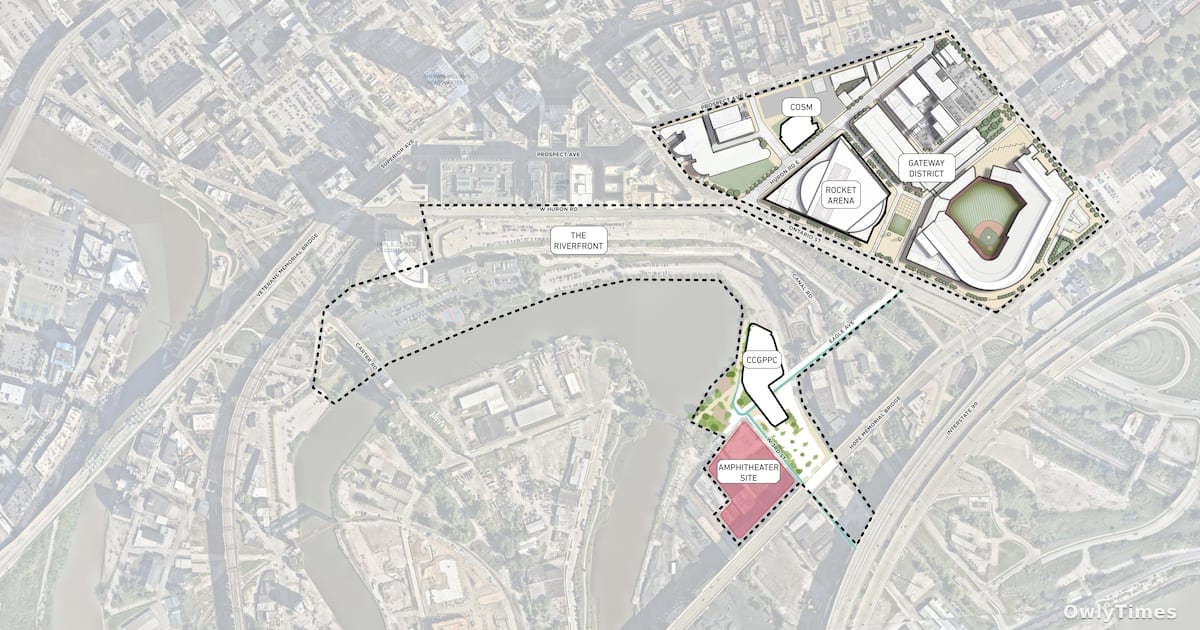

The bass drum thudded in my chest even before I saw the renderings. Not from a concert, but from the sheer ambition of the plan Dan Gilbert and his team at Bedrock unveiled last week: a 6,200-seat outdoor amphitheater rising from the banks of the Cuyahoga River. It’s a sound Cleveland hasn’t felt consistently in decades, a promise of a revitalized riverfront, and a signal that the city is betting big on a future where sports and entertainment aren’t just adjacent industries, but inextricably linked. This isn’t simply about bringing another venue online; it’s about reshaping the cultural landscape of a city still defining itself in the 21st century.
A Billion-Dollar Gamble on the River’s Edge
The $3.5 billion Riverfront development, spearheaded by Bedrock, is a scale of investment rarely seen outside of major coastal cities. To put that into perspective, Cleveland’s entire annual city budget hovers around $600 million. This isn’t incremental improvement; it’s a wholesale reimagining of 35 acres of prime real estate. The amphitheater, slated to open in May 2028, is just one piece of a larger puzzle that includes the already-under-construction Cleveland Clinic Global Peak Performance Center (designed by Populous, and opening next year), a Cosm location planned for summer 2027, mixed-income housing, and a 3,000-foot public riverwalk. Dan Whalen is leading the project for Bedrock, and the choice of DLR Group as lead architect, alongside Live Nation’s Blueprint Studio, suggests a focus on both aesthetic appeal and operational efficiency. But the sheer size of the investment begs the question: is Cleveland ready for this level of transformation, and will it deliver the promised economic and cultural returns?
Based on the original sportsbusinessjournal.com report.
The Live Nation Playbook: Synergy and Scale
The involvement of Live Nation is crucial, and reveals a broader trend in the entertainment industry. This project is part of a billion-dollar investment by Live Nation in mixed-use development venues, strategically positioned near – and often integrated with – sports facilities. This isn’t accidental. Live Nation understands that fans of sports are also fans of music, and that creating a synergistic ecosystem maximizes revenue and engagement. The Cavaliers, under the umbrella of Rock Entertainment Group (formed in 2021), are already a major draw, overseeing not only the NBA team but also Cleveland’s forthcoming WNBA franchise (debuting in 2028), the AHL’s Cleveland Monsters, and the G League Cleveland Charge. By placing a major music venue next to the Peak Performance Center, Bedrock and Live Nation are essentially creating a 24/7 entertainment district, designed to capture a wider audience and extend the economic impact beyond game days. Rocket Arena, already operated by Rock Entertainment Group, further solidifies their control over the city’s entertainment offerings.
Beyond the Headlines: A City Reclaiming Its Waterfront
For decades, Cleveland’s riverfront has been underutilized, a forgotten space between the city’s industrial past and its aspirations for a modern future. This development isn’t just about building a venue; it’s about reclaiming a vital piece of urban space and transforming it into a destination. The inclusion of mixed-income housing is a particularly noteworthy element, addressing a critical need for affordable housing in a rapidly developing area. However, the success of this aspect will depend on ensuring that the housing remains genuinely accessible to a diverse range of residents, and doesn’t simply become another luxury development catering to a wealthy elite. The promise of a 3,000-foot public riverwalk is also significant, offering a much-needed public amenity and a space for community gathering.
The Gilbert Effect and the Future of Urban Entertainment
Dan Gilbert’s Bedrock has already poured $7.5 billion into real estate investments in Cleveland and Detroit, and this project represents a continuation of his aggressive strategy to revitalize both cities. While his investments have been largely credited with sparking economic growth, they haven’t been without controversy, often involving public subsidies and concerns about gentrification. The Riverfront development will undoubtedly face similar scrutiny. The question isn’t simply whether the amphitheater will attract national touring acts – it almost certainly will – but whether it will contribute to a more equitable and vibrant Cleveland for all its residents. The industry should be watching closely to see if this model of integrated sports and entertainment development, backed by massive private investment, can truly deliver on its promise of urban renewal, or if it will simply exacerbate existing inequalities. Will other cities follow suit, attempting to replicate the “Gilbert Effect”? And, crucially, will they learn from the potential pitfalls of prioritizing profit over people?