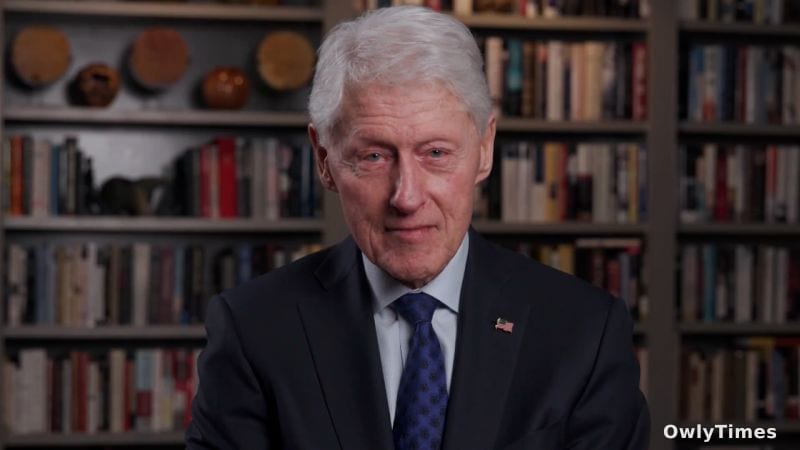

The strategic deployment of Bill Clinton’s recent video statement wasn’t about clearing his or Hillary Clinton’s name regarding Jeffrey Epstein – it was a preemptive maneuver to control the narrative and limit damage within a rapidly escalating political landscape. The timing, coinciding with heightened scrutiny of the Epstein network and the ongoing House investigation, signals a calculated effort to inoculate the Clintons against further accusations and, crucially, to frame the inquiry as politically motivated. This isn’t simply a defense; it’s a re-assertion of power through narrative control, a tactic honed over decades in the highest echelons of American politics.
The core of Clinton’s defense – denial of prior knowledge of Epstein’s crimes and a claim that his wife shouldn’t have been compelled to testify – is less important than why it was delivered now. The House investigation, spearheaded by Republicans, has been consistently framed as a partisan attack, and the former President’s statement reinforces that narrative. This is a classic deflection strategy: by focusing on the perceived unfairness of the process, the Clintons attempt to overshadow the substance of the allegations. Who benefits? Primarily, the Clintons themselves, by attempting to minimize legal and reputational fallout. Who loses? The credibility of the House investigation, potentially undermining its ability to uncover further information, and any independent journalists seeking to explore the full extent of the Epstein network’s connections.
See the original CNN story for the full account.
This situation echoes the Clinton’s handling of previous controversies, most notably the Whitewater scandal in the 1990s. Then, as now, the strategy involved portraying investigations as politically driven “witch hunts.” The parallel isn’t accidental. The Clinton political machine has consistently relied on a playbook of aggressive defense, narrative control, and the framing of opponents as motivated by partisan animus. The difference today is the intensity of the media environment and the speed at which information – and counter-narratives – circulate. The 3:24 video released to CNN is a direct response to that accelerated cycle, aiming to establish a baseline defense before further damaging information emerges. The fact that this is happening alongside coverage of strikes against Iran, Donald Trump’s political maneuvering, and internal Republican party struggles demonstrates a deliberate attempt to bury the story within a deluge of other headlines.
The Democrats’ call for Donald Trump to be the next to testify is a calculated countermove, designed to shift the focus and potentially expose Trump’s own connections to Epstein. This escalation of the investigation, however, carries significant risk. While it could divert attention from the Clintons, it also opens the door to further scrutiny of Trump’s past dealings, potentially reigniting investigations into his business practices and personal conduct. The dynamic is a high-stakes game of political chess, where each move is designed to both defend and attack. The statement from Trump’s niece, questioning the veracity of his claims regarding the Epstein files, adds another layer of complexity, suggesting a willingness within some Republican circles to exploit vulnerabilities within the former President’s camp.
Beyond the immediate fallout of the depositions, the broader implications lie in the erosion of trust in institutions. The public’s cynicism towards political elites is already high, and the ongoing saga surrounding Epstein – and the powerful figures connected to him – only exacerbates that sentiment. The fact that Anthropic rejected a Pentagon contract offer, while seemingly unrelated, underscores a growing distrust of government and its partnerships with private entities. This broader trend of institutional distrust creates a fertile ground for populism and further political polarization. The question now isn’t simply whether the Clintons will face further legal challenges, but whether this episode will further accelerate the decline in public faith in the political system. The next political chess move to watch is whether House Republicans will attempt to subpoena additional witnesses with direct knowledge of Epstein’s activities, and whether they will be willing to risk a protracted legal battle to compel their testimony.





