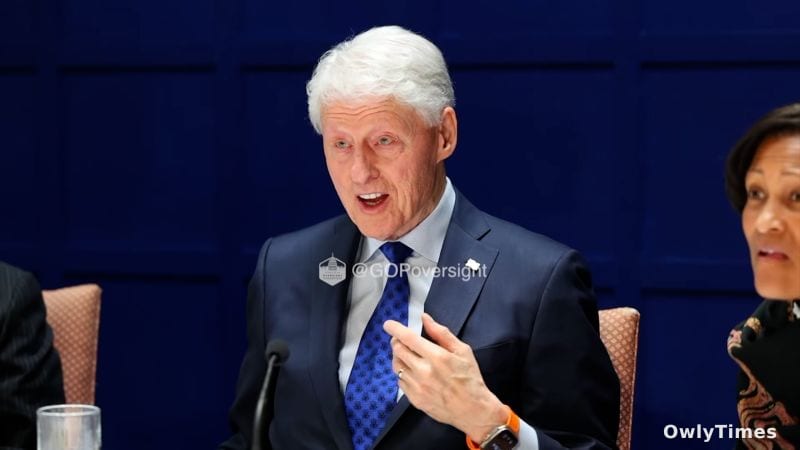

The release of deposition footage featuring Bill and Hillary Clinton regarding the Jeffrey Epstein case isn’t about uncovering new facts regarding Epstein’s crimes; it’s a calculated power play by the House Oversight Committee to demonstrate control and establish a narrative of accountability – or the appearance of it – ahead of a contentious election year. The strategic value lies not in what the Clintons said – Bill Clinton maintained he had a “brief acquaintance” with Epstein – but in the act of compelling their testimony and then selectively releasing portions of it for public consumption. This isn’t a genuine pursuit of justice regarding a decades-old case; it’s a demonstration of force, a flexing of congressional authority designed to resonate with specific voter bases and potentially damage the reputations of prominent Democratic figures.
The immediate fallout – Hillary Clinton’s visible frustration after a photo from her deposition was leaked by Lauren Boebert – underscores this dynamic. The leak wasn’t a spontaneous act, but a deliberate escalation, designed to provoke a reaction and further fuel partisan outrage. This echoes tactics employed during the Clinton investigations of the 1990s, where the goal wasn’t solely to establish legal culpability, but to erode public trust and inflict political damage. The independent counsel investigations of Bill Clinton, like the current Epstein inquiry, were often criticized for being driven as much by political motivations as by genuine legal concerns. The parallel is striking: then, it was accusations of perjury and obstruction; now, it’s association with a convicted sex offender. The core strategy – delegitimize the target through scandal – remains consistent.
Drawn from CNN.
Who benefits and who loses from this spectacle? The immediate beneficiaries are the Republican members of the House Oversight Committee, who can claim to be holding powerful figures accountable. This bolsters their base and provides ammunition for fundraising efforts. Donald Trump, despite not being directly involved in these depositions, also gains from the distraction, shifting media attention away from his own legal challenges and reinforcing his narrative of a “deep state” targeting political opponents. The losers are, predictably, the Clintons, whose reputations continue to be tarnished by association with Epstein, regardless of the veracity of any accusations. More broadly, the American public loses faith in the political process, witnessing yet another example of partisan maneuvering masquerading as legitimate oversight. The Democrats’ call for Donald Trump to testify next is a predictable countermove, attempting to level the playing field and portray the investigation as a politically motivated witch hunt.
Beyond the immediate political theater, the timing of these depositions and releases is crucial. The concurrent coverage of escalating tensions in the Middle East – including the reported drone strikes on the US Embassy in Saudi Arabia and President Trump’s subsequent statements – serves as a convenient backdrop, potentially diminishing the impact of the Epstein-related revelations. This is a classic political tactic: bury unfavorable news amidst a larger crisis. The fact that these events are unfolding alongside the Texas Senate primary, a race with significant implications for the balance of power in the Senate, further complicates the landscape. The focus on the Clintons could be a deliberate attempt to divert attention from the critical dynamics at play in Texas.
The rejection of the Pentagon’s latest contract offer by Anthropic, an AI company, adds another layer of complexity. This signals a growing reluctance within the tech sector to fully align with the military-industrial complex, raising questions about the future of AI development and its potential applications in warfare. While seemingly unrelated to the Clinton depositions, it highlights a broader trend of institutional resistance to established power structures. This resistance, whether from tech companies or within the political arena, is a key indicator of shifting power dynamics.
The political chess move to watch next isn’t whether further damaging information about the Clintons will emerge – it’s whether the House Oversight Committee will successfully leverage this momentum to launch a broader investigation targeting other prominent Democrats. The committee’s chairman, James Comer, has hinted at further inquiries, and the question is whether he can maintain the political will and public support necessary to sustain a prolonged offensive. Will this be a sustained campaign to damage Democratic prospects in 2024, or a fleeting moment of partisan spectacle? The answer will reveal much about the strategic calculus driving the current political climate.





