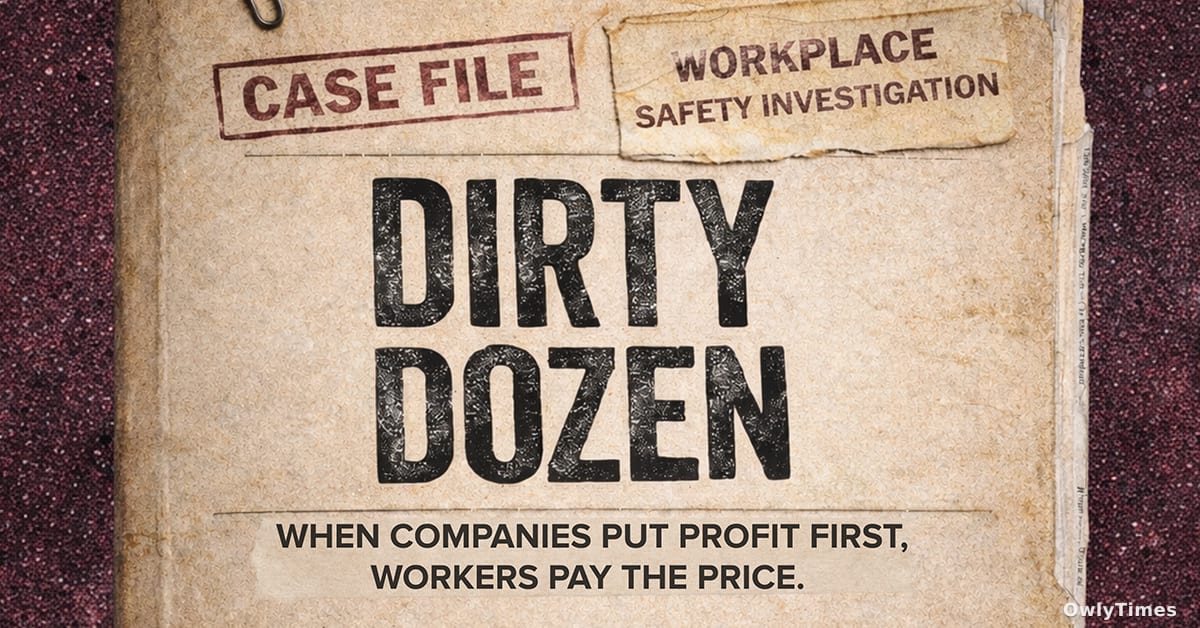

Can a healthcare organization reconcile its foundational mission of healing with a corporate operational model that prioritizes profitability over the physical safety of its workforce? This is the central question raised by the recent designation of CommonSpirit Health as one of the "Dirty Dozen 2026" by the National Council for Occupational Safety and Health (NCOSH). While headlines focus on the stigma of being named to an "infamous list," the underlying scientific and operational issue is whether the systematic disregard for workplace safety standards—such as inadequate staffing and exposure to environmental hazards—creates a dangerous feedback loop that compromises clinical outcomes for patients.
The Disconnect Between Mission and Methodology
The NCOSH list is not a mere public relations grievance; it is a compilation based on a documented history of repeated and serious violations of workplace safety laws. For CommonSpirit, the tension lies in the stark contrast between their public-facing mission to serve vulnerable populations and the financial data reported for 2025. During that year, the nonprofit health system recorded more than $1 billion in profits. Simultaneously, internal compensation records reveal that the organization paid its former and current CEOs a combined $36.6 million in 2024.
For the National Nurses Organizing Committee/National Nurses United (NNOC/NNU), these figures are not just financial line items—they represent a diversion of resources that could otherwise be utilized to mitigate documented safety failures. Nurses report that the current operational environment includes everything from structural issues like unsafe staffing levels and workplace violence to immediate environmental concerns, such as fly and fruit fly infestations in patient care areas.
Documented Patterns of Safety Violations
It is important to distinguish between the emotional toll described by staff and the clinical evidence of safety lapses. Occupational Safety and Health Administration (OSHA) records indicate a pattern of safety failures that extend beyond individual hospitals. These records confirm dozens of violations in California and Nevada regarding a lack of appropriate respiratory protection. Furthermore, investigations have uncovered formaldehyde exposure hazards at a hospital in Houston and failures to implement necessary protections against chemical hazards in Seattle facilities.
These findings suggest a systemic issue rather than isolated incidents. For Evan Epps, an RN in the critical care unit at St. Joseph Health College Hospital in College Station, Texas, the NCOSH designation acts as a grim validation of his daily experience. He notes that inadequate security protocols in his facility place both the nursing staff and their patients at significant risk, challenging the very premise of a "safe" healthcare environment.
Limitations to Consider
When interpreting these reports, it is necessary to consider the scope of a large, nonprofit health system. CommonSpirit operates a vast network, and while OSHA data provides a rigorous look at specific regulatory infractions, the "Dirty Dozen" label is an advocacy-driven classification. It serves to highlight the intersection of corporate policy and labor rights but does not necessarily capture the full spectrum of quality-of-care metrics or the internal complexities of managing multiple, diverse facilities across several states.
The Path Toward Regulatory Accountability
The situation in the Brazos Valley, Texas, serves as a measurable indicator of where this conflict is heading. In December 2025, nurses at five St. Joseph Health facilities—including the St. Joseph Health Regional Hospital in Bryan and three critical access facilities in Caldwell, Navasota, and Madisonville—voted to join the NNOC. These nurses are currently in the initial stages of bargaining for their first contract. The outcome of these negotiations, specifically regarding the inclusion of binding safety provisions and staffing ratios, will serve as a bellwether for the organization's willingness to address the systemic hazards identified by NCOSH. The next reading of these contract negotiations will show whether the health system intends to shift its operational focus from purely financial outcomes toward the standard of occupational safety demanded by its workforce.