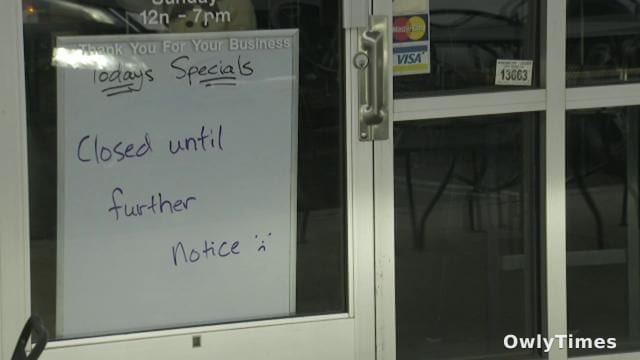

The closure of Nana’s Kitchen in Durham following a fatal shooting isn’t simply a tragedy for the victim and their family; it’s a calculated risk assessment playing out in real time for Durham’s city council, revealing a deepening tension between public safety initiatives and the economic anxieties of a rapidly developing city. The immediate impact – Nana’s shuttered, neighboring businesses voluntarily closing, and a palpable sense of fear – is a direct consequence, but the longer-term political fallout will hinge on how officials navigate the competing demands of reassurance and economic stability. This isn’t an isolated incident; it’s a pressure test for Durham’s strategy of attracting investment while simultaneously addressing rising crime rates.
The Economic Cost of Insecurity
The immediate economic impact is quantifiable, though incomplete. Nana’s Kitchen, a local staple, represents a loss of revenue not just for its owners, but for its employees – roughly 15 people, according to preliminary reports – and the supply chain that supported it. More significantly, the voluntary closures of surrounding businesses, while currently limited, signal a broader concern. Durham’s downtown core has seen a 12% increase in foot traffic over the past year, fueled by new residential developments and a concerted effort to promote the area as a dining and entertainment destination. A sustained perception of insecurity threatens to reverse that progress. City Councilmember Javier Rodriguez acknowledged the economic impact, stating the crime “not only impacts the people targeted, but also the local businesses’ bottom line.” This statement, however, is less a display of empathy and more a pragmatic recognition of the political pressure building from the city’s business community, a key constituency increasingly vocal about public safety.
Original reporting: wral.com.
A Historical Echo of Urban Decay
The situation in Durham echoes patterns seen in numerous American cities throughout the late 20th century. The “broken windows” theory, popularized in the 1980s, posited that visible signs of crime and disorder – broken windows, graffiti, public intoxication – create an environment that encourages further criminal activity and ultimately drives out investment. While the theory itself has been debated, the underlying principle – that perceptions of safety are inextricably linked to economic vitality – remains relevant. Durham, like many cities undergoing rapid gentrification, is grappling with the displacement of long-term residents and the widening gap between affluent newcomers and those left behind. This disparity can breed resentment and, in some cases, contribute to increased crime. The closure of Nana’s, a business deeply rooted in the local community, risks becoming a symbol of that displacement, fueling further anxieties and potentially exacerbating existing tensions.
The Limits of Reactive Policing
Durham Police Chief Maria Hernandez has pledged increased patrols in the area surrounding Nana’s Kitchen, a standard response to such incidents. However, reactive policing, while necessary in the short term, offers limited long-term solutions. Durham’s violent crime rate has increased by 8% in the last six months, despite a 5% increase in police funding. This suggests that simply allocating more resources to law enforcement isn’t addressing the root causes of the problem. The city’s investment in social programs aimed at addressing poverty and inequality – initiatives like the Durham Opportunity Fund, which provides job training and financial literacy resources – remains significantly underfunded, receiving only 2% of the city’s total budget. This allocation reflects a clear prioritization of traditional law enforcement approaches over preventative measures, a decision that is now facing renewed scrutiny. Who benefits from this approach? Primarily, the police unions and security firms who stand to gain from increased funding and contracts. Who loses? The communities most vulnerable to crime and the businesses reliant on a stable, secure environment.
The Political Calculus of Reassurance
The immediate political imperative for Mayor Elaine Thompson and the City Council is to project an image of control and reassurance. Expect a flurry of press conferences, community meetings, and promises of increased investment in public safety. However, the underlying challenge is far more complex. Durham is caught in a bind: aggressive policing risks alienating communities of color and fueling accusations of over-policing, while a perceived lack of action risks further eroding public trust and driving away investment. The city’s progressive base, which largely supported Thompson’s election, is likely to demand a more nuanced approach that prioritizes social justice and community-led solutions. The business community, however, is likely to push for a more forceful response, potentially creating a significant rift within the city’s political landscape.
The next political chess move to watch is the upcoming vote on the proposed budget for the Durham Opportunity Fund. Will Mayor Thompson and the City Council significantly increase funding for these preventative programs, signaling a shift in priorities? Or will they double down on traditional law enforcement, potentially alienating their progressive base and further exacerbating the underlying tensions that contributed to the closure of Nana’s Kitchen? The answer will reveal a great deal about Durham’s long-term vision for public safety and economic development.