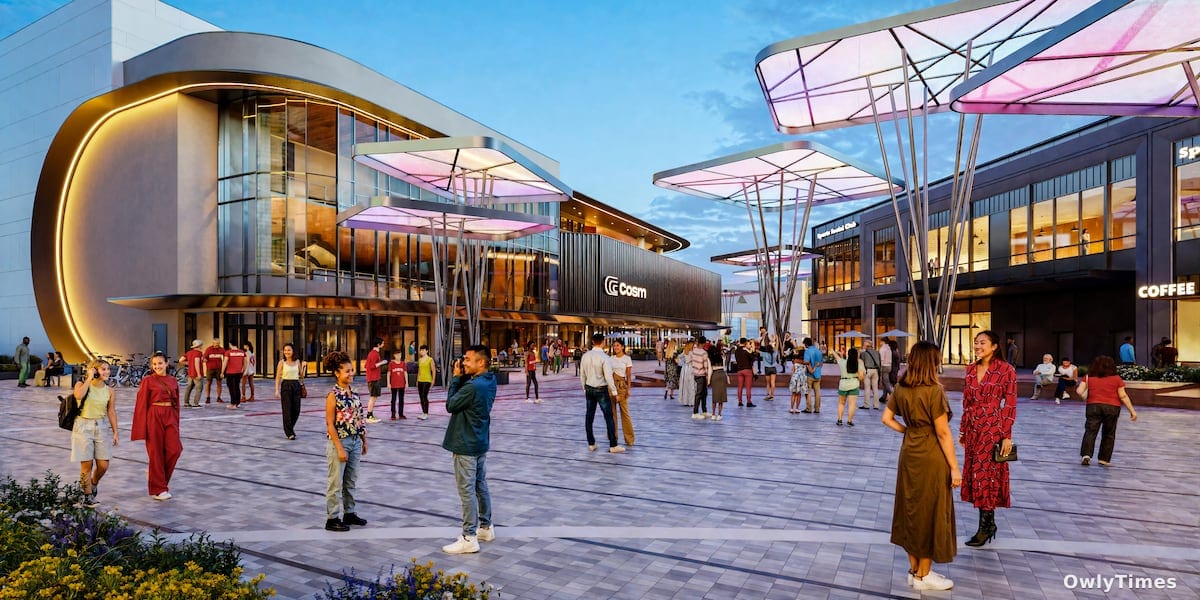

The bass thrummed even through the construction fencing. Standing across from Mercedes-Benz Stadium last week, the skeletal frame of Cosm wasn’t just rising steel and concrete; it was a promise – or perhaps a threat – to redefine how Atlanta experiences live entertainment. On June 10th, that promise will be tested as Cosm opens its doors with a viewing party for Game 4 of the NBA Finals. But this isn’t simply another venue opening; it’s a bellwether for a cultural shift, a gamble on whether audiences crave total immersion over traditional event spaces, and a direct challenge to the dominance of the stadium experience itself.
The Sphere Effect: Atlanta Joins the Immersive Race
The 70,000-square-foot, three-level venue, spearheaded by Cosm, isn’t operating in a vacuum. It’s a direct response to the splash made by the Sphere in Las Vegas, a $2.3 billion gamble that’s already reshaping entertainment expectations. While the Sphere’s initial concert numbers from U2 were strong – grossing $186.4 million from 48 shows, averaging $3.88 million per night – the long-term viability of such a massive, technologically dependent space remains a question. Cosm is betting it can replicate that magic, and more importantly, that the market isn’t saturated. Opening locations in Los Angeles and Dallas earlier in 2024 suggests a belief in scalable demand, but Atlanta presents a unique test case. Unlike Las Vegas, which exists for spectacle, Atlanta is a city with a deeply rooted music scene, a passionate sports fanbase, and a growing film industry – all vying for entertainment dollars.
Beyond the Game: A Diversified Content Strategy
What separates Cosm from simply being a giant TV is its content strategy. The June 10th NBA Finals viewing is a calculated opening move, leveraging the city’s fervent basketball fandom. But the lineup extends far beyond sports. Tickets are already available for UFC fights, immersive screenings of classics like “Harry Potter and the Sorcerer’s Stone” and “The Matrix,” and performances by Cirque du Soleil’s “O.” This diversification is crucial. The Sphere, for all its technological prowess, has faced criticism for relying heavily on a limited number of high-profile events. Cosm seems to be aiming for a broader appeal, positioning itself as a destination for everything from blockbuster movies to live performances, all enhanced by its massive LED dome screen. This approach acknowledges a fundamental truth about the entertainment landscape: audiences want options, and they want experiences tailored to their individual tastes.
See the original walb.com story for the full account.
The Stadium vs. The Dome: A Battle for Attention
The location itself – directly across from Mercedes-Benz Stadium – isn’t accidental. It’s a deliberate positioning, a subtle challenge to the established order of live events. For years, the stadium has been the destination for major sporting events and concerts in Atlanta. But Cosm offers something different: intimacy, immersion, and a technologically advanced experience that a traditional stadium simply can’t match. Consider the ticket prices. While NBA Finals tickets at Mercedes-Benz Stadium routinely reach into the thousands of dollars, Cosm’s viewing party tickets started at a more accessible $149. This isn’t necessarily about undercutting the stadium; it’s about attracting a different segment of the market – those who want the energy of a live event without the exorbitant cost or the logistical headaches. It’s a bet that a shared, immersive experience can be just as compelling as being physically present at the game.
What This Means for the Future of Live Entertainment
The opening of Cosm in Atlanta isn’t just about one venue; it’s about the evolving relationship between technology, entertainment, and the audience. We’re moving beyond simply watching events to experiencing them, and that experience is increasingly defined by immersion and personalization. The success of Cosm will hinge on its ability to deliver on that promise, to create truly captivating experiences that justify the cost and the effort. But more broadly, it raises a critical question: are we entering an era where the physical location of an event matters less than the quality of the immersive environment? Will stadiums need to invest heavily in similar technologies to remain competitive? Or will they continue to rely on the spectacle of live performance and the energy of the crowd? The answer, as the bass continues to thrum from the construction site, is still very much up in the air. But one thing is certain: Atlanta is about to become a key battleground in the future of live entertainment, and the industry will be watching closely to see who emerges victorious.