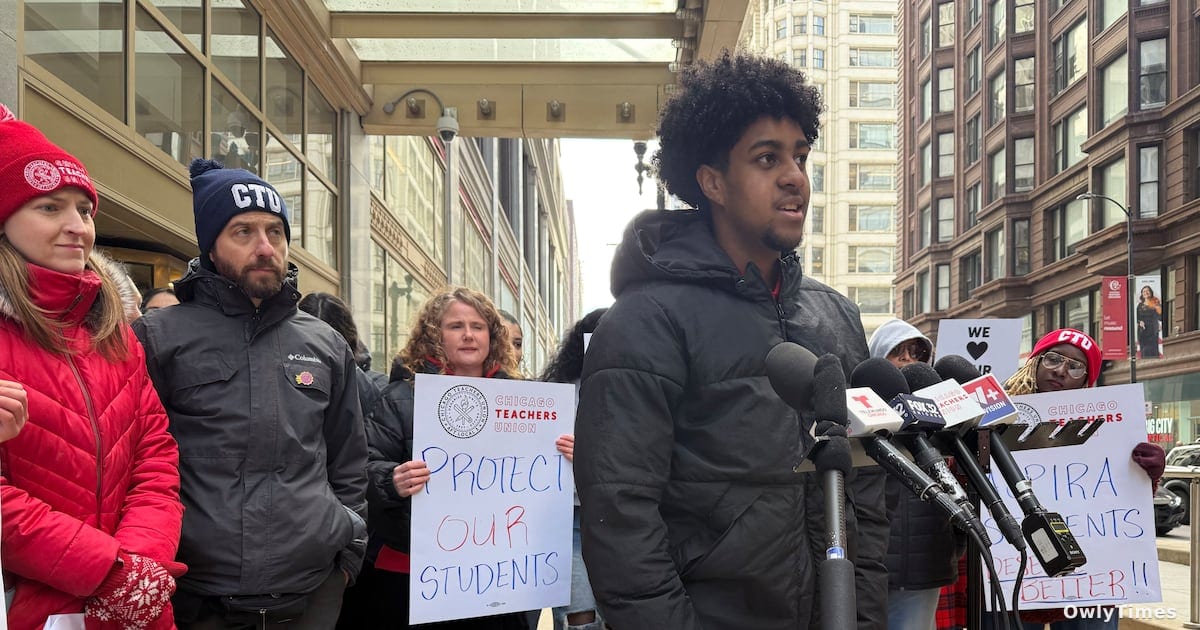

$2.9 million is the figure defining the immediate future of 700 Chicago Public Schools students, as Chicago Public Schools (CPS) initiates a transition plan away from two ASPIRA charter high schools – ASPIRA Business and Finance and ASPIRA Early College – due to a deepening financial crisis. While ASPIRA leadership, led by CEO and President Edgar Lopez, insists campuses will remain open through the current school year, the district’s move signals a lack of confidence in the network’s ability to deliver on that promise, despite $2.5 million in advanced payments already provided. This isn’t simply a case of a school facing budgetary headwinds; it’s a stark illustration of the escalating financial pressures within Chicago’s charter school sector and a critical test of CPS’s oversight capabilities.
Follow the money, and the picture becomes clear: ASPIRA is currently operating with a $2.9 million deficit. This shortfall, according to Lopez, stems from rising salaries and what he characterizes as insufficient district funding. However, CPS paints a different picture, accusing ASPIRA of financial mismanagement, citing unrealistic enrollment projections and a failure to provide required financial documentation – including a financial audit and monthly cash flow reports. The district’s legal limit on funding to a single charter school, combined with ASPIRA’s inability to present a viable recovery plan, has forced CPS to prioritize the continuity of student education over extending further financial support. The request from ASPIRA for retroactive funding equivalent to the maximum allowed per-pupil rate – 103% of district school funding – was deemed unfeasible, highlighting a fundamental disagreement over responsibility for the current situation.
The implications extend beyond the immediate 700 students. ASPIRA’s predicament is symptomatic of a broader trend within Chicago’s charter and contract school landscape. Last year alone, the district absorbed five Acero campuses and intervened to keep EPIC Academy High School and ChiArts afloat, demonstrating a pattern of financial instability requiring district intervention. Declining enrollment citywide and CPS’s decision to withhold funds to cover pension and debt costs are contributing factors, but critics argue insufficient oversight of charter school finances is equally to blame. The situation with ASPIRA is particularly concerning given the student body’s demographics – predominantly low-income and Latino – raising equity concerns about access to stable educational opportunities. Debby Pope, an appointed member of the Chicago Board of Education, directly addressed this, stating, “We cannot do this to our children. It is just not OK.”
Based on the original chalkbeat.org report.
The district’s response, while decisive, isn’t without its own complexities. While guaranteeing a seat at a nearby district-run high school and providing transition coordinators offers a safety net, the disruption to students – particularly seniors like Lavelle Turner of ASPIRA Business and Finance High School, who expressed concerns about credit transfers and college applications – is undeniable. The district is “reviewing and assessing” graduation requirements and plans to provide letters to colleges explaining the situation, but these are reactive measures addressing the fallout of a preventable crisis. Furthermore, the lack of a clear plan for maintaining student cohesion – a point raised by board member Karen Zaccor regarding planned activities like field trips and graduation – underscores the logistical challenges of a mid-year transition. The anxieties of parents, like Griselda Hermosillo, regarding the transfer of IEPs and student credits highlight the potential for vulnerable students to fall through the cracks.
This situation isn’t isolated; it’s a bellwether. The question now is whether CPS will proactively address the systemic issues contributing to charter school instability, or continue to react to crises as they unfold. Will the district increase financial monitoring and enforce stricter accountability measures for charter operators? More importantly, will CPS revisit its funding model to ensure equitable support for all schools, including those serving high-needs populations? For investors and taxpayers, the escalating costs of charter school bailouts and transitions raise a critical question: at what point does the financial risk outweigh the potential benefits of the charter school model, and what changes are needed to ensure a sustainable and equitable education system for all Chicago students?