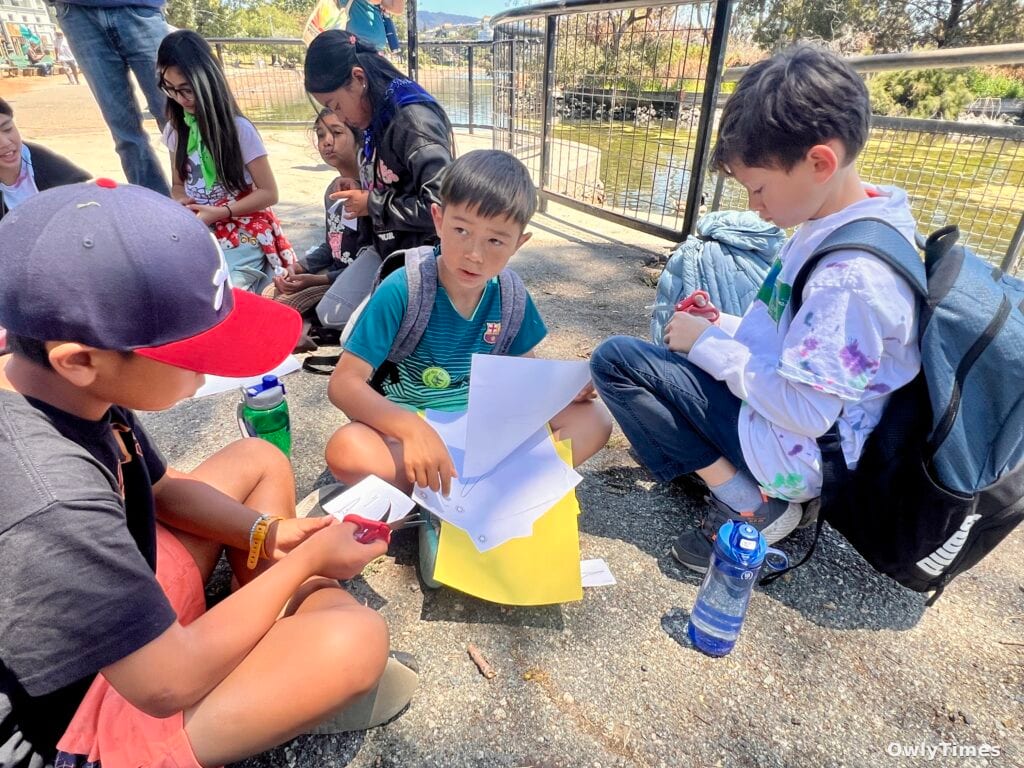

As we mark another Earth Day, the discourse often gravitates toward technological breakthroughs or policy mandates. Yet, there is a fundamental question that remains largely overlooked: How are we training the next generation to tackle challenges that refuse to fit into a single textbook chapter? Problems like climate change and biodiversity loss are inherently multidisciplinary, requiring a grasp of biology, physics, and earth science simultaneously. The scientific community is increasingly recognizing that to solve these complex problems, we must move away from the traditional model of isolated scientific silos.
Moving Beyond the Silos of Middle School Science
The transition toward integrated science is most critical during the middle school years. This developmental window is when students solidify their identities as scientists and begin to connect their personal interests to real-world inquiry. For instance, Richmond students participating in the Headwaters Science Institute’s summer program gain hands-on experience by crafting cutout paper models of birds on the banks of Lake Merritt in Oakland. This type of experiential learning encourages students to see the environment not as a list of facts, but as a dynamic system.
While the Next Generation Science Standards do not mandate a specific sequence, they intentionally organize learning expectations across a sixth-eighth grade band. This structure encourages educators to weave life, physical, and earth and space sciences together. Some states have taken this a step further; California has identified an interwoven model as its preferred approach, while states like Texas and Ohio now expect students to engage with all three domains each year.
The Data Behind the Classroom Shift
The shift toward multidisciplinary instruction is not merely a theoretical preference; it is becoming a statistical reality. A new analysis from the NWEA (Northwest Evaluation Association) provides a clear picture of this transition. Looking at nearly 2,200 middle schools nationwide—a sample that includes 34 schools in California—the data shows that 83% of these institutions now offer multidisciplinary science courses. An additional 14% offer a hybrid model that blends integrated and single-discipline options.
It is important to distinguish what this data represents versus what it might imply. These figures demonstrate that integrated instruction is rapidly becoming the dominant pedagogical norm, rather than a fringe alternative. However, the prevalence of these courses does not automatically guarantee that all students are receiving high-quality, deeply integrated lessons. The existence of a course title does not measure the efficacy of the curriculum or the depth of the pedagogical connection between, for example, chemical reactions and ecological health.
Limitations and the Path Toward Sustained Integration
While the widespread adoption of multidisciplinary science is a significant milestone, we must remain cautious about the implementation gap. The success of this model relies heavily on the quality of instructional materials and the professional development afforded to teachers. Simply combining subjects on a syllabus is not the same as providing the support necessary for educators to synthesize complex concepts across domains with confidence.
Furthermore, while integrating science is a positive step, it must be supported by systemic policy changes. California’s decision to include science assessments on the statewide school dashboard is a promising move toward elevating the subject's status. However, the long-term effectiveness of this shift depends on whether schools can move beyond the "dashboard" and provide the resources—such as time for teacher collaboration and interdisciplinary lesson planning—that make integrated learning viable.
The next reading of the NWEA assessment data will provide a clearer signal of whether this integrated approach is narrowing the gap in student science literacy. As we move forward, the metric to watch is not just the number of schools offering multidisciplinary courses, but the consistency of teacher support and the integration of these sciences with other core subjects like literacy. By aligning how students investigate phenomena with how they read, write, and reason, we can better prepare the next generation to confront the complex, interconnected challenges of the future.





