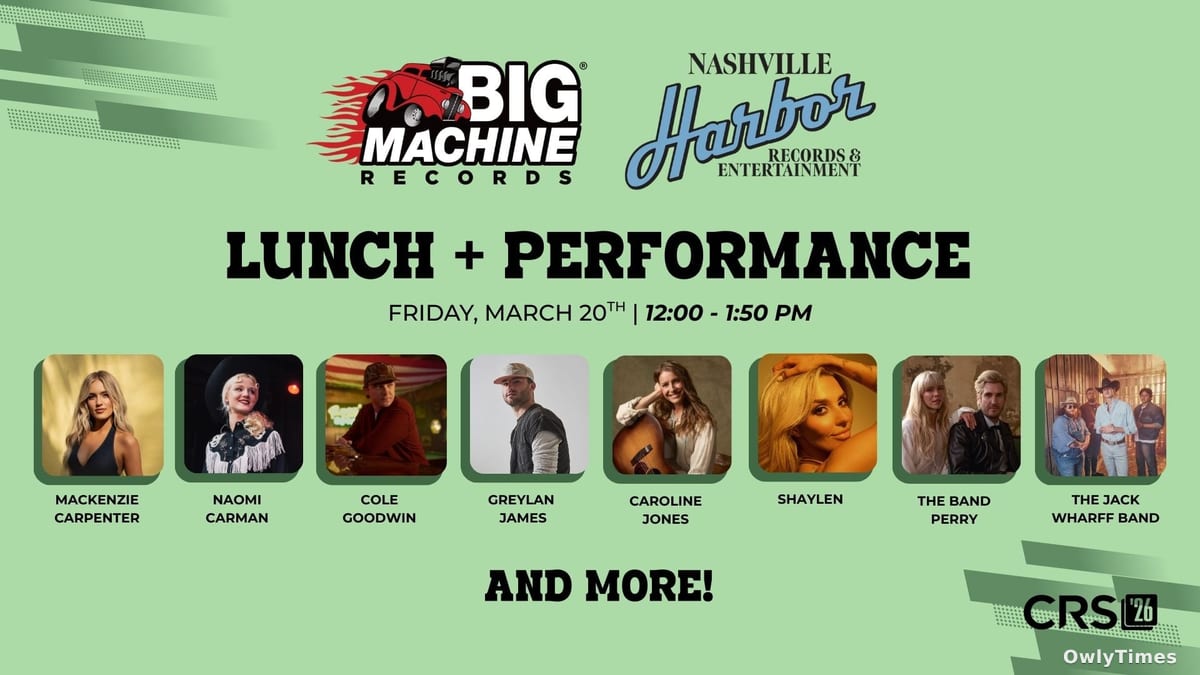

The scent of hot chicken and anticipation hung thick in the air last March as industry insiders descended on Nashville for Country Radio Seminar (CRS). It wasn’t the headlining acts drawing the biggest buzz, though – it was the quiet scramble for access, the whispered predictions about who would break, and the sheer, undeniable weight of a system still largely built on gatekeepers. Now, with Big Machine Records/Nashville Harbor Records & Entertainment unveiling its 2026 luncheon lineup, that tension is back, but with a crucial difference: the industry is watching to see if the old rules still apply, or if a new generation is rewriting the playbook. The roster – The Band Perry, The Jack Wharff Band, Mackenzie Carpenter, Cole Goodwin, Caroline Jones, Shaylen, Greylan James, and Naomi Carman – isn’t just a collection of names; it’s a microcosm of country music’s current identity crisis.
The Legacy Act and the Rising Tide
The inclusion of The Band Perry immediately throws a spotlight on the shifting sands of country stardom. Once a dominant force with hits like “If I Die Young,” their career trajectory has been marked by label disputes and creative reinvention. Their presence at CRS isn’t a coronation, but a question mark. Is this a genuine attempt to re-establish a legacy act, or a strategic move to draw attention to the luncheon itself? The answer likely lies somewhere in between, but it underscores a broader trend: established artists are increasingly reliant on industry events like CRS to maintain relevance in a landscape dominated by streaming and social media. Meanwhile, the remaining artists represent a diverse range of emerging talent, a deliberate attempt by Scott Borchetta, Founder & Chair of Big Machine, to showcase the “future—and yours.” But “future” is a loaded term in Nashville.
Beyond the Luncheon: The $799 Question
The announcement of the lineup is inextricably linked to the economics of access. With online registration now closed, on-site registration remains open at $799 – a significant barrier to entry for independent artists and smaller labels. This price point, roughly 30% higher than the average cost of similar industry conferences according to a 2023 report by Billboard, isn’t just about covering costs; it’s about curating the room. It’s about ensuring that the artists showcased have the backing – and the budgets – to capitalize on the exposure. Borchetta’s statement about showcasing artists “where they feel most at home – ON STAGE” rings hollow for those who can’t afford a seat at the table. The luncheon, and CRS as a whole, becomes a self-fulfilling prophecy: those with resources get a platform, and those without remain on the periphery.
Original reporting: musicrow.com.
The Project Manager’s Perspective: A Shift in Industry Roles
The fact that this announcement was reported by Madison Hahnen, Project Manager at MusicRow Magazine, is itself telling. Traditionally, these announcements would be handled by music critics or entertainment reporters. Hahnen’s background in team and project management, coupled with her previous internships at artist development companies like Make Wake Artists and Song Suffragettes, suggests a growing emphasis on the operational and logistical side of the music industry. Her role highlights a shift away from purely creative coverage towards a more business-focused approach. This isn’t necessarily a negative development – efficient project management is crucial for navigating the complexities of the modern music landscape – but it does raise questions about whether the industry is prioritizing infrastructure over artistry. The focus on “operational objectives and large-scale projects,” as Hahnen’s job description states, could inadvertently marginalize the individual artist’s voice.
What Does “NEXT 20” Really Mean?
Borchetta’s proclamation of entering the “NEXT 20” feels less like a celebration and more like a challenge. Big Machine Records, once a powerhouse behind artists like Taylor Swift and Florida Georgia Line, has undergone significant changes in recent years, including its sale to HYBE America. The luncheon lineup, and the broader CRS event, are a testing ground for the label’s future strategy. Will they continue to rely on established formulas, or will they embrace a more disruptive approach to artist development? The inclusion of artists like Caroline Jones, who blends country with pop sensibilities, suggests a willingness to experiment. But the ultimate measure of success won’t be the number of attendees or the positive press coverage; it will be whether these artists can translate industry buzz into sustained chart success and a loyal fanbase. The question isn’t just about who will be the next big star, but whether the system itself is capable of nurturing genuine, lasting talent in an era of fleeting viral moments and algorithm-driven playlists. Will the “NEXT 20” truly represent a new era for country music, or simply a polished continuation of the old one?





