
The Calculus of Dismissal: DeSantis Signals a Shift in Iran Strategy
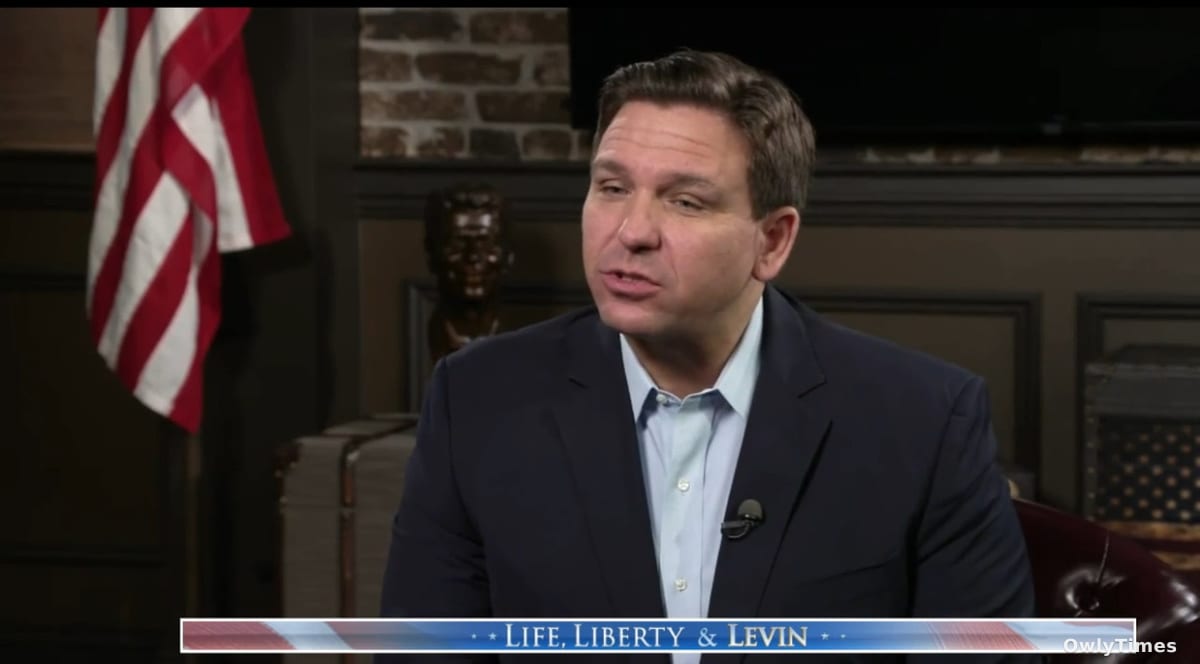
The conspicuous deployment of American military assets – reportedly up to 50,000 troops, 14 ships, and a substantial air and logistical support network – to the Persian Gulf isn’t simply a show of force; it’s a deliberate narrowing of strategic options. While the Biden administration pursues diplomatic avenues regarding Iran’s nuclear program, Governor Ron DeSantis’s public dismissal of negotiations isn’t a deviation from established policy, but a calculated articulation of a hawkish alternative gaining traction within the Republican party. DeSantis isn’t arguing against diplomacy, he’s preemptively delegitimizing the possibility of a successful diplomatic outcome, effectively framing negotiation as appeasement. This positioning isn’t about Iran, it’s about positioning within a potential future administration and solidifying support from a key constituency.
Echoes of Preemptive Framing and the Road to Iraq
DeSantis’s assertion that Iran is a regime “pledged to Islamic jihad” and incapable of a “credible deal” isn’t novel rhetoric, but its timing is significant. The framing mirrors the arguments deployed in the lead-up to the 2003 invasion of Iraq, where the George W. Bush administration emphasized Saddam Hussein’s alleged ties to terrorism and disregard for international norms to build public and congressional support for military action. The scale of the current military buildup – rivaling those preceding the Gulf War and the Iraq invasions – further reinforces this parallel. While direct comparisons are fraught with nuance, the pattern is clear: a demonstrable military escalation coupled with a narrative that casts the opposing regime as fundamentally untrustworthy and driven by irrational ideology. The key difference, and a crucial point of analysis, is that the 2003 justification relied on claims of weapons of mass destruction, a claim DeSantis avoids, instead focusing on ideological incompatibility.
This piece references the Florida Politics report.
Who Benefits and Who Loses from a Negotiating Void?
The immediate losers from DeSantis’s stance are those advocating for a renewed Joint Comprehensive Plan of Action (JCPOA), or a similar agreement limiting Iran’s nuclear capabilities. The Biden administration, despite its stated commitment to diplomacy, faces increasing pressure from both Republicans and some within its own party to adopt a more confrontational approach. DeSantis’s rhetoric provides ammunition for those advocating for maximal pressure and military preparedness. Conversely, those who benefit include defense contractors poised to profit from increased military spending in the region, and hardline factions within Iran who can use the perceived intransigence of the West to justify their own domestic policies and continued nuclear development. The Israeli government, under Benjamin Netanyahu, has consistently voiced skepticism about negotiations with Iran and would likely welcome a more aggressive stance from the United States.
The “Inducement” Factor and the Erosion of Deterrence
DeSantis’s previous suggestion that attacks coordinated with Israel would serve as an “inducement” due to Iran’s “very apocalyptic radical ideology” is particularly unsettling. This isn’t simply a rejection of mutual assured destruction; it’s an explicit articulation of a willingness to accept escalation, even if it carries significant risk. This line of thinking rests on the assumption that Iran’s leadership is not rational in the traditional sense, and therefore won’t respond to conventional deterrents. This is a dangerous premise, as it lowers the threshold for miscalculation and increases the likelihood of unintended consequences. The historical precedent here isn’t a specific conflict, but a recurring pattern in international relations: the belief that an adversary is uniquely irrational leading to disastrous policy choices. The 1914 July Crisis, predicated on miscalculations about the other side’s intentions, serves as a stark warning.
The Next Chess Move: Congressional Pressure and the Shadow Lobby
The political chess move to watch isn’t a direct action by the Biden administration, but the intensifying pressure from Congress. A coordinated effort by Republican lawmakers, potentially joined by dissenting Democrats, to restrict funding for negotiations with Iran or to impose additional sanctions could effectively box in the administration. Crucially, the role of the pro-Israel lobby, particularly groups like AIPAC, will be pivotal. Their ability to mobilize financial and political support for candidates who align with a hawkish Iran policy will shape the debate in the coming months. The question isn’t simply whether negotiations will succeed, but whether they will even be allowed to continue with sufficient resources and political cover. The real battleground isn’t in Tehran, it’s in Washington.