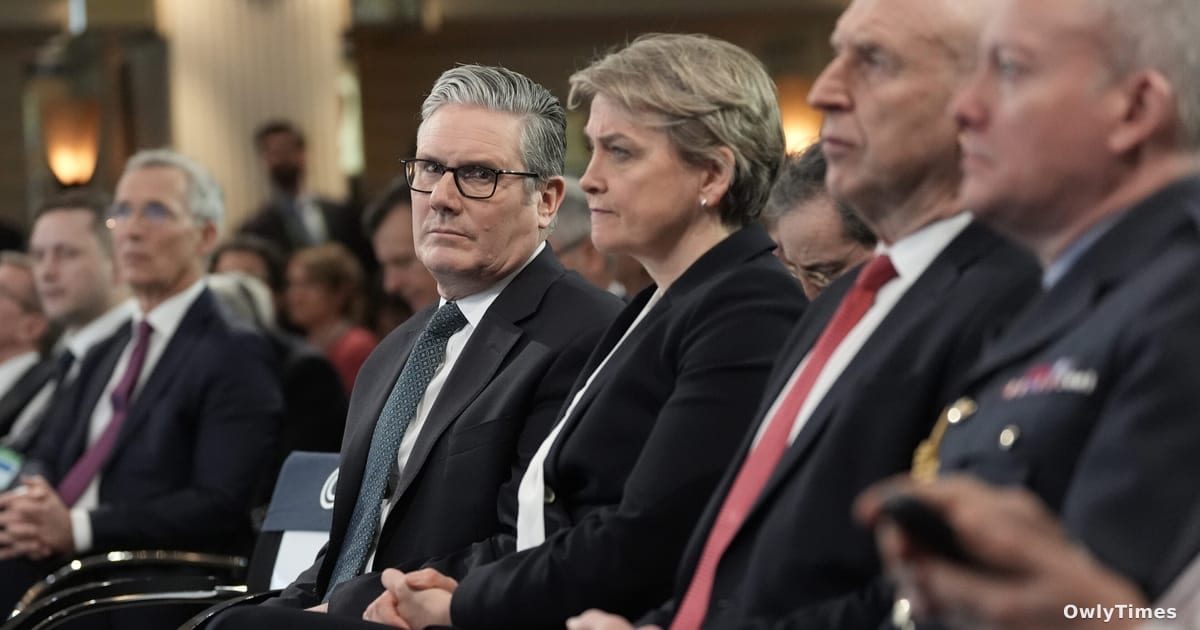

The Calculus of Non-Intervention: Starmer Navigates a U.S.-Shaped Crisis
Keir Starmer’s calculated approach to the “special relationship” is being stress-tested not by a divergence of interests, but by the sheer force of Donald Trump’s unilateral action in the Middle East. The British Prime Minister’s insistence on non-involvement in the U.S.-Israeli operation targeting Iranian Supreme Leader Ayatollah Ali Khamenei isn’t simply a matter of principle; it’s a strategic positioning designed to preserve U.K. autonomy while mitigating the fallout from a volatile situation. This delicate balancing act, however, reveals a fundamental tension: the limits of British influence when faced with a U.S. administration prioritizing its own objectives, and the domestic political costs of appearing either too compliant or too critical.
Drawn from politico.eu.
The initial response – repeatedly stating the U.K. “played no role” while ultimately conceding the use of British bases for defensive purposes – is a classic example of risk transfer. Starmer attempts to distance the U.K. from direct responsibility for the escalation, shielding it from potential retaliatory attacks, while simultaneously offering limited support to a key ally. This mirrors the British stance during the 2003 invasion of Iraq, where then-Prime Minister Tony Blair sought to position the U.K. as a bridge between the U.S. and Europe, a role that ultimately proved unsustainable and damaging to British credibility. The current situation, however, differs in that Starmer is proactively establishing distance, anticipating the potential for blowback rather than attempting to manage it after the fact.
Who benefits and who loses from this approach is immediately apparent. The U.S., predictably, feels shortchanged, as evidenced by Lindsey Graham’s “pathetic” rebuke. The expectation, articulated by former Foreign Office Permanent Secretary Peter Ricketts, is that Washington would naturally expect full U.K. support. Conversely, Iran benefits from the fractured international response, potentially diminishing the legitimacy of any future actions taken against it. Domestically, Starmer risks alienating both the right-wing, who demand unwavering support for the U.S., and the left-wing Green Party, emboldened by recent electoral gains, who condemn the strikes as illegal and a violation of international law. The by-election victory for the Greens, and Zack Polanski’s pointed criticism, underscores the growing pressure on Labour to articulate a clear moral and legal position.
The immediate logistical challenges – assisting tens of thousands of stranded British citizens and protecting commercial interests like the Gibraltar-flagged oil tanker – are tangible consequences of the escalating conflict. These practical concerns, however, are secondary to the underlying political calculation. John Healey’s refusal to comment on the legality of the U.S. strikes, while strategically avoiding direct endorsement, provides ammunition for Polanski’s accusations of a “law of the jungle” mentality. This highlights a core contradiction within Starmer’s position: a commitment to international law coupled with a reluctance to publicly challenge a powerful ally. The parallel to the Iraq War, repeatedly invoked by Polanski, serves as a potent reminder of the potential for long-term damage to British prestige and influence.
The current dynamic isn’t simply about the U.S. and U.K.; it’s about the shifting power dynamics within British politics. Starmer’s Labour Party, already facing questions about its leadership, is vulnerable to attacks from both the left and the right. The right-wing parties, led by Nigel Farage and Priti Patel, are attempting to frame the issue as a test of loyalty to the U.S., while the Greens are exploiting the opportunity to position themselves as the champions of international law and peace. Calvin Bailey’s attempt to reframe the debate, resisting the “us-and-them” narrative, is a defensive maneuver designed to prevent the issue from becoming a populist rallying cry.
The political chess move to watch next isn’t whether Starmer will ultimately join a broader military coalition – the current signals suggest he won’t. It’s whether he can successfully leverage the U.K.’s perceived neutrality into a leading role in post-conflict stabilization efforts. Emily Thornberry’s suggestion that Britain can “call for diplomatic solutions” is a hopeful assessment, but it hinges on the U.S. and Israel being willing to accept British mediation. The question is whether Washington, having acted unilaterally, will genuinely welcome a British-led diplomatic initiative, or whether Starmer’s attempt at a balancing act will ultimately leave the U.K. sidelined and diminished.





