
Is Diablo II: Resurrected’s new Warlock class a genuine evolution of the formula, or just a cleverly disguised nostalgia trip? The hype surrounding Blizzard’s latest addition has been deafening, promising a fresh take on the classic action RPG. But the real story here isn't about a new class filling a gap in the roster—it’s about how Resurrected is subtly admitting the original Diablo II’s class design was, frankly, a bit limited, and how the Warlock is a workaround, not a revolution. For players who haven’t sunk hundreds of hours into mastering the nuances of each archetype, this is a welcome change. For the die-hards, it’s a fascinating, if slightly inelegant, compromise.
The Hybrid’s Appeal: A Class for the Undecided
The Warlock, at its core, feels like Blizzard finally gave in to the player desire for “I want to do everything.” The three Demonic partner options—the Tainted, a ranged attacker; and two melee-focused demons—offer a taste of different playstyles, but it’s the Tainted that consistently proved most effective in my testing. While the other demons often got overwhelmed in larger encounters, the Tainted’s ability to harass enemies from a distance provided crucial support without becoming a liability. This isn’t a bug, it’s a feature. It speaks to a design philosophy that prioritizes accessibility over strict optimization. The often-overlooked skill allowing you to teleport your demon or sacrifice it for area damage felt… unnecessary. The AI-controlled attack patterns were, surprisingly, sufficient. This is a subtle but important point: Diablo II traditionally demanded meticulous micromanagement. The Warlock, at least in its early stages, offers a degree of forgiveness.
Original reporting: Ars Technica.
Flame Waves and Lethargy: The Power of Controlled Chaos
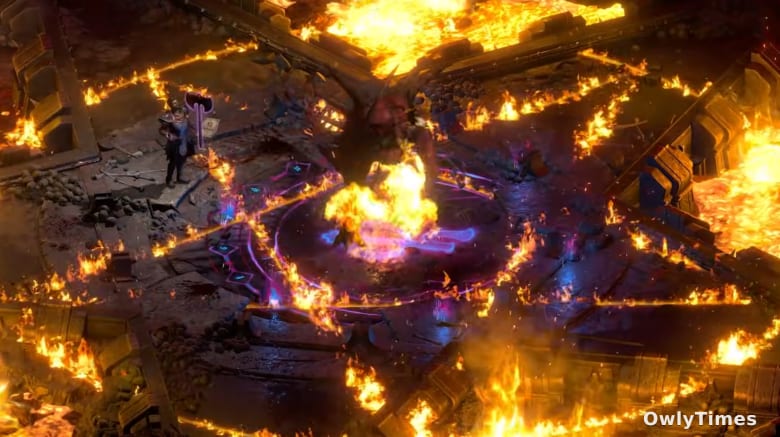
The Chaos upgrade branch is where the Warlock truly shines, leaning heavily into area-of-effect (AoE) spells. My build quickly became reliant on direct-damage AoE, with the Flame Wave spell proving particularly devastating in the game’s frequently claustrophobic corridors. It’s not a groundbreaking mechanic—AoE has been a staple of Diablo for decades—but the Warlock’s implementation feels particularly satisfying. Complementing the offensive power is the Sigil of Lethargy, a spell that slows enemy swarms, providing a crucial window for strategic planning. This isn’t about twitch reflexes and perfect positioning; it’s about controlling the battlefield and dictating the pace of combat. Compared to the frantic, often overwhelming encounters of the original Diablo II, this feels like a significant quality-of-life improvement.
Borrowed Power and the Illusion of Originality
What’s most striking about the Warlock is how much it feels like a remix of existing classes. The combination of ranged combat, AoE magic, and demon summoning creates a hybrid experience that borrows liberally from the Sorceress, Amazon, and Necromancer. Blizzard isn’t pretending otherwise. The class description itself acknowledges this lineage. But this isn’t necessarily a criticism. The Warlock doesn’t attempt to reinvent the wheel; it refines and combines existing elements into a cohesive, enjoyable package. This is a smart move, particularly for a DLC class aimed at both veteran players and newcomers. It lowers the barrier to entry without alienating those who have already mastered the intricacies of the original archetypes.
However, it’s worth noting that I haven’t yet ventured into the “Reign of the Warlock” DLC’s late-game content, or explored the truly optimized builds that dedicated players are already uncovering. My experience has been largely casual, focused on enjoying the core gameplay loop. And that’s precisely the point. The Warlock isn’t about breaking the game; it’s about providing a fresh, accessible, and enjoyable way to revisit the world of Sanctuary.
The real question isn’t whether the Warlock is the best class in Diablo II: Resurrected—it’s whether it’s a sign of things to come. Will Blizzard continue to address the inherent limitations of the original class design with future updates and expansions? Or will the Warlock remain a unique, but ultimately isolated, experiment? My prediction: we’ll see more hybrid classes in the future, leaning into the player desire for versatility and control. The Warlock isn’t the end of Diablo II’s evolution; it’s a glimpse of what’s possible when Blizzard acknowledges that sometimes, the best way forward is to borrow from the past.