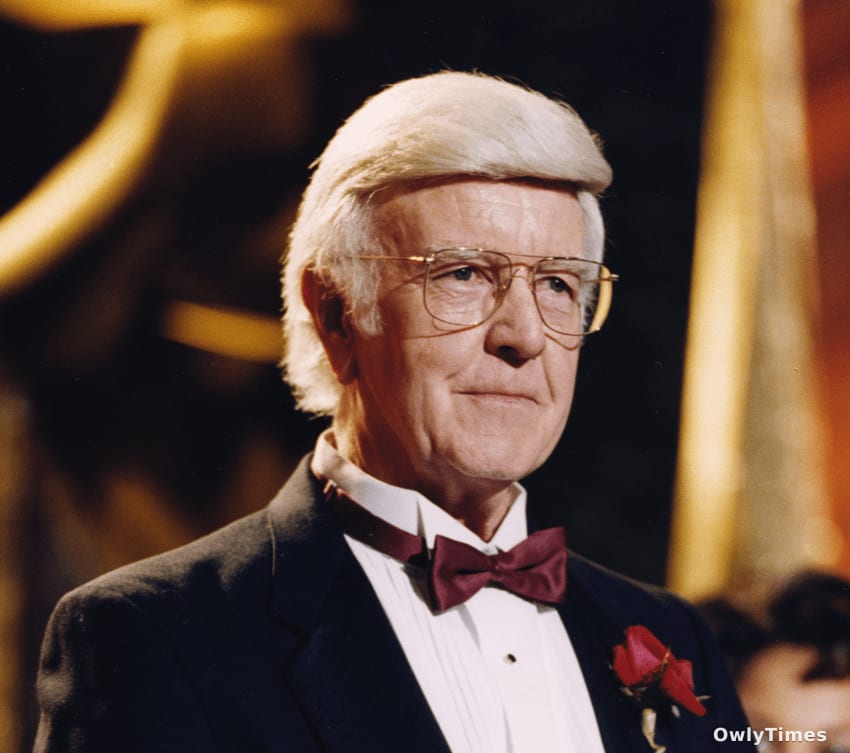

The hum of a projector and the flicker of a screen were the heartbeat of Don Iwerks’ life, a man whose hands built the literal machinery of our modern imagination. On July 9, the industry lost a titan of technical ingenuity when Iwerks passed away at age 96, as reported by Variety. While The Hollywood Reporter notes that Disney announced his passing occurred on Thursday evening, Deadline provides the poignant detail that he died peacefully at the Ojai Community Memorial Care Center, surrounded by loved ones.
Born on July 24, 1929, Iwerks grew up as the son of Disney legend Ub Iwerks, the co-creator of Mickey Mouse. While Variety places his birthplace in Southern California, Deadline specifies that he was born in Dallas, Texas. Regardless of the geography of his birth, his destiny was inextricably linked to the machine shops of Burbank. He began his tenure at Walt Disney Productions in 1950, a career path briefly interrupted by his service in the U.S. Army Signal Corps during the Korean War. Upon his return to the studio in 1952, he joined his father in the Studio Machine Shop, embarking on a legacy that would span over six decades.
Crafting the Immersive Experience
To look at the history of Disney is to look at the tools Iwerks helped forge. He was instrumental in perfecting the sodium vapor process—a sophisticated traveling matte technique—that became iconic in the 1964 classic Mary Poppins. Beyond the camera lens, he pioneered the 360-degree Circle-Vision camera system, which fundamentally altered how theme park guests experienced panoramic storytelling. His technical fingerprints are on everything from the projection systems for the Star Tours attraction to the underwater cameras used in the filming of 20,000 Leagues Under the Sea.
The reach of his work extended far beyond the studio walls. In 1986, Iwerks co-founded Iwerks Entertainment alongside former Disney executive Stan Kinsey. Under his technical leadership, the company grew into a global powerhouse, installing immersive 3D experiences, giant-screen theaters, and motion simulators in nearly 300 venues across 38 countries. This expansion brought the kind of high-end, immersive entertainment once reserved for studio lots to millions of everyday theatergoers, effectively democratizing the "theme park" experience.
A Legacy Written in Steel and Light
For many Disney fans, Iwerks’ contribution is even more intimate. He served as the model for the hands of the Abraham Lincoln Audio-Animatronics figure. These "Iwerks Hands" became the gold standard for the company’s robotic performers, a small but essential detail that grounded the illusion of life in a mechanical frame. As Variety notes, his influence was so profound that in 2007, he was entrusted by Diane Disney Miller to restore the historic camera systems housed at The Walt Disney Family Museum, including the original Multiplane camera.
His contributions earned him significant industry recognition, though sources differ slightly on the timing of his accolades. Variety notes he received the Academy of Motion Picture Arts and Sciences’ Gordon E. Sawyer Award, while Deadline specifically identifies the 1998 Oscars ceremony as the moment he accepted the honor. He was later named a Disney Legend in 2009. Disney CEO Josh D’Amaro paid tribute to the late innovator, stating, "Don embodied that rare combination of heart, ingenuity, and passion that has always defined Disney."
Ultimately, the story of Don Iwerks is the story of the transition from the golden age of animation to the age of immersive experience. His life was defined by the belief that every technical challenge was simply a puzzle waiting for an optimistic solution. As his family noted, he spent his final days sketching new inventions and cheering on the Los Angeles Dodgers, keeping the spirit of the inventor alive until the very end. The industry now looks to the upcoming stewardship of his legacy at The Walt Disney Family Museum, where his life’s work in preservation and innovation remains on display for future generations.