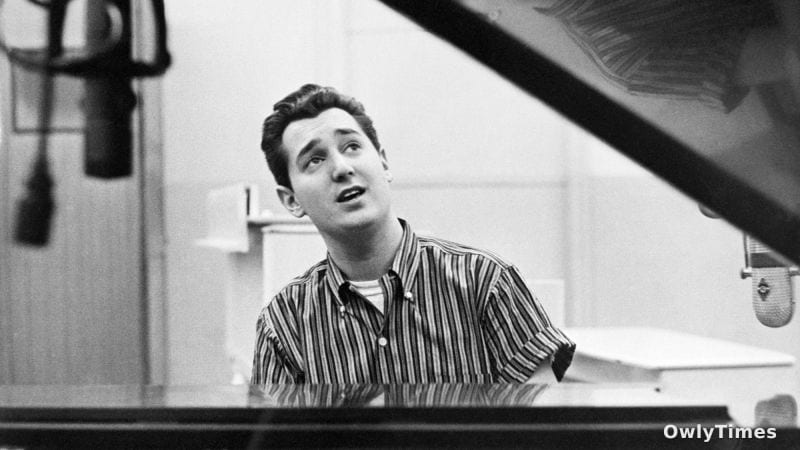

The stage lights hit Neil Sedaka just so, catching the glint of his dark hair and the perpetual, boyish grin. It was 2012, and at 73, he was still delivering the soaring vocals that defined a generation, still commanding audiences with a seemingly endless catalog of hits. He’d just finished a set, recounting to the Associated Press how Luciano Pavarotti had warned him about the inevitable decline of the vocal cords. Sedaka, however, felt remarkably unchanged. “It’s nice to be a legend,” he’d said, “but it’s better to be a working legend.” Sedaka passed away Friday at the age of 86, and with him goes a crucial link to a moment in American music history often overshadowed by the seismic shifts of the British Invasion and the counterculture movement – the meticulously crafted, emotionally direct pop of the early 1960s.
From Brighton Beach to the Brill Building
Sedaka’s story isn’t just about chart-topping singles like “Breaking Up Is Hard to Do” and “Laughter in the Rain”; it’s a testament to the power of the American dream, forged in the crowded two-bedroom apartment he shared with eleven relatives in Brooklyn’s Brighton Beach. His mother, Eleanor Sedaka, recognizing his talent after a teacher’s encouragement, worked tirelessly to afford a secondhand piano, and then managed his career for years. This wasn’t a tale of overnight success, but of relentless dedication and a family’s unwavering belief. It’s a narrative that resonates deeply in a cultural moment obsessed with “hustle culture” and the sacrifices made in pursuit of artistic ambition. Sedaka’s early success, alongside lyricist and childhood friend Howard Greenfield, within the famed Brill Building, speaks to a specific era of songwriting – a factory of hits designed to soundtrack teenage life. Between 1959 and 1963, they churned out a string of classics – “Happy Birthday Sweet Sixteen,” “Calendar Girl,” and the sweetly melancholic “Oh! Carol,” a song famously inspired by his high school sweetheart, Carole King.
Reporting from CNN informs this analysis.
The Echo of a Lost Innocence
The significance of those early hits lies in what they represented. The late 50s and early 60s were a period of relative calm before the storm of the 60s, a brief window of teenage innocence before the Vietnam War, civil rights struggles, and the cultural revolution. Sedaka’s music, with its clean-cut image and relatable themes of first love and adolescent anxieties, perfectly captured that moment. While Elvis Presley was shaking up the establishment with raw sexuality and Chuck Berry was pioneering rock and roll’s rebellious spirit, Sedaka offered a softer, more accessible sound. His songs weren’t about challenging the status quo; they were about navigating the universal experiences of growing up. This isn’t to diminish his artistry, but to contextualize it. In a current music landscape dominated by genre-bending and often politically charged lyrics, Sedaka’s work feels like a nostalgic echo of a simpler time, a time that many now view with a complicated mix of fondness and regret.
A Second Act and the Power of Reinvention
The mid-1960s brought a downturn for Sedaka, as the British Invasion swept across America and his style fell out of favor. Many artists from that era faded into obscurity, but Sedaka demonstrated a remarkable resilience. He reinvented himself in the 1970s, scoring hits with “Laughter in the Rain” and “Bad Blood,” and even found success as a songwriter for others, most notably with “Love Will Keep Us Together,” which became a chart-topping smash for The Captain & Tennille in 1975 – a song that famously included a shout-out, “Sedaka’s back!” This comeback story is particularly relevant today, as artists grapple with the ever-changing demands of the music industry and the pressure to constantly evolve. Sedaka’s ability to adapt and find new audiences, decades after his initial success, serves as a powerful example of longevity and artistic reinvention. His continued touring well into his 80s, fueled by that “adrenaline rush” of performing, further underscores his dedication to his craft.
Beyond the Headlines: A Legacy of Songwriting
Sedaka’s influence extends far beyond his own recordings. He helped launch the career of Connie Francis with hits like “Stupid Cupid” and “Where the Boys Are,” demonstrating a keen understanding of what resonated with audiences. His songs have been covered by a diverse range of artists, from legends like Frank Sinatra and Elvis Presley to more contemporary acts like The 5th Dimension and even Nickelback, proving their enduring appeal. But perhaps the most significant aspect of his legacy is the sheer volume of quality songwriting he produced. In an industry often focused on fleeting trends, Sedaka’s catalog represents a consistent body of work that has touched millions of lives. As the music industry continues to navigate the challenges of streaming, artificial intelligence, and the evolving tastes of younger generations, the story of Neil Sedaka reminds us that genuine artistry, coupled with a relentless work ethic, can transcend time and leave an indelible mark on culture. The question now is: will future generations recognize the quiet brilliance of the Brill Building sound, or will it remain a footnote in the history of rock and roll?