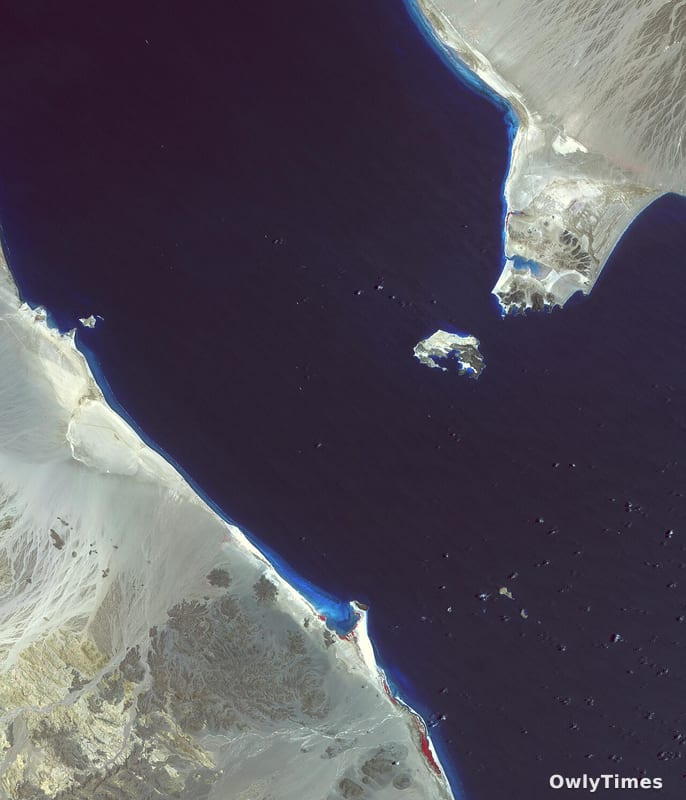

How does a continent slowly pull itself apart, and what happens to the land left in the wake of such a colossal tectonic shift? For decades, geologists have studied the movement of plates to understand the birth of oceans, but catching the process in its "necking" phase—where the crust thins like taffy before finally snapping—is a rare opportunity. A new study published on April 23 in the journal Nature Communications provides a high-resolution look at the Turkana Rift, offering evidence that eastern Africa is currently undergoing this critical transition.
The study, led by researchers including Folarin Kolawole and Christian Rowan of Columbia University, focused on the Turkana Rift, a 300-mile-wide zone that forms a segment of the larger East African Rift System. This massive system stretches roughly 4,000 miles from Jordan to Mozambique. By analyzing how acoustic waves interacted with subsurface layers and integrating that data with existing imaging, the team mapped the structural composition of the rift’s crust.
The Physics of Continental Thinning
The data revealed a striking discrepancy in crustal thickness. While the crust in surrounding regions exceeds 22 miles in thickness, the center of the Turkana Rift has been stretched down to a mere 8 miles. This extreme thinning is the hallmark of "necking," a mechanical process that precedes the eventual separation of a tectonic plate.
It is important to clarify what these findings actually mean versus the sensationalized headlines suggesting an immediate catastrophe. This is not a sudden, violent event that will reshape maps overnight. The plates are currently separating at a rate of about one-fifth of an inch per year. While the authors conclude that eastern Africa is "primed for continental breakup," this is a geological timeline; the formation of a new ocean basin—where magma rises to form a new seafloor and the Indian Ocean rushes in—is a process expected to play out over the next few million years.
A Geological Cradle for Human History
One of the most intriguing aspects of this study is the connection between tectonic activity and the preservation of biological history. The researchers posit that the necking process, which likely began around four million years ago following widespread volcanic eruptions, created the ideal conditions for fossilization. The volcanic activity generated fine-grained sediments that effectively blanketed and preserved remains, including the famous Turkana Boy, a 1.6-million-year-old Homo erectus skeleton.
The study suggests that the rift’s unique structural evolution is responsible for the region's remarkable fossil record, which includes more than 1,200 discovered hominin fossils. By linking the mechanical thinning of the crust to the deposition of these sediments, the team has provided a new framework for understanding why this specific corridor of Africa has become a focal point for paleoanthropological discovery.
Limitations to Consider
While the data provides a compelling look at current crustal dynamics, it is worth noting that tectonic rifting is notoriously complex. Not every rift that reaches a "necking" phase proceeds to a full continental breakup. Geologic history is littered with failed rifts that ceased activity before forming an ocean. Furthermore, while the current rate of movement is measured at one-fifth of an inch annually, tectonic processes can be influenced by internal mantle dynamics that are difficult to model with complete certainty over deep time.
Next Steps in Tectonic Mapping
The research team is now looking toward broader applications of their mapping methodology to better understand how these rifted margins have shaped global geography. Because the East African Rift System serves as the only known active example of this transition, it acts as a primary laboratory for geologists. Future investigations will likely focus on gathering more granular seismic data across the 4,000-mile stretch of the rift to determine if the "necking" signature is uniform or if localized variations exist. The next reading of crustal thinning metrics across the broader rift system will indicate whether this specific phase of development is accelerating or stabilizing, providing a clearer forecast for the eventual transformation of the African coastline.





