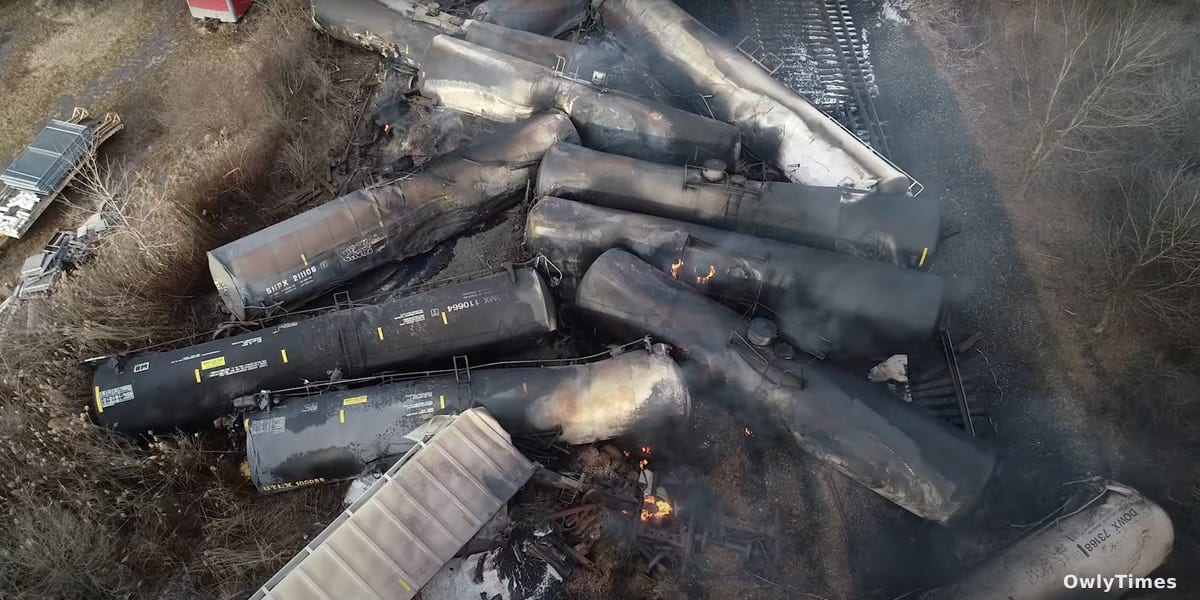

The question of how environmental toxins “get under the skin” – how they translate from atmospheric presence to measurable biological harm – is rarely answered quickly. In East Palestine, Ohio, where a train derailment unleashed a cocktail of industrial chemicals three years ago, that slow pace of discovery is particularly fraught. Initial anxieties focused on immediate symptoms like headaches and respiratory irritation, but the true scope of the disaster’s impact will unfold over decades, potentially manifesting as chronic diseases like cancer. While headlines have often framed the situation as a search for definitive proof of harm, the ongoing research reveals a more nuanced reality: a painstaking effort to establish a baseline, disentangle cause from correlation, and understand the long-term trajectory of exposure.
Beyond Immediate Symptoms: Focusing on the Liver
The derailment on February 3, 2023, involved 38 cars and released an estimated 1.1 million pounds of vinyl chloride, a synthetic polymer widely used in plastic production. Residents immediately reported a range of symptoms, prompting a swift response from the National Science Foundation, which conducted six rounds of testing in the surrounding environment – analyzing buildings, waterways, and even bee hives – within a mere four and a half months. Now, a research project led by Juliane Beier, an assistant professor of medicine in gastroenterology at the University of Pittsburgh, is zeroing in on a specific organ system: the liver. Beier recognized early on that vinyl chloride exposure could lead to toxicant-associated steatohepatitis (TASH) and, ultimately, liver cancer. This focus isn’t arbitrary; the liver is a primary site for detoxification, making it particularly vulnerable to chemical insult.
See the original popularmechanics.com story for the full account.
What the study actually found, however, isn’t a simple confirmation of widespread liver damage. Beier’s team is currently analyzing data from 120 residents within a 10-mile radius of the crash site, and approximately 30% exhibit markers for liver damage in blood tests. While this percentage is higher than average for a rural area like East Palestine, it’s not dramatically so. This highlights a critical point: establishing a clear link between the derailment and observed health effects requires careful comparison to pre-existing health conditions and other potential risk factors within the community. As Beier herself cautions, “So at this time, we can’t really say this is due to the derailment. It could be other risk factors causing this. This is why it’s so important to come in, like every year from now, to look at their progression.” The study isn’t about proving guilt, but about building a longitudinal dataset to discern patterns.
A Canine Canary in the Coal Mine
The challenge of long-term human health monitoring is, of course, the length of human life. Diseases like cancer can take decades to develop, making it difficult to directly attribute them to a specific event. This is where the study’s innovative use of canine subjects becomes particularly compelling. Researchers are leveraging the shorter lifespans of dogs – a tragic reality, acknowledged by Elinor Karlsson of the University of Massachusetts – to accelerate the understanding of exposure-disease relationships. Less than two months after the derailment, dog owners were provided with silicone tags. These tags, acting like passive air samplers, absorb chemicals from the environment, providing a record of each dog’s exposure profile.
Initial findings reveal that dogs near the derailment site experienced varying chemical exposures over time, and that exposure differed based on distance from the crash. This dynamic picture of exposure is crucial. It suggests that the initial plume of chemicals wasn’t uniform, and that ongoing sources of contamination may exist. Karlsson explains the value of this approach: “One of the things that’s the biggest puzzle in human health is how exposures in your environment change your risk of getting diseases like cancer. Dogs are a great model for understanding this question because they tend to have shorter lifespans, very sadly, but that means that we can sort of study diseases more quickly in dogs.” This isn’t to suggest dogs are merely disposable research tools, but rather that their biological characteristics offer a unique opportunity to accelerate scientific understanding.
Limitations to Consider
Despite the ingenuity of the research, several limitations must be acknowledged. The 120 human participants represent a relatively small sample size for a community impacted by such a widespread event. Recruitment challenges and potential selection bias – those most concerned about their health may be more likely to participate – could skew the results. Furthermore, accurately quantifying past exposure levels in humans is incredibly difficult, relying on self-reported data and retrospective assessments. The silicone dog tags offer a more precise record, but even these have limitations; they capture airborne chemicals but don’t account for exposure through ingestion or dermal contact. Finally, the complex interplay of genetic predisposition, lifestyle factors, and other environmental exposures makes it challenging to isolate the specific contribution of the vinyl chloride and other chemicals released during the derailment.
The Future of Environmental Health Monitoring
The East Palestine research isn’t just about understanding the aftermath of a single train derailment. It’s a case study in environmental health monitoring, highlighting the need for proactive, long-term surveillance in communities exposed to industrial chemicals. The next steps involve expanding the participant pool in both the human and canine studies, refining exposure assessment methods, and investigating the potential for epigenetic changes – alterations in gene expression that can be passed down through generations. Crucially, researchers need to move beyond simply identifying biomarkers of harm to understanding the mechanisms by which these chemicals disrupt biological processes.
Looking ahead, consider this scenario: a new sensor technology is developed that can continuously monitor air and water quality at a hyperlocal level, providing real-time data on chemical exposures. Imagine this technology deployed in communities surrounding industrial facilities, creating a “digital fence” that alerts residents and authorities to potential hazards before they manifest as widespread health problems. The lessons learned from East Palestine suggest that such proactive monitoring isn’t just desirable, it’s essential for protecting public health in an increasingly complex and chemically-laden world.





