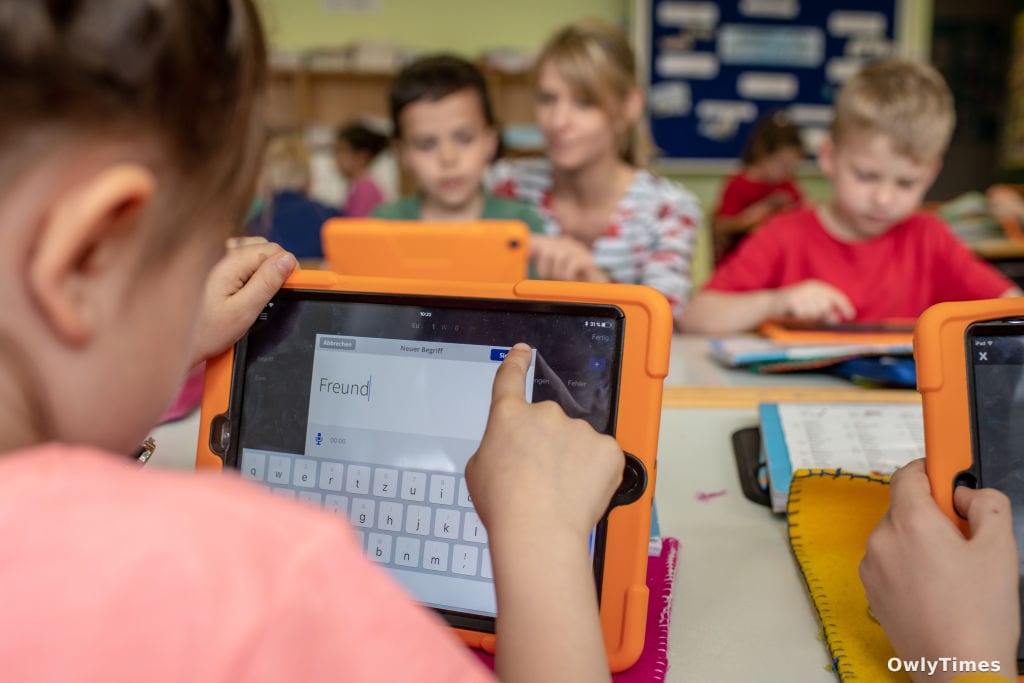

Is the classroom laptop now a symbol of wasted potential? It feels almost sacrilegious to ask, given the earnest intentions behind decades of ed tech investment. But the numbers don’t lie, and they’re screaming a truth Silicon Valley desperately wants to avoid: throwing technology at education doesn’t automatically make it better. The real story here isn’t about innovation or access – it’s about a fundamental misunderstanding of how people actually learn, and a willingness to ignore evidence that contradicts a compelling narrative.
The story begins with optimism. Following the devastating 2011 Joplin tornado, the United Arab Emirates stepped in with a $500,000 donation, allowing Joplin High School to become a 1:1 computing environment – a laptop for every student. It was a gesture of goodwill, and emblematic of the prevailing belief at the time: technology was the key to unlocking educational equity. Back in 2008, predictions were bold. Some, like those outlined in prominent books of the era, envisioned half of all high school classes delivered fully online, slashing costs and boosting outcomes. The biggest concern wasn’t if it would work, but if it was financially viable.
This article draws on reporting from theargumentmag.com.
Today, that vision feels… quaint. A staggering 88% of US public schools now boast 1:1 computing programs. Yet, despite this ubiquitous access, American students are demonstrably worse at reading and math than they were in 2015, and haven’t improved since 2005. This isn’t a minor dip; it’s a sustained decline happening concurrently with massive tech integration. The OECD, examining international trends, found “no appreciable improvements in student achievement” in countries heavily invested in educational technology. We’ve spent decades and billions chasing a digital panacea, and the results are, frankly, embarrassing.
The Illusion of the Great Equalizer
The initial promise of ed tech hinged on leveling the playing field. Give every child a laptop, the thinking went, and suddenly socioeconomic disparities in access to resources would vanish. A digital library would be available to all, regardless of zip code. But the reality is far more complex. The widening gap in performance between racial and socioeconomic groups suggests technology isn’t a magic bullet, but potentially a magnifier of existing inequalities. A student struggling with food insecurity or unstable housing isn’t suddenly empowered by a laptop; they’re still grappling with fundamental needs that impact their ability to learn.
This isn’t to say technology has no role. But its role needs to be carefully considered, and rigorously evaluated. Consider Khan Academy, a flagship online learning program lauded for its accessibility and comprehensive content. A recent large-scale study revealed that typical use resulted in math gains of a mere 0.03 standard deviations. As Justin Reich, director of the MIT Teaching Systems Lab, bluntly put it, “If 20 years and $100MM+ in research and development builds an online math practice problem system that supports typical learning gains of 0.03SD, what can we expect from other edtech products?” That’s not a failure of the idea of Khan Academy, but a stark illustration of the diminishing returns of simply digitizing existing pedagogical approaches.
Beyond the Shiny Interface: What’s Missing?
The problem isn’t the devices themselves, but the underlying assumption that technology can replace effective teaching. We’ve focused so much on how information is delivered – the sleek interface, the interactive simulations – that we’ve neglected what information is delivered, and how it’s contextualized. A laptop is a tool, and like any tool, it’s only as good as the person wielding it. A skilled teacher can leverage technology to enhance learning, but a mediocre teacher will simply use it to deliver mediocre lessons, only faster.
Furthermore, the relentless push for digital learning often overlooks the crucial role of social interaction and hands-on experience. Learning isn’t a solitary activity; it’s a collaborative process. The classroom isn’t just a place to absorb information; it’s a space to debate ideas, build relationships, and develop critical thinking skills. Replacing these interactions with isolated screen time risks creating a generation of digitally fluent, but intellectually stunted, individuals.
The Future of Ed Tech: A Dose of Reality
The ed tech bubble isn’t bursting, it’s deflating. The hype is fading, replaced by a growing sense of disillusionment. Parents are increasingly opting their children out of laptop programs, recognizing that screen time isn’t synonymous with learning. School districts are facing tough questions about the return on their massive technology investments. The next phase of ed tech won’t be about simply adding more devices, but about strategically integrating technology to support effective teaching, not replace it.
Here’s what to watch for: a shift in focus from flashy new platforms to evidence-based interventions. We’ll see more emphasis on professional development for teachers, equipping them with the skills to leverage technology effectively. And, crucially, we’ll see a renewed appreciation for the human element of education – the power of a skilled teacher to inspire, challenge, and connect with their students. The question isn’t whether technology has a place in the classroom, but whether we’re finally ready to admit that it’s not the answer, and that the real work of education lies elsewhere. Will school districts finally prioritize teacher training and smaller class sizes over the latest app? That’s the metric that will truly determine whether we’ve learned anything from the last two decades of ed tech experimentation.