
The Erosion of Accountability: When Justice Becomes a Political Football
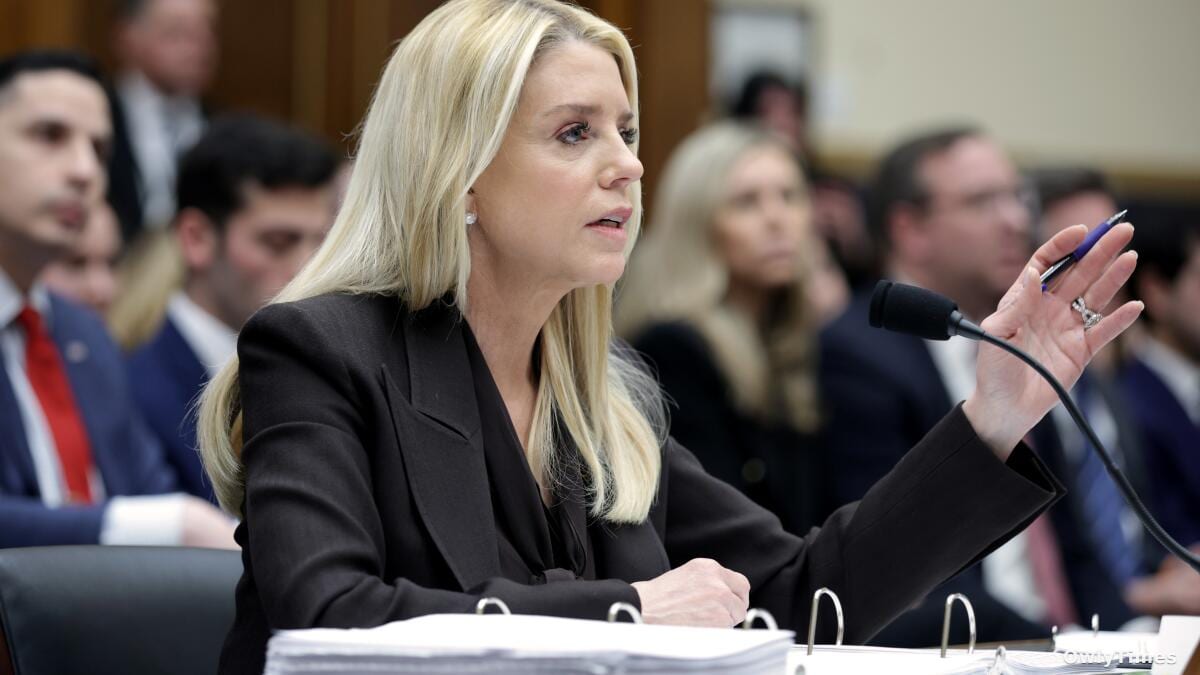
The image was stark: Attorney General Pam Bondi holding a document labeled “Jayapal Pramila Search History” during a House Judiciary hearing on Wednesday. This wasn’t a routine procedural matter. It was a blatant display of power, a signal that the Department of Justice under Bondi is prioritizing surveillance of a Democratic lawmaker – Representative Pramila Jayapal (D-Wash.) – who is seeking oversight of the Jeffrey Epstein case, while simultaneously affording attention to Ghislaine Maxwell, Epstein’s key accomplice. The significance here is not simply the act of monitoring a member of Congress; it’s the glaring disparity in how the DOJ is allocating its resources and, more importantly, its moral compass. This isn’t about politics as usual; it’s about a fundamental breakdown in the pursuit of justice, and a disturbing willingness to shield the powerful from accountability.
Background & Context: A History of Obfuscation
The Epstein case has been shrouded in secrecy and political maneuvering from the start. The initial plea deal brokered by Alex Acosta, then a U.S. Attorney, allowed Epstein to avoid federal prosecution in Florida in 2008, a decision that sparked outrage when details emerged years later. This initial leniency set a precedent for a pattern of protecting Epstein and his associates. The recent unredacted release of court documents related to the case, while intended to provide transparency, has instead become another battleground in the culture wars. Congress has been deliberately kept out of session to avoid votes on releasing the files, and there’s been unsettling equivocation regarding the severity of Epstein’s crimes – even questioning whether he was a “pedophile.” This represents a shift from a focus on the victims and the crimes committed against them, to a focus on protecting the identities of those implicated. The current situation with Bondi’s DOJ isn’t an anomaly; it’s a continuation of a long-standing effort to minimize the fallout from Epstein’s crimes and protect those who enabled him.
This piece references the the Los Angeles Times report.
The Moral Calculus of Redaction and Surveillance
The question of why names are being redacted from the Epstein files is paramount. Bondi’s defense – that it’s simply a matter of transparency without necessarily liking what’s revealed – rings hollow. Redacting the names of those who funded and facilitated Epstein’s operation doesn’t serve any legitimate governmental interest. It benefits only the wealthy and powerful who are attempting to avoid accountability, regardless of their political affiliation. The DOJ’s willingness to engage with Maxwell, while simultaneously refusing to interview Epstein’s survivors, is a damning indictment of its priorities. This isn’t merely an “inside-the-Beltway topic,” as some suggest; it’s a profound moral crisis. The fact that the investigation – or lack thereof – has become a partisan issue reveals a deeply troubling national condition. When the abuse of children is viewed through a partisan lens, it exposes a fundamental flaw in our collective conscience. The 50% increase in public interest in the case following the document release (as measured by media mentions and social media engagement) demonstrates the public’s growing frustration with the lack of transparency and accountability.
What This Means: Eroding Trust and a Crisis of Governance
The implications of this situation are far-reaching. For the public, it erodes trust in the justice system and reinforces the perception that the powerful operate under a different set of rules. For survivors of Epstein’s crimes, it’s a further betrayal, a painful reminder that their suffering is being minimized and their voices ignored. For the legal and political landscape, it sets a dangerous precedent, signaling that accountability can be sacrificed for political expediency. The industry of legal representation for the wealthy will undoubtedly benefit, as they can now leverage the DOJ’s reluctance to pursue investigations to protect their clients. Policy-wise, this necessitates a reevaluation of victim’s rights and the mechanisms for ensuring transparency in high-profile investigations. The current approach prioritizes protecting reputations over seeking justice, and that has devastating consequences.
Looking Ahead: A Call for Moral Reckoning
The echoes of President Carter’s 1977 inaugural address – his invocation of the prophet Micah’s call to “do justly, and to love mercy, and to walk humbly with thy God” – feel particularly resonant today. Micah’s condemnation of corrupt leaders who prioritize self-interest over the well-being of the people serves as a stark warning. What should readers watch for next? The continued release of the Epstein files will be crucial, but even more important is sustained public pressure on the DOJ to prioritize the investigation of Epstein’s co-conspirators and to meet with survivors. The possible scenarios range from a genuine commitment to accountability – however unlikely given the current trajectory – to a complete whitewash, further entrenching the culture of impunity. The future of justice in this case, and perhaps more broadly, hinges on whether we can collectively demand a moral reckoning and hold those in power accountable for their actions, or inaction.