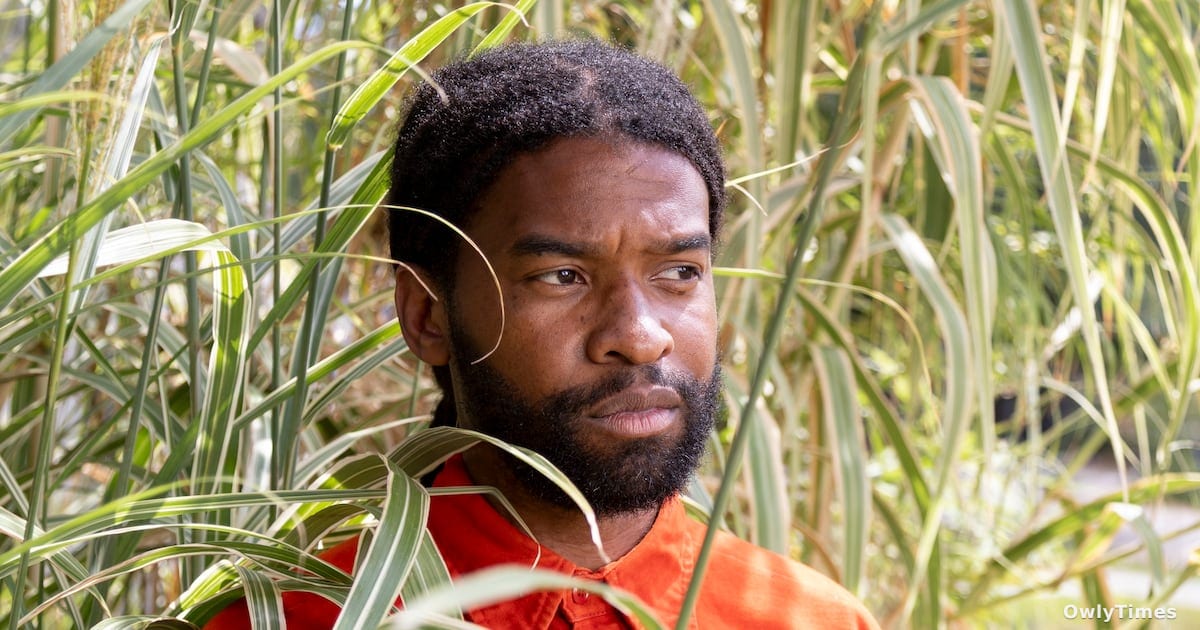

The morning light hitting the East Lake home of Eric Mack isn’t just illuminating a residence; it is revealing a living, breathing laboratory. For the Atlanta-based artist, his backyard—known as the Kai Garden—is where the rigid lines of the studio dissolve into the messy, chaotic brilliance of the natural world. After a five-year hiatus from a solo show at his home-base gallery, Whitespace, Mack has returned not with a simple collection of paintings, but with an invitation to witness the "garden’s annual symphony."
To understand Mack’s current exhibition, one must look beyond the canvas and into the soil. Over the last half-decade, Mack’s practice has shifted from purely aesthetic creation to a deep, tactile investigation of the earth itself. He hasn’t just been painting; he has been collaborating with scientists and geologists at Georgia Tech, conducting workshops on the complex beauty of soil. This isn't a hobbyist’s curiosity. It is a rigorous, research-based obsession that views dirt not as a static foundation, but as an active, living participant in the cycle of life.
The Intersection of Dirt and Design
In his latest work, including pieces like "GRV-0708," Mack incorporates raw, elemental materials—red sand, raintree leaves, tissue paper, and acrylic paint—onto wood veneer. The result is a series of mixed-media compositions that feel less like traditional art and more like biological artifacts. These pieces capture the tension between human-made structures and the relentless, creeping growth of the garden.
This pivot reflects a broader shift in contemporary art, where creators are increasingly moving away from the digital sterility of the early 2000s and toward a grounded, sensory-based realism. By incorporating the "hidden" geology of the soil into his work, Mack is challenging the viewer to acknowledge the hidden networks that sustain our world. It is an acknowledgment that we are not observers of nature, but are instead inextricably tangled within its growth patterns.
A Garden as a Crucible of Change
The Kai Garden itself serves as the crucible for this philosophy. Staging plant sale pop-ups twice a month, Mack has turned his home into a greenhouse and a community hub. For Mack, the act of nurturing a seedling is an act of defiance against the transient nature of modern life. He speaks candidly about the profound influence of his seven-year-old daughter and his wife, Melissa, noting how the cycles of planting and growth became a source of healing following the loss of his son in 2017.
This biographical layer adds a weight to his work that is rarely seen in gallery settings. When Mack says, "I just want to take the plants that I love and put them in a place where they can be cared for," he is articulating a radical form of resilience. He isn’t just cultivating plants; he is cultivating a response to grief, turning the inevitable decay of the garden into a metaphor for human endurance.
Why This Moment Matters
The significance of Mack’s return to Whitespace lies in his ability to bridge the gap between scientific inquiry and poetic expression. In an industry that often favors the conceptual over the physical, Mack’s work demands a return to the tactile. He reminds us that the most profound insights are often found in the soil beneath our feet, provided we are willing to stop and study them.
As the exhibition continues its run through June 6, the conversation surrounding Mack’s work will likely turn toward the future of sustainable art practices. The next reading of the local reception to these botanical-inspired works will indicate whether the art world is truly ready to embrace this "garden-first" mentality. For now, the "Silent Melodies" currently hanging at Whitespace serve as a necessary reminder that in the symphony of the natural world, even the smallest sprout has a part to play.