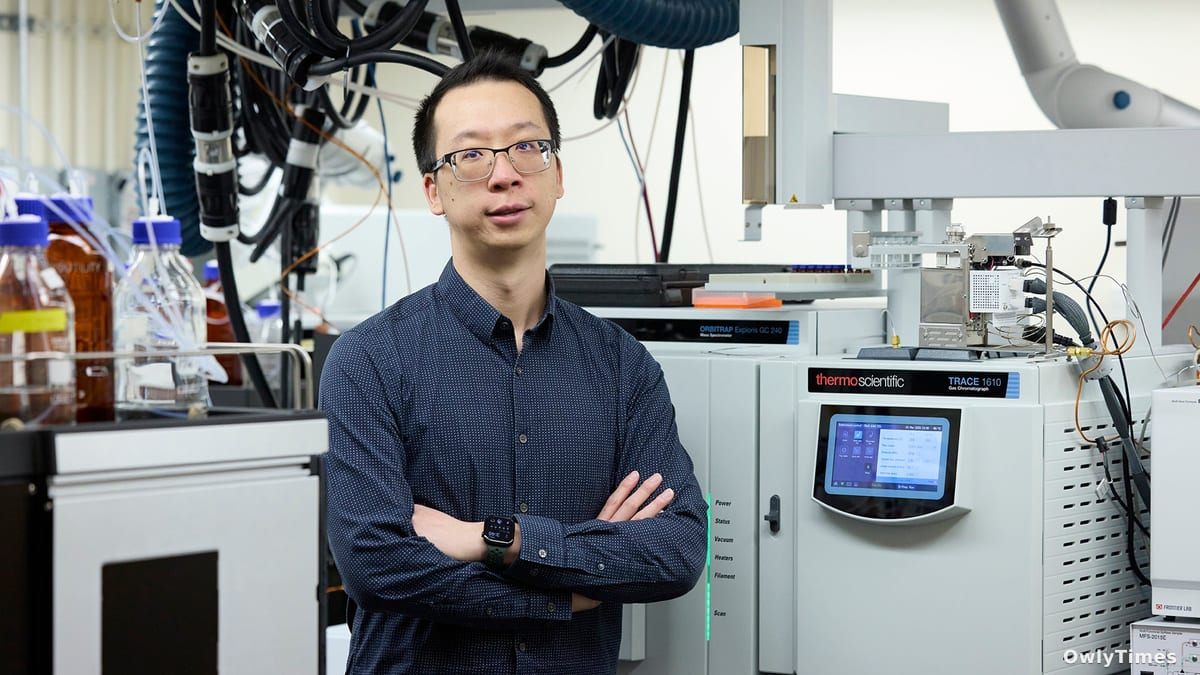

The persistent question of why some individuals develop disease while others exposed to similar conditions remain healthy isn’t simply a matter of genetics, but increasingly, a story written in the complex language of the “exposome” – the totality of environmental exposures a person experiences throughout their life. Peng Gao, assistant professor of environmental health and exposomics at the Harvard Chan School, isn’t interested in isolating single toxic agents; he’s building the tools to map the entire landscape of chemical interactions within the human body, and the implications are reshaping our understanding of everything from asthma to Alzheimer’s disease. While headlines often focus on identifying a cause for illness, Gao’s work underscores a far more nuanced reality: it’s rarely about one chemical, but the unpredictable consequences of their combined effects.
The core challenge, as Gao explains, is that we are constantly bombarded with thousands of chemicals, most of which go unmeasured and unregulated. His lab’s approach is to “make the invisible visible,” utilizing advanced analytical and computational tools to create a comprehensive “chemical fingerprint” of an individual and correlate it with their biological state. This isn’t simply about cataloging what’s in the body, but understanding how these substances interact – a concept known as synergistic effects. Research demonstrates that a chemical with minimal impact on its own can become significantly harmful when combined with others, defying the simple additive logic of “one plus one equals two.” Consider alcohol, a known carcinogen; its metabolic breakdown produces acetaldehyde, a highly reactive compound capable of damaging DNA and increasing cancer risk, particularly when the body’s repair mechanisms are overwhelmed.
Based on the original hsph.harvard.edu report.
This interplay extends beyond chemical-to-chemical interactions. Pollutants also engage with fundamental biomolecules like proteins, RNA, and DNA, often undergoing transformations within the body that increase their toxicity. Gao cites polycyclic aromatic hydrocarbons (PAHs), byproducts of fossil fuel combustion, as an example. While many PAHs are initially inert, enzymes attempt to make them water-soluble for excretion, inadvertently creating more bioreactive compounds that bind to DNA – a key link to cancer development. Disentangling these complex interactions requires a sophisticated methodology, moving beyond traditional toxicology that often assesses chemicals in isolation.
To tackle this complexity, Gao’s group employs a “multi-omics” approach, integrating data from exposomics (measuring external exposures), metabolomics (analyzing small molecule metabolites), and proteomics (studying proteins). They collect biospecimens – blood, tissue, urine – and analyze them using high-resolution mass spectrometry, a tool capable of profiling thousands of molecules simultaneously. This allows them to identify patterns linking specific exposures to health outcomes, comparing individuals with and without disease, or tracking changes within the same person over time. The initial data is then subjected to rigorous epidemiological and computational analyses to pinpoint the most impactful chemicals, which are subsequently investigated in laboratory settings using cell and animal models to establish potential causal links.
Currently, Gao’s team is pursuing several projects that highlight the power of this approach. One particularly compelling study focuses on asthma severity, utilizing wearable personal samplers to capture a detailed picture of individuals’ daily airborne exposures. The findings are challenging conventional wisdom, revealing that symptom control isn’t driven by single pollutants, but by specific “cocktails” of chemicals, some previously unrecognized. This suggests a need to move beyond static outdoor air quality monitoring towards personalized assessments that reflect actual, often indoor, exposures. Perhaps even more strikingly, research into lung cancer among never-smokers is uncovering previously unreported environmental carcinogens linked to specific tumor mutations, potentially opening new avenues for early detection and prevention in a vulnerable population currently overlooked by standard screening protocols.
Beyond cancer and respiratory illness, Gao’s lab is exploring the surprising role of the gut microbiome in Alzheimer’s disease, suggesting that gut bacteria can transform pesticides into more neurotoxic compounds, effectively creating a pathway from environmental exposure to brain damage. The team also responded to the 2023 East Palestine, Ohio, train derailment, deploying to monitor chemical contamination in multiple environmental media and provide affected communities with long-term exposure data. This rapid-response capability demonstrates the potential for a “multi-media exposomics approach” to inform future environmental disaster response efforts.
However, it’s crucial to acknowledge the limitations of this research. Establishing definitive causal links between environmental exposures and disease is inherently difficult, given the long latency periods involved and the multitude of confounding factors. While the multi-omics approach provides a powerful framework for identifying potential culprits, it doesn’t automatically prove causation. Furthermore, the cost and complexity of these analyses limit the scale of studies, potentially introducing bias if study populations aren’t representative. The reliance on advanced technology also means access to these tools is unevenly distributed, hindering broader research efforts.
The next critical step is to translate these findings into actionable interventions. Gao and his team are now focused on identifying specific interventions – dietary changes, air filtration systems, or policy changes – that can mitigate the harmful effects of these identified chemical mixtures. But a key question remains: as we gain a more granular understanding of the exposome, will regulatory frameworks adapt quickly enough to address the complex interplay of chemicals that are demonstrably impacting public health? We should all be watching for how personalized exposure monitoring, coupled with advances in microbiome research, will reshape our understanding of disease risk in the coming decade.





